This is the problem with thematic exhibits; species planning needs do change, and unless a zoo has vast areas of space to play with zoogeographic theming can become a millstone around a collection's neck.
I was in San Diego in January 1999, and remember seeing Pallas' cats as part of the supporting Arctic exhibits for "Polar Bear Plunge". The latter is a good exhibit for Polar Bears, and I like Pallas' Cats, but the combination didn't make a huge amount of sense..
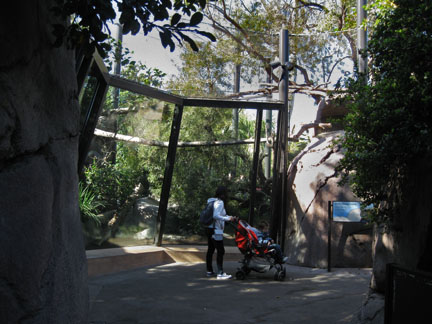
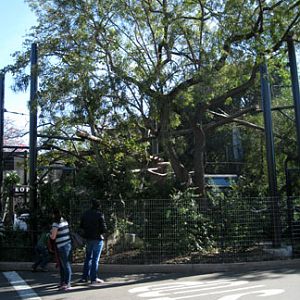
What are the actual dimensions of the exhibit, and why do you feel it is too small? Does it just 'look' too small to you, or do you have evidence and experience enough to actually make the argument that the staff of the San Diego Zoo and the AZA, who determine the minimum space requirements necessary for leopards (and all other species) to meet their physical, mental, and emotional needs, are both incorrect? Remember, animals do not view their spaces in the same way humans do, and I would argue that often, when someone says an exhibit is 'too small', what they are really saying,in an anthropomorphic way and without being aware of it, is that it is too small for THEM personally.
Remember, animals do not view their spaces in the same way humans do, and I would argue that often, when someone says an exhibit is 'too small', what they are really saying,in an anthropomorphic way and without being aware of it, is that it is too small for THEM personally.
Agreed, and a few square-footage doesn't have as much impact as food and social or environmental enrichment. Studies have shown that these reduce an animal's stress far more than increasing exhibit size. I think we would all like to see a thicket of trees and rocks with no visual barriers for a better visitor experience, but husbandry-wise, this exhibit size is fine.
I do not buy it. When I have seen massive (and I mean massive) exhibits for cats such as at Parc Felins or the tiger exhibit at Minnesota or Safari Park, I have NEVER seen a cat pacing. This leopard at San Diego was pacing the (very small) back fence line the entire time. I often see pacing in small to modest size exhibits, but never in huge exhibits.
Pacing has very little to do with exhibit size. Its more of a cat's inability to find adequate enrichment that meets their searching and hunting behavior.