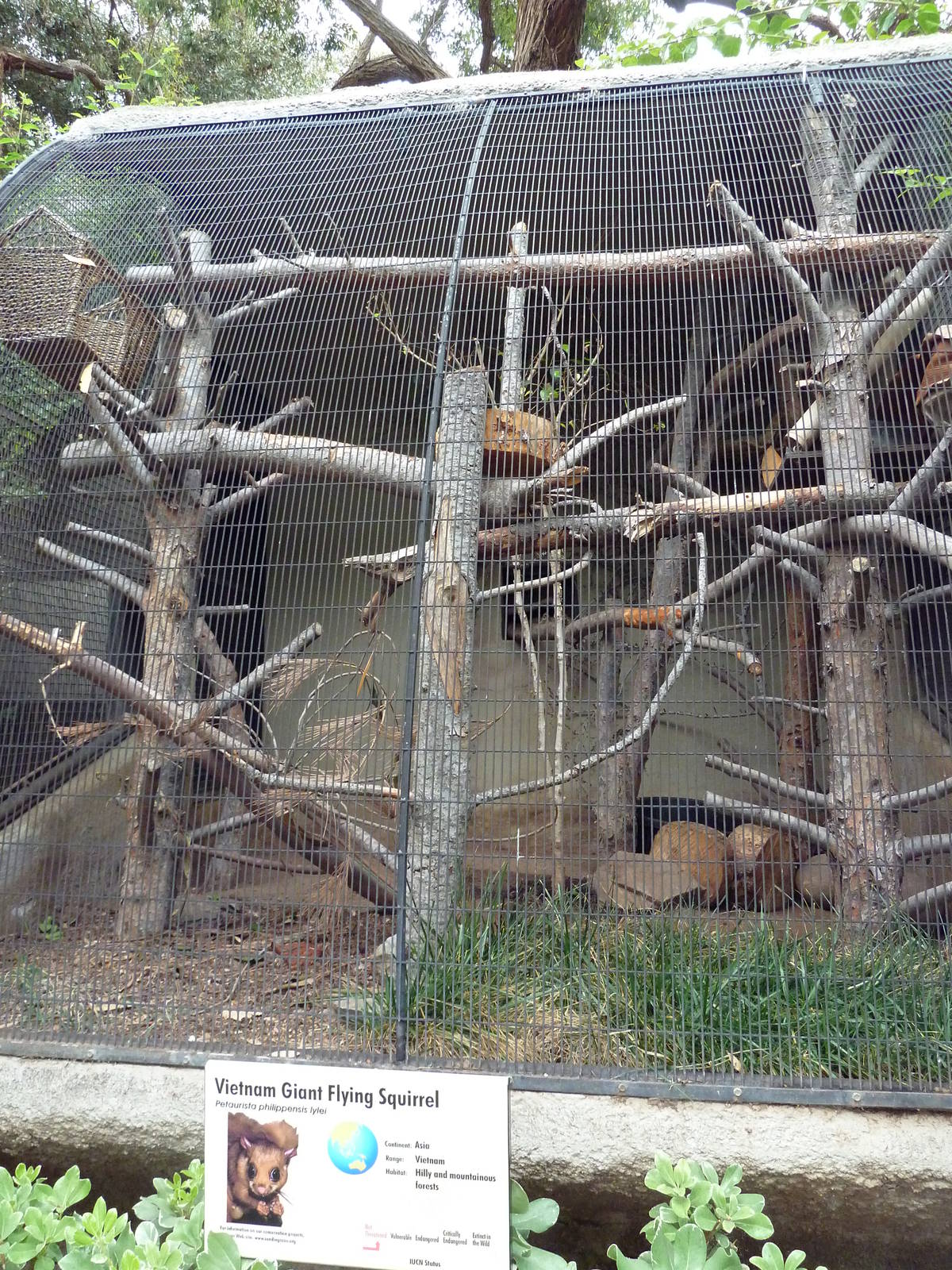
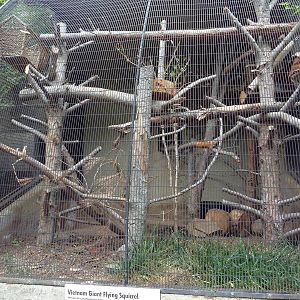
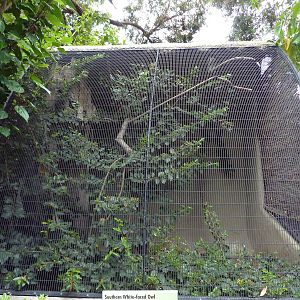
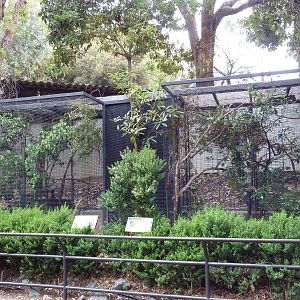
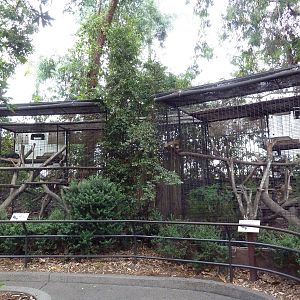
I thought it would be my first time seeing that species. But alas after multiple visits to this enclosure over multiple days...no luck. Also I think this area is part of the Outback renovation.
I thought it would be my first time seeing that species. But alas after multiple visits to this enclosure over multiple days...no luck. Also I think this area is part of the Outback renovation.
The only glimpse that I ever got of it was a bit of balled up fur. It's really a shame that such a special animal could not live in a more appropriate enclosure for viewing it. Does anybody know of a zoo that displays this species in a way where it's more active? I assume that it is probably nocturnal?
I did not see it displayed the last time that I went to the zoo in March. On previous occasions it was in the cluster of cages by the old elephant (now Indian rhino) exhibit that now completely inadequately has a clouded leopard crammed into it.
I think that the cage shown here is in the footprint of the new Outback exhibit and likely no longer exists. I don't know if this species is even still at the zoo.
The only glimpse that I ever got of it was a bit of balled up fur. It's really a shame that such a special animal could not live in a more appropriate enclosure for viewing it. Does anybody know of a zoo that displays this species in a way where it s more active? I assume that it is probably nocturnal?
the Night Safari in Singapore displays another species (I think its the red and white giant flying squirrel from memory; there's a photo in the gallery) in a walk-through "aviary" which really is the best way to house a giant flying squirrel of any species given their size and lifestyle. Their requirements are quite a bit different to housing a large "regular" (i.e. non-gliding) squirrel in my opinion. I don't think a cage in a nocturnal house (read: small) would cut it frankly.
EDIT: I just had a thought. Perhaps the ideal way to house them would be in a very large aviary-style enclosure but with the sleeping quarters (a "tree hole") viewable by the public through a window. That way the public could see the squirrel (albeit asleep) but the squirrel would still have ample room for when its active. The "aviary" part could even house diurnal animals (perhaps other species of squirrels, mouse deer, etc) for the public to see as well, in which case it could be a walk-through.
This exhibit was demolished to make room for the Australian Outback exhibit complex that opened this year. I did not see this species anywhere in the zoo during my recent visit.