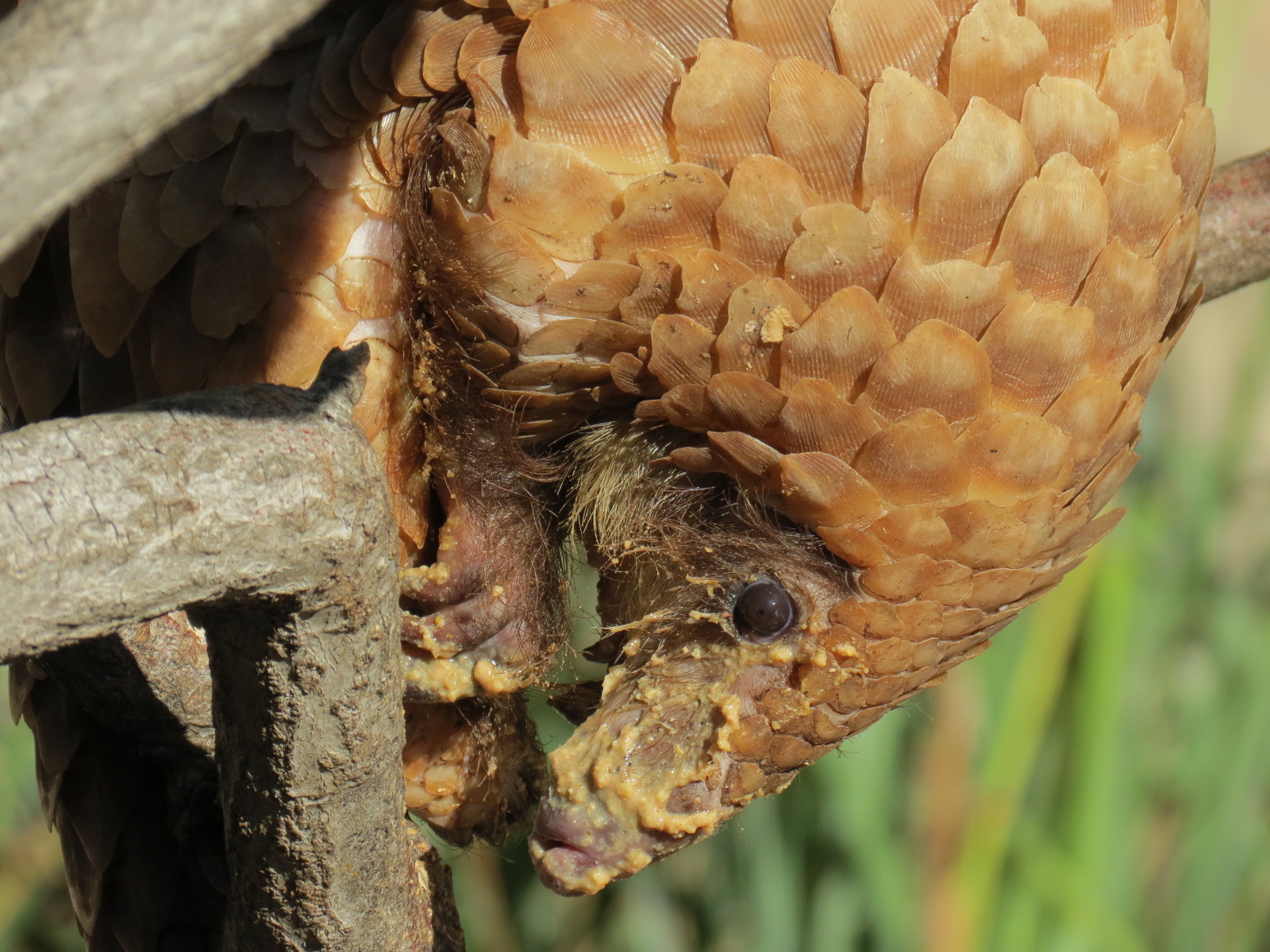
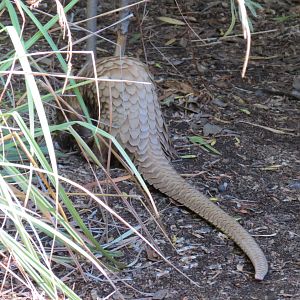
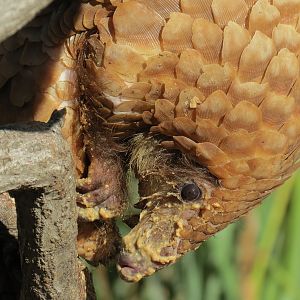
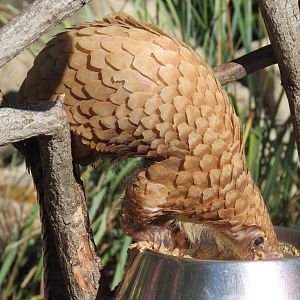
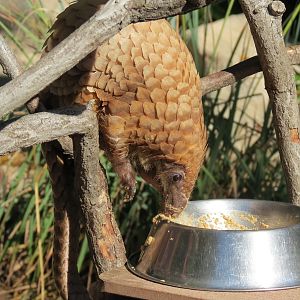
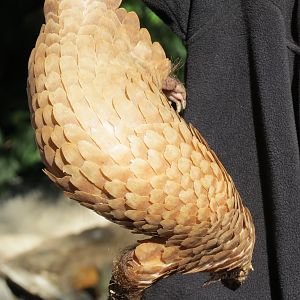
November 2013. This daily keeper talk features a Tree Pangolin. His name is Baba and he is the only pangolin of any species in the Western Hemisphere. He has been at the zoo for 8 years, and had a female companion for 6 of those years.
November 2013. This daily keeper talk features a Tree Pangolin. His name is Baba and he is the only pangolin of any species in the Western Hemisphere. He has been at the zoo for 8 years, and had a female companion for 6 of those years.
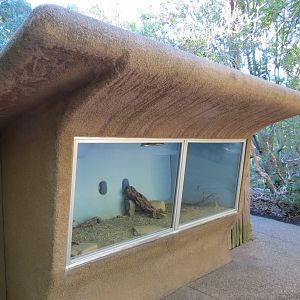
Yes, the pangolin had been kept in a behind-the-scenes area and only brought out for the talks, but as of 2014 it has a public exhibit exactly as you describe. It is a glass-fronted enclosure near where the pangolin talk takes place.
Yes, the pangolin had been kept in a behind-the-scenes area and only brought out for the talks, but as of 2014 it has a public exhibit exactly as you describe. It is a glass-fronted enclosure near where the pangolin talk takes place.
November 2013. This daily keeper talk features a Tree Pangolin. His name is Baba and he is the only pangolin of any species in the Western Hemisphere. He has been at the zoo for 8 years, and had a female companion for 6 of those years.
As of right now, due to a recent export from Togo, more pangolins can be found in America. From what I can tell, the exporter is still holding on to them but hopefully they can make their way to a public collection for a large number of people to view.
As of right now, due to a recent export from Togo, more pangolins can be found in America. From what I can tell, the exporter is still holding on to them but hopefully they can make their way to a public collection for a large number of people to view.
Given their specialist diet they are difficult to keep alive and healthy in captivity. They are also difficult breeders, but both these barriers are gradually being overcome with some pioneering work by a number of institutions. They are also not usually impressively active animals for display, tending to curl up in a corner, so a zoo might choose an armadillo or tamandua over the risk of a pangolin - if that were a choice. Now that public awareness is increasing and that progress is being made with their husbandry I hope that we'll be seeing plenty more in captivity in the coming years.
Manis tricuspis is the only species of pangolin I am aware of that came out of Togo this year. The exact numbers have not been clarified but from what I have last seen (and do not quote me on this) it is between 6-11 individuals. Some of those are babies that are still with mothers.
Togo slippery frogs, once thought to be extirpated and feared to be extinct, were also imported back. From what I have heard, the frogs are doing great and recent advances on their husbandry have made them an easier frog.