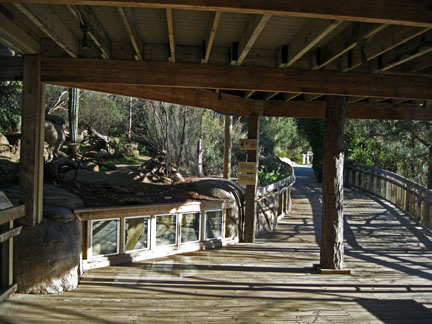
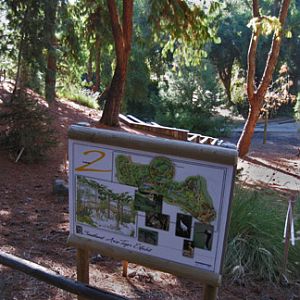
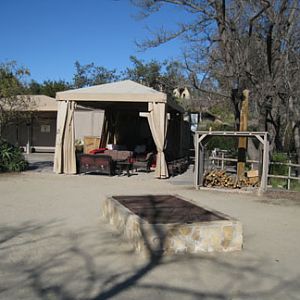
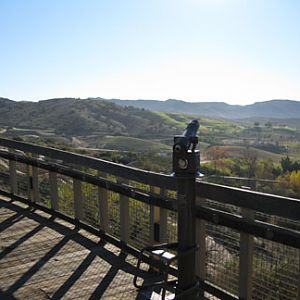
The burrowing owls were always here. The ferret was in the exhibit just left of this, which now houses an ocelot. To the left of that still has prairie dogs. Considering the b f ferret is nocturnal and was never seen by visitors, I do not think it is much of a loss. (Of course I am a cat fanatic, so putting ocelot there is only a gain IMO ).
The ferret could be quite active during the day. It was fun to watch him (her?) scampering around the enclosure. For California (and maybe all West Coast) black-footed ferret fans this is a loss because there are no others on display in any zoos in the region.
I share the opinion of DavidBrown. Black-footed ferrets CAN be very activ during the day. I saw them running during noon in National Zoo Washington D.C. And although Ocelots are not (anymore) that common in zoos as Tigers or Lions, I think that space for black-footed ferrets is much more needed/important.
In Casa de Campo Zoo (Madrid) there are mustelids which I have NEVER seen although I visit the zoo most weekends but guess what ? I make a point of visiting their enclosures every time I am in the zoo just for the excitement of the possibility of that first sighting.I believe this attitude is not exclusive to zoo fanatics - all the time I see visitors fascinated by enclosures that oblige them to slow down and take the extra effort to spot the animals.Mixed exhibits can be particularly rich - while one or more species are sure to be visible & thereby avoid an empty look , an enthusiastic visitor will have more of a challenge to spot most or all of the species.I fully support the "Slow Zoos" movement - those zoos that exhibit in a way that encourages the visitor to slow down & do some observation rather than race past the exhibits marking them off on a checklist.I really do believe that the average visitor is evolving and nowadays actually is beginning to appreciate this type of design.