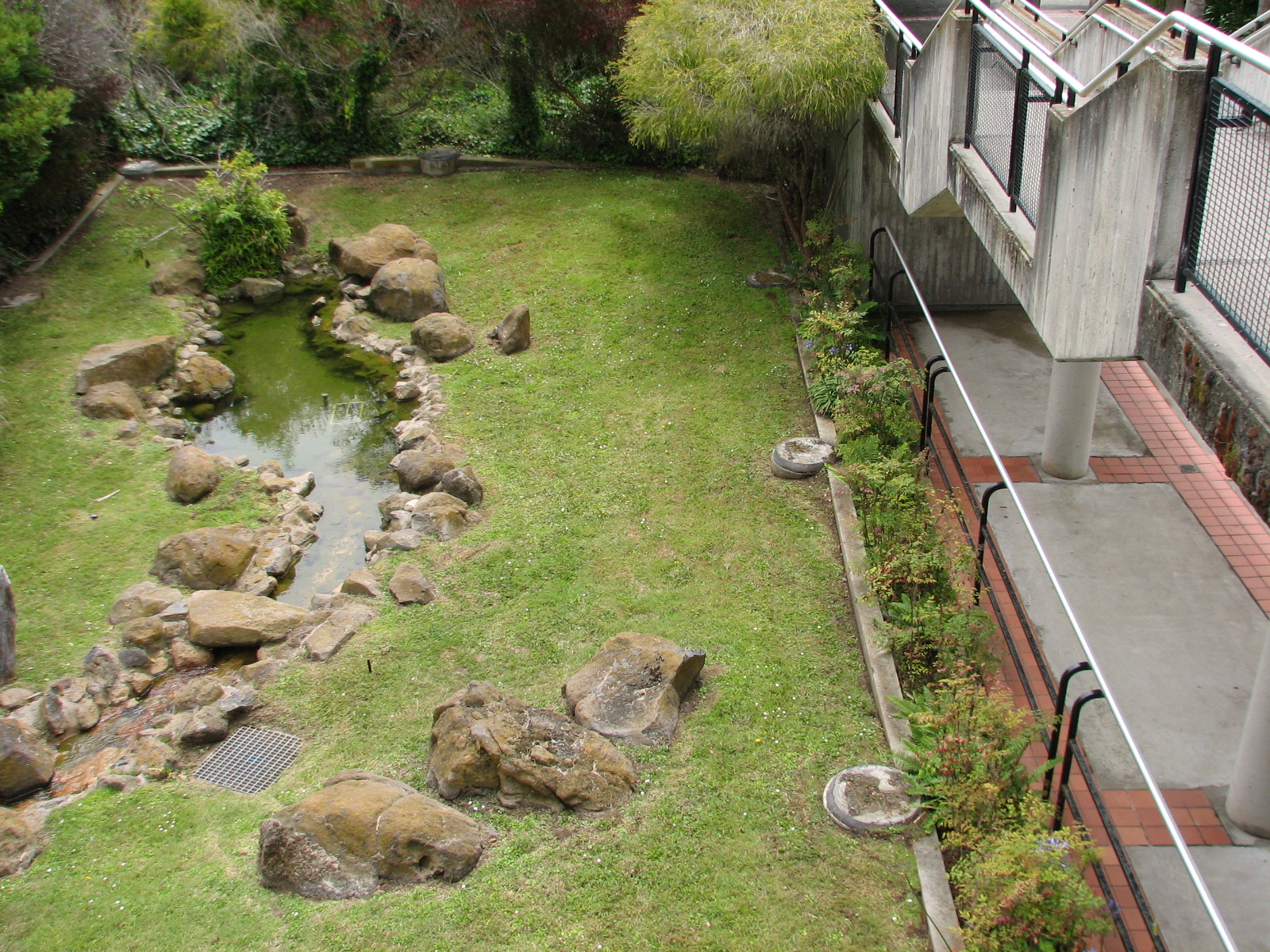
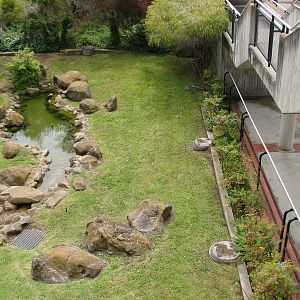
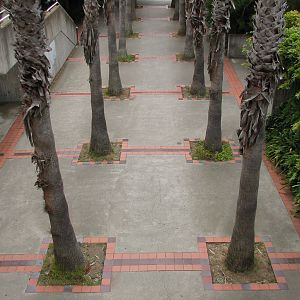
It was a large cage that held Francois langurs. It was one of the better exhibits in this complex in terms of space so I'm not sure why they tore it down. Maybe it was structurally unsound.
I've often looked at this spot and wondered why they couldn't throw up some netting and wooden poles. It doesn't look like a lot of effort would be required, and it would get the black and white colobus monkeys out of that horrible, cramped cage they've occupied for the four years that I've been going to the SF Zoo (again).
It was a large cage that held Francois langurs. It was one of the better exhibits in this complex in terms of space so I'm not sure why they tore it down. Maybe it was structurally unsound.
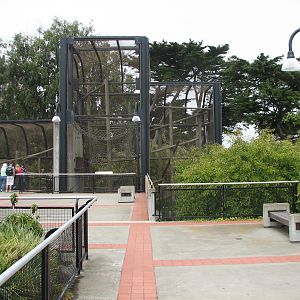
This was originally the centerpiece of the complex, a very tall, "vaulted" mesh structure that was home to a large group of black and white colobus. From the beginning there were health issues here (the metal structure was hard to sanitize, so several monkeys died, and the mesh too close to the public, encouraging illicit feeding and facilitating biting).
Eventually, salt corrosion severely impacted the metal structure, and down came the cage. The tiny cage now housing colobus was originally an antechamber within the much larger enclosure; it's all that's left now.
Why they bother to mow and manicure the remnant "lawn" here is one of the many mysteries of the SF zoo.
This was originally the centerpiece of the complex, a very tall, "vaulted" mesh structure that was home to a large group of black and white colobus. From the beginning there were health issues here (the metal structure was hard to sanitize, so several monkeys died, and the mesh too close to the public, encouraging illicit feeding and facilitating biting).
Eventually, salt corrosion severely impacted the metal structure, and down came the cage. The tiny cage now housing colobus was originally an antechamber within the much larger enclosure; it's all that's left now.
Why they bother to mow and manicure the remnant "lawn" here is one of the many mysteries of the SF zoo.
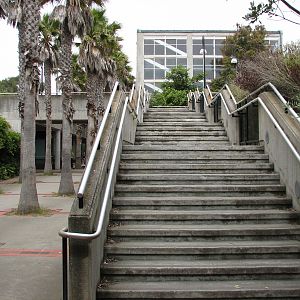
I only remember Francois langurs in one of the tall and narrow "row cages" on the west side of the complex, where I believe siamangs currently reside. There was another enclosure, slightly larger in footprint but not as tall, that used to exist on the upper level of the building, in between the now-defunct colobus exhibit and the row of cages--i think it originally housed Celebes macaques. It too has been removed, likely for structural reasons.
I only remember Francois langurs in one of the tall and narrow "row cages" on the west side of the complex, where I believe siamangs currently reside. There was another enclosure, slightly larger in footprint but not as tall, that used to exist on the upper level of the building, in between the now-defunct colobus exhibit and the row of cages--i think it originally housed Celebes macaques. It too has been removed, likely for structural reasons.
I only remember Francois langurs in one of the tall and narrow "row cages" on the west side of the complex, where I believe siamangs currently reside. There was another enclosure, slightly larger in footprint but not as tall, that used to exist on the upper level of the building, in between the now-defunct colobus exhibit and the row of cages--i think it originally housed Celebes macaques. It too has been removed, likely for structural reasons.
The siamangs and Francois langurs currently bookend the Discovery Center, but I'm sure you already knew they that. Though, how they think keeping the eight(?) Francois langurs in the same sized enclosure as two siamangs is beyond me.