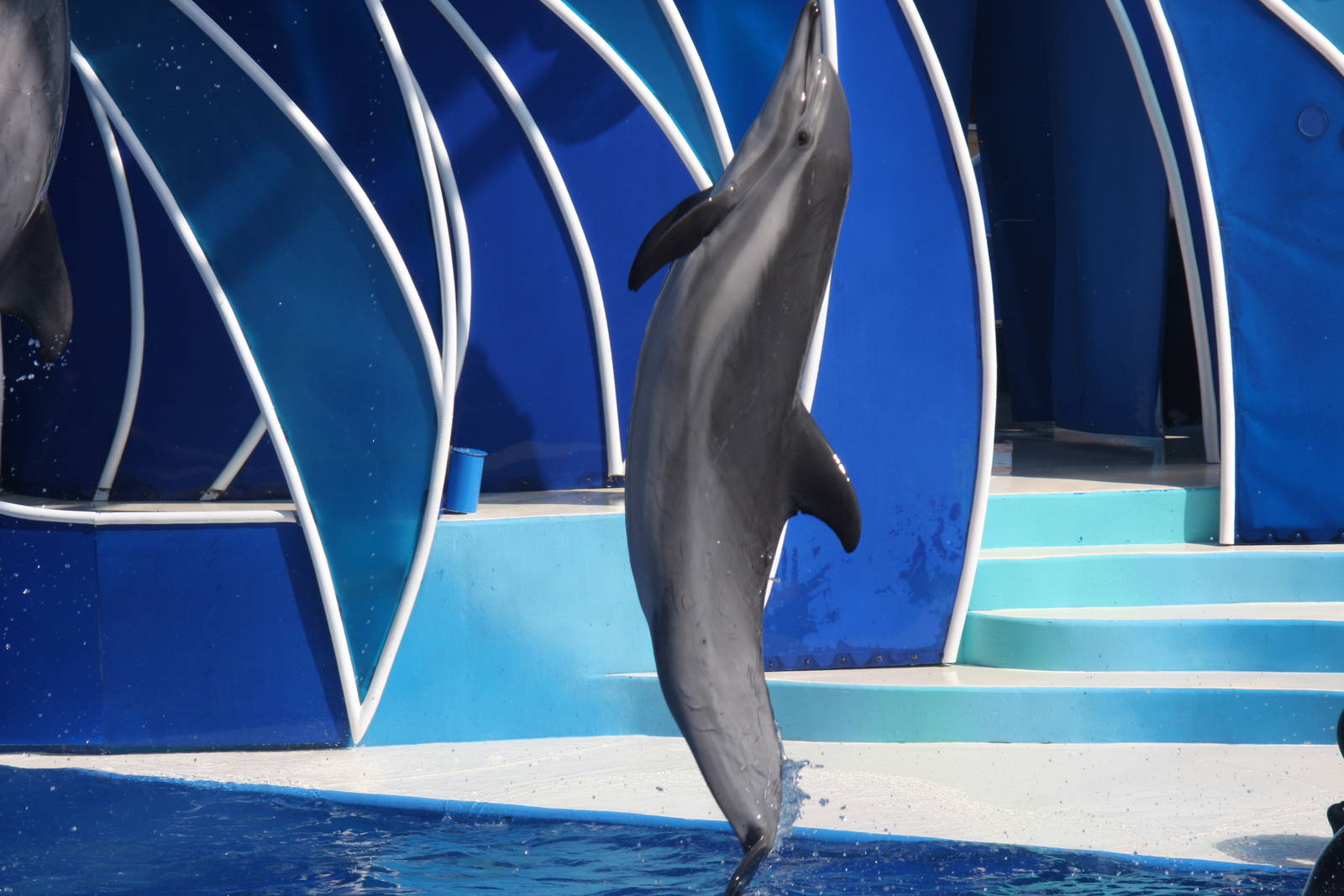
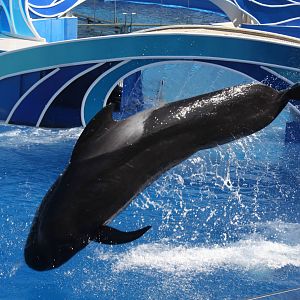
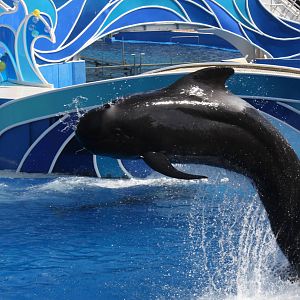
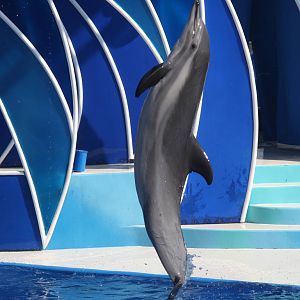
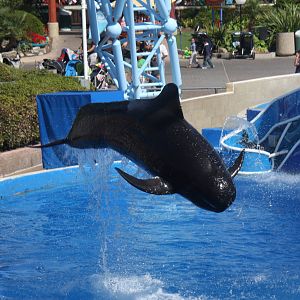
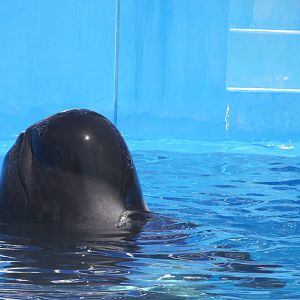
This is very interesting, but kind of morbid. Many of us would unhesitatingly criticize any accredited zoo that displayed a "liger" or "tigon," or for that matter even the most common genetic manipulation in zoos--"white tigers.".
Is anyone else bothered that Sea World, a member in good standing of AZA and WAZA, has this unfortunate product of bad husbandry (giving them the benefit of the doubt that it was not the result of an intentional pairing) on display?
Is anyone else bothered that Sea World, a member in good standing of AZA and WAZA, has this unfortunate product of bad husbandry (giving them the benefit of the doubt that it was not the result of an intentional pairing) on display?
Doesn't bother me in the slightest, as the alternatives would be to stick it offshow (in what would most likely be a smaller/less stimulating environment), send it to a different location (which would do nothing of any real benefit to anyone except allow SeaWorld to claim a dubious moral high ground), or release it to an uncertain future in the wild. Or, I suppose, euthanasia, but that would be so politically sensitive as to be unthinkable from the start.
Of course, I don't think they should be trying to breed more hybrids, but I see no reason this animal should be made a martyr to the cause (with apologies for slightly over-stated language but I couldn't think of a better way to sum up).
EDIT: the problem with White Tigers in particular is that many zoos are still selectively breeding them. I have nothing against places keeping the animals they have, but I'd rather they weren't breeding more. A similar story applies to hybrids - being a zoologist by inclination, once they exist I'm always interested to see them, but also always hoping there won't be too many more produced. That said, I defy anyone not to be impressed (however briefly before logic cuts in!) by a Liger...
Doesn't bother me in the slightest, as the alternatives would be to stick it offshow (in what would most likely be a smaller/less stimulating environment), send it to a different location (which would do nothing of any real benefit to anyone except allow SeaWorld to claim a dubious moral high ground), or release it to an uncertain future in the wild. Or, I suppose, euthanasia, but that would be so politically sensitive as to be unthinkable from the start.
Of course, I don't think they should be trying to breed more hybrids, but I see no reason this animal should be made a martyr to the cause (with apologies for slightly over-stated language but I couldn't think of a better way to sum up).
You posted while I added my edit above. Yes, I would.
The animal exists, there's nothing that can be done about that. To say it is not fit to be in an 'accredited'* zoo because it is a hybrid is a bit odd to me, as it implies that the animal should be sent to a quite possibly less-high-quality zoo (or euthanased). To put it bluntly, what did the liger do to you?
*I still find the importance of AZA accreditation in the US zoo world a little odd, being used to the UK system where a zoo is either of acceptable standard (and so licensed) or not (and closed down/required to improve).
You posted while I added my edit above. Yes, I would.
The animal exists, there's nothing that can be done about that. To say it is not fit to be in an 'accredited'* zoo because it is a hybrid is a bit odd to me, as it implies that the animal should be sent to a quite possibly less-high-quality zoo (or euthanased). To put it bluntly, what did the liger do to you?
*I still find the importance of AZA accreditation in the US zoo world a little odd, being used to the UK system where a zoo is either of acceptable standard (and so licensed) or not (and closed down/required to improve).
I hold nothing against this beautiful animal, nor against any of the hybrids (intentional or otherwise) one still encounters in zoos of all levels of professional credibility. What does bother me are the dubious motivations and/or poor animal management methodologies evidenced by the continued existence of these poor, for want of a better term, freaks.
Over 2000 US "zoos" are licensed; only about 220 are accredited. There is an enormous gap between the standards of a majority of the former and the minimum set of standards needed to attain AZA accreditation. It will be interesting to see if your perception changes as EAZA rolls out its mandatory accreditation program in the upcoming years.
I hold nothing against this beautiful animal, nor against any of the hybrids (intentional or otherwise) one still encounters in zoos of all levels of professional credibility. What does bother me are the dubious motivations and/or poor animal management methodologies evidenced by the continued existence of these poor, for want of a better term, freaks.
I understand this particular animal is descended from a rescued Common Dolphin kept with resident bottlenoses (please correct me if this is wrong). I can't speak for SeaWorld's motivations, but it seems to me that if the parent Common Dolphin couldn't be released, it would hardly be considered good husbandry to keep a social dolphin solo. If there was no suitable single-sexed group, what could they do? I've no idea how efficient dolphin birth control is, but we've not found any 100% effective methods for our own species short of surgery or total avoidance of the opposite sex, so accidents can always happen.
Over 2000 US "zoos" are licensed; only about 220 are accredited. There is an enormous gap between the standards of a majority of the former and the minimum set of standards needed to attain AZA accreditation. It will be interesting to see if your perception changes as EAZA rolls out its mandatory accreditation program in the upcoming years.
I guess it depends on how high the standards are set. I think the process will rapidly come to a premature end if they set standards so high that big names start to fail.
But I wonder how valuable an accreditation process is if it excludes so many collections as the AZA methods (always remembering that there will be zoos that never apply for one reason or another - cost, politics, pride, lack of faith in the system etc). Surely a system where zoos have responsibilities to a body like EAZA is better than excluding (in particular mid-quality-range) zoos and having no chance to improve their condition?
Do you think it possible that if a level of AZA membership were possible without accreditation it would encourage more improvements in the lower-quality animal collections, and so more zoos to reach accreditation-standard? I can't claim to know for sure, but I suspect it might.