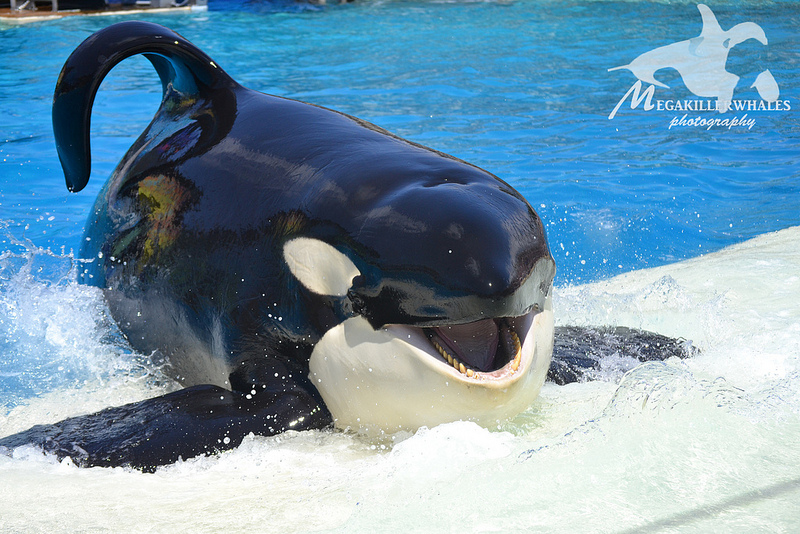
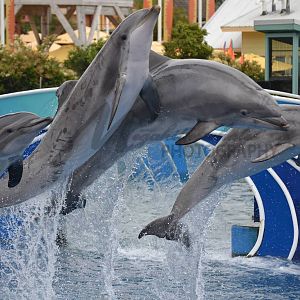
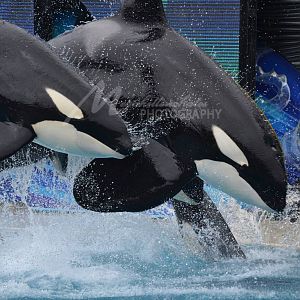
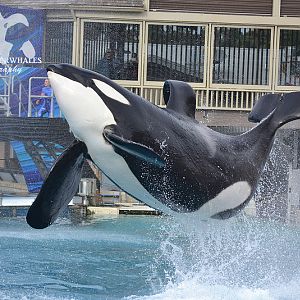
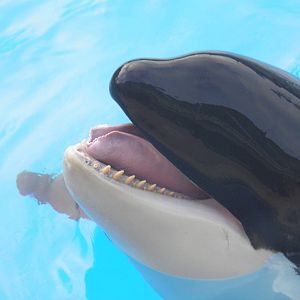
Unknown.Animal Rightners, of course,say the reason is to less movement in"captivity", so the muscles become weak, and the dorsal fins fall to the side.Anyway, of Course this is Nonsens, see the both examples above or the femals with Standing dorsal fins.
Unknown.Animal Rightners, of course,say the reason is to less movement in"captivity", so the muscles become weak, and the dorsal fins fall to the side.Anyway, of Course this is Nonsens, see the both examples above or the femals with Standing dorsal fins.
It's because there isn't enough water pressure to keep the dorsal fin upright. It's only just because they don't have access to deep waters. I scoff and laugh when people give other reasons like 'it's caused by stress", it makes absolutely no sense considering emotions cannot affect the shape of cartilage.
It's because there isn't enough water pressure to keep the dorsal fin upright. It's only just because they don't have access to deep waters. I scoff and laugh when people give other reasons like 'it's caused by stress", it makes absolutely no sense considering emotions cannot affect the shape of cartilage.
Any source for that Information ? In the wild, orcas
do not swim all day in deep waters,mostly only for hunting, so I'm sure, it hasn't nothing to do with water pressure.
Any source for that Information ? In the wild, orcas
do not swim all day in deep waters,mostly only for hunting, so I'm sure, it hasn't nothing to do with water pressure.
Just to start out, I'm with SeaWorld 100% I'm sure you are in some way as well based on some of your posts.
It may be because captive orcas stay on the surface with their trainers almost all of their lives. Wild whales spend their lives in constant motion, travelling vast distances underwater in a weightless environment. The water current against the fin helps to shape it into an erect position. On the other hand, captive whales spend most of their time floating at the surface of their pools.