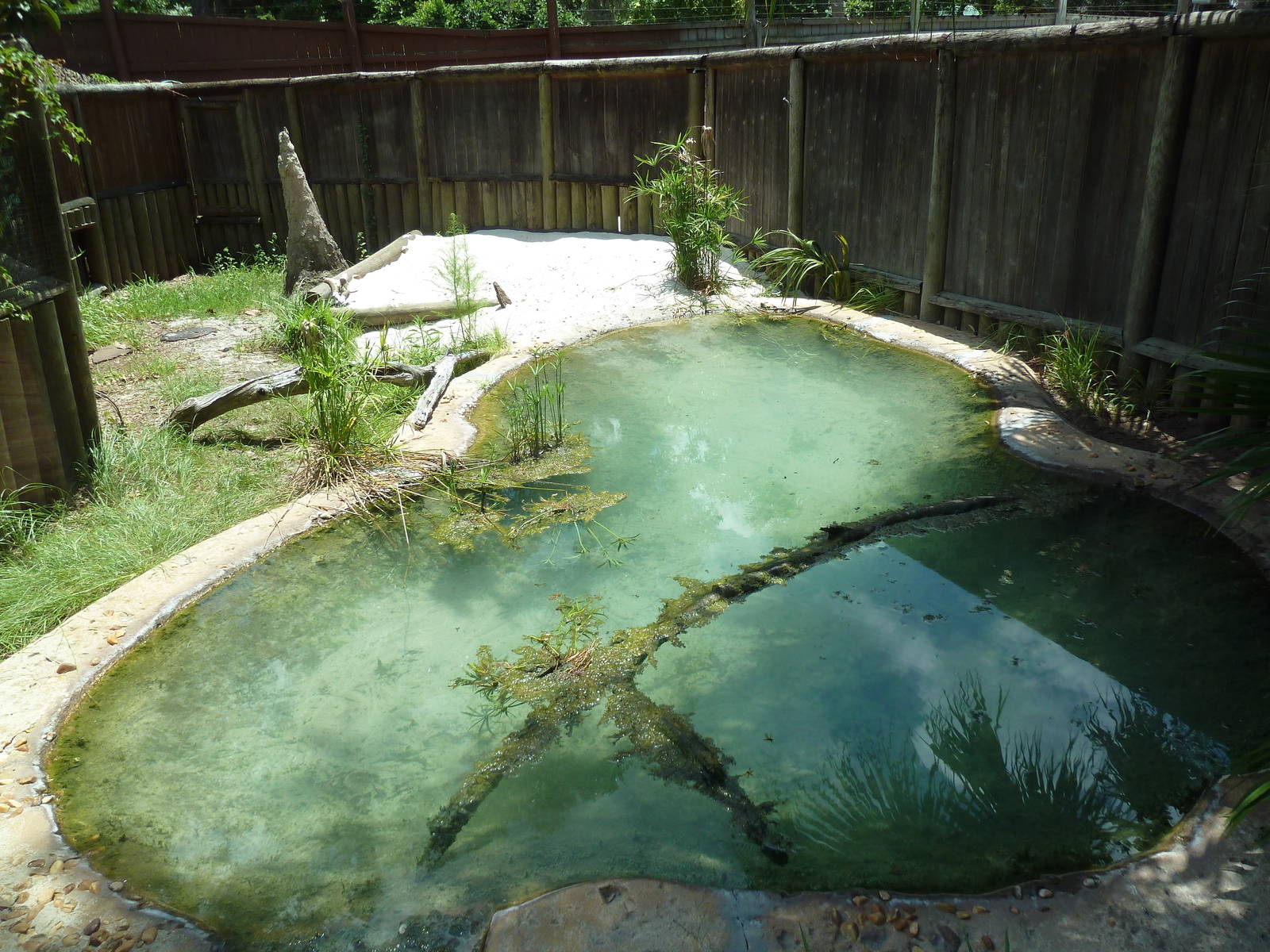
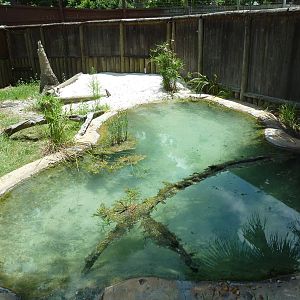
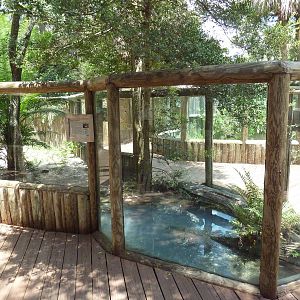
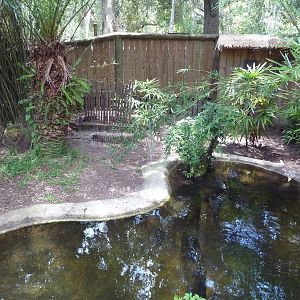
Was this exhibit for young Nile crocs or full grown ones? It looks pretty dinky for a full grown croc - or was there more to the exhibit?
The thought of seeing all the species of crocs in one place sounds very attractive. Did you get croc fatigue after awhile or were you still into see them all by the end of your visit?
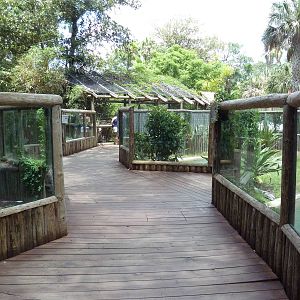
There was a medium-sized Nile crocodile in the shade of the tree, but it was not a huge one by any means. I physically saw at least one specimen of all 23 species of crocodilian and that was a true thrill because I ticked them all off in a couple of hours. To be perfectly honest I was excited for the entire journey around the park, and there really aren't any bad exhibits. Some of the pools are fairly small but crocodilians are easy to please and the many species of caiman seemed fine having average-sized pools. The Indian gharial exhibit is the real stunner, but there seems to be a conscious effort to add various primate habitats (6 species) and bird aviaries to the park so that St. Augustine is not viewed as yet another basic Florida gator farm.
Someone else might have the answer to that question, but there are a number of signs at St. Augustine declaring the park to be the only one on the planet with all 23 species of crocodilian and so a 24th might mess things up for them! It does appear legitimate that there are now 2 Nile crocs to tick off lifetime lists.
I wonder if crocodilian taxonomy will be taken over by "splitters" in the future, as for example hoofstock has become incredibly confusing. Isn't there a staggering number of bushbuck, or klipspringer...or lesser-spotted, red-crowned, hairy-necked, four-horned, polka-dotted greater gazelles?
I believe that that individual was the one used in the genetic tests to confirm the existence of C. suchus. Interestingly, C. suchus is much more closely related to the Cuban Crocodile than it is to the Nile.
Unfortunately with the recent splitting of the slender-snouted crocodile into M. cataphractus and M. leptorhynchus, this facility can presumably no longer truthfully claim the title of housing every crocodilian species. Plus the whole Osteolaemus debacle still needs to be sorted out.