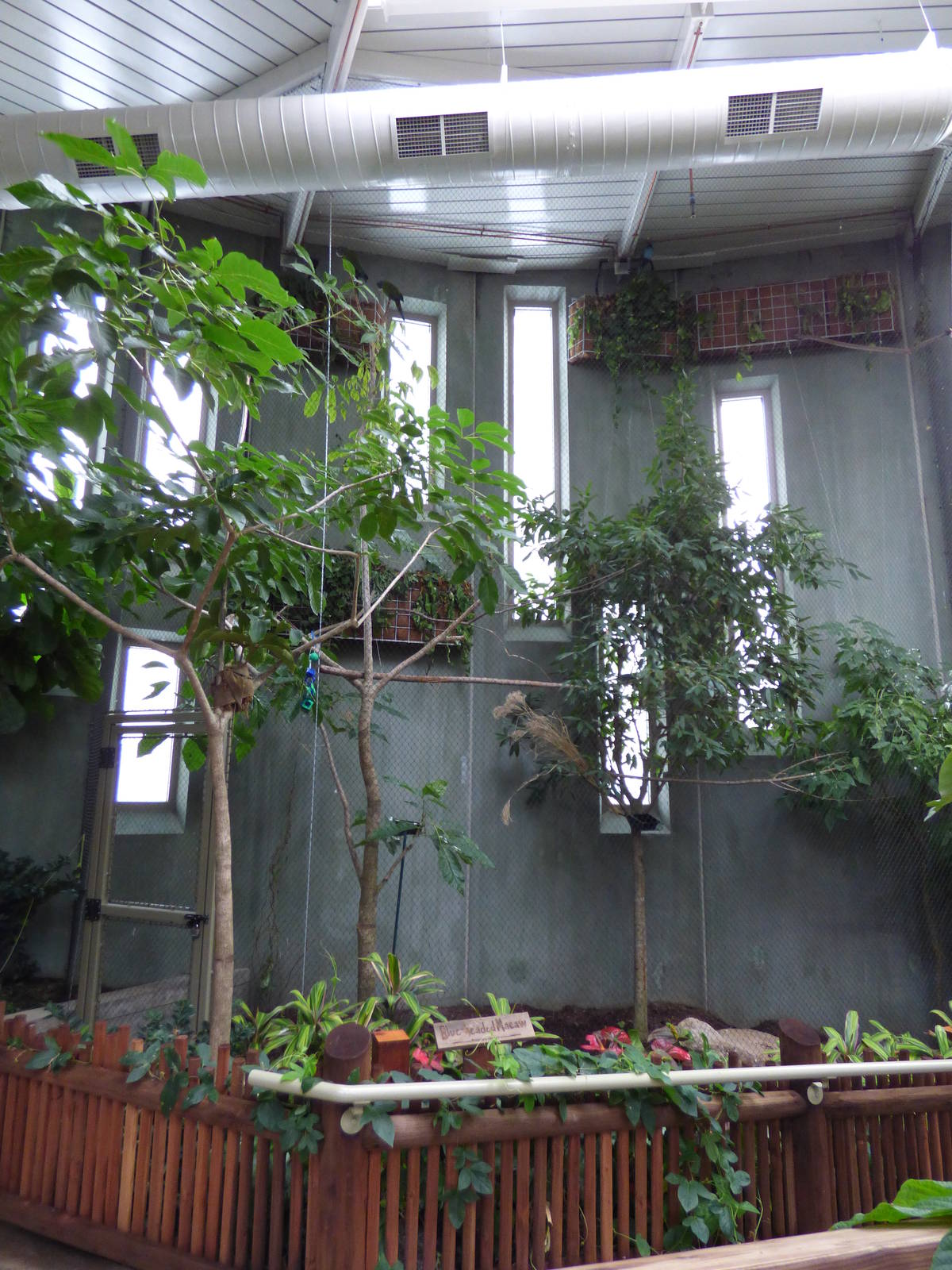
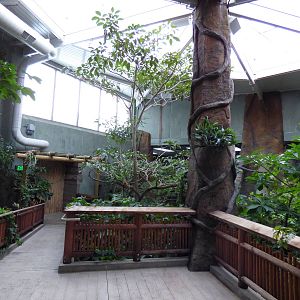
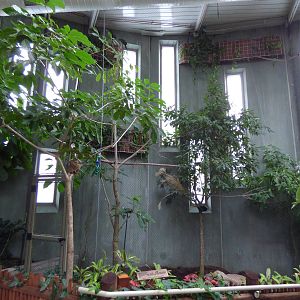
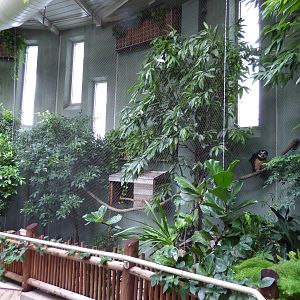
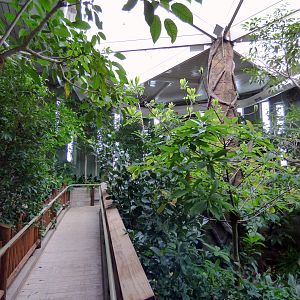
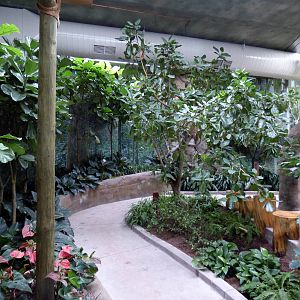
What is the distance from the mesh to the wall in these focal exhibits? Almost looks the same as the distance from the guard rail to the front of the mesh.
What is the distance from the mesh to the wall in these focal exhibits? Almost looks the same as the distance from the guard rail to the front of the mesh.
The depth of the exhibit varies as the exterior wall of the building is curved. At its widest I'd guess that it is about 6 feet wide, the guard rail is perhaps 2 or 3 feet from the mesh.
The depth of the exhibit varies as the exterior wall of the building is curved. At its widest I'd guess that it is about 6 feet wide, the guard rail is perhaps 2 or 3 feet from the mesh.
There are three male Cissa chinenesis at Tracy Aviary. The US population of this species is no longer sustainable and is slated to be phased out. Only three US institutions house green magpies (that I know of): Tracy Aviary, Fort Wayne Children's Zoo, and Rosamond Gifford Zoo.
There are three male Cissa chinenesis at Tracy Aviary. The US population of this species is no longer sustainable and is slated to be phased out. Only three US institutions house green magpies (that I know of): Tracy Aviary, Fort Wayne Children's Zoo, and Rosamond Gifford Zoo.
In addition to the few in zoos, there are small numbers of Common Green (C. chinensis) and Indochinese Green (C. hypoleuca) in private aviculture.
However, the Javan Green (C. thalassina) is highly threatened and the few known captives (Cikinanga, Chester and Prague, with plans to spread out to more European zoos) represent a last ditch effort to save this species from total extinction. Both chinensis and hypoleuca are fairly common in the wild; although interesting exhibits, they're not in need of conservation help and for that reason alone few zoos are willing to put in much effort with them. The last green magpie species, Bornean Green (C. jefferyi), is also fairly common in the wild, but oddly enough it doesn't appear to be in captivity anywhere (might be some in private aviculture in Asia?).