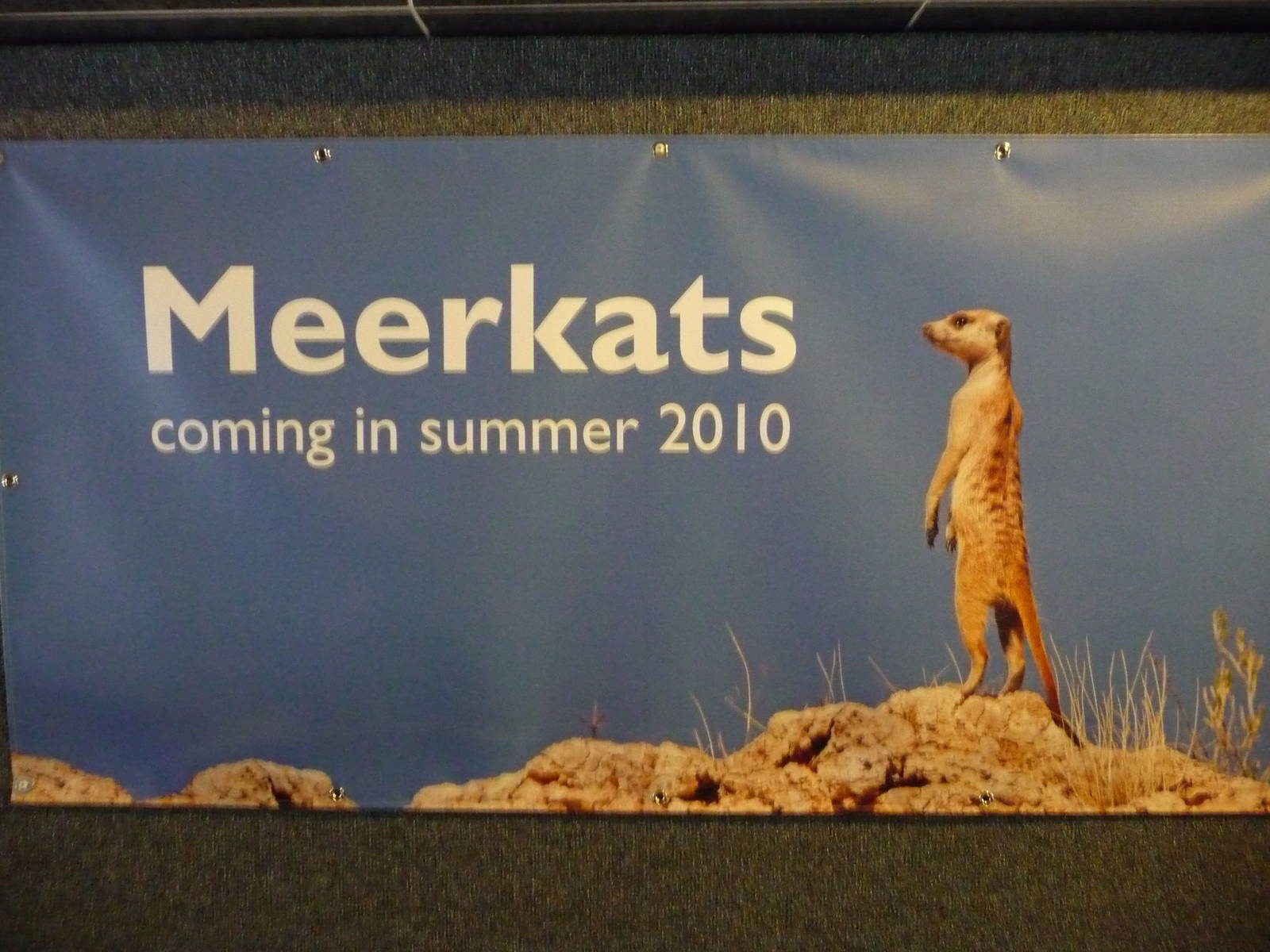
June 2009. This small exhibit will be inside the Adaptations building, which currently holds 2 komodo dragons, an elderly clouded leopard, a male ocelot and in the next month some northern tree shrews.
June 2009. This small exhibit will be inside the Adaptations building, which currently holds 2 komodo dragons, an elderly clouded leopard, a male ocelot and in the next month some northern tree shrews.
The meerkat exhibit isn't going to be physically connected to the African Savannah correct? You will not go directly from the wild dogs to this part of the building will you?
I believe that the Adaptations building serves as the holding centre for lions, sumatran tigers and African wild dogs. It is directly across from the brand-new cafe called "Pacific Blue Chowder House" (which is outside of the Asian Trail of Vines area), and usually either the wild dogs are seen directly before the entrance or from the other side there is the snow leopard exhibit. Outside the Adaptations building are a couple of outdated cages from 1951 (sloth bear (not the grotto enclosure) and a cage for keas.) Inside the Adaptations building there is about half of it devoted to a pair of komodo dragons, and the other half is the ocelot, northern tree shrews, clouded leopard and in upcoming meerkat enclosure. The meerkat exhibit will undoubtedly be tremendously popular with kids, but it will be indoors and rather small. The zoo has its attention on the $7.5 million west entry redesign for 2010.
But is this on the African savannah side of the building, or do you pass by other animals before you get to where the meerkats will be? I'm just curious if they are working any geographic continuity into the design.
This is almost the only part of the entire zoo that has zero continuity, which is odd because as you know the Woodland Park Zoo prides itself on the geographic regions of its enclosures. Inside the Adapations building komodo dragons were addded in 2000, and with a clouded leopard from Asia, an ocelot from South America and upcoming meerkats from Africa this tiny portion of the zoo is a "mixed-bag" of species. I've seen a wide variety of animals inside and also in the two traditional cages that are connected to the building outdoors. Sloth bears, cougars, pallas's cats, fennec foxes, golden lion tamarins, various birds, etc. It seems as if the zoo just plugs in whatever doesn't fit anywhere else on the grounds, but as you know from experience this is the only area that is like that.