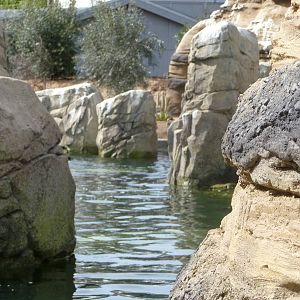
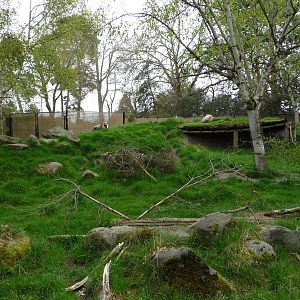
May 2009. This $6.5 million exhibit opened on May 1st, 2009, and is 17,000 sq. ft. in size. There are approximately 8 viewing windows, and it is one of the largest penguin enclosures in North America.
May 2009. This $6.5 million exhibit opened on May 1st, 2009, and is 17,000 sq. ft. in size. There are approximately 8 viewing windows, and it is one of the largest penguin enclosures in North America.
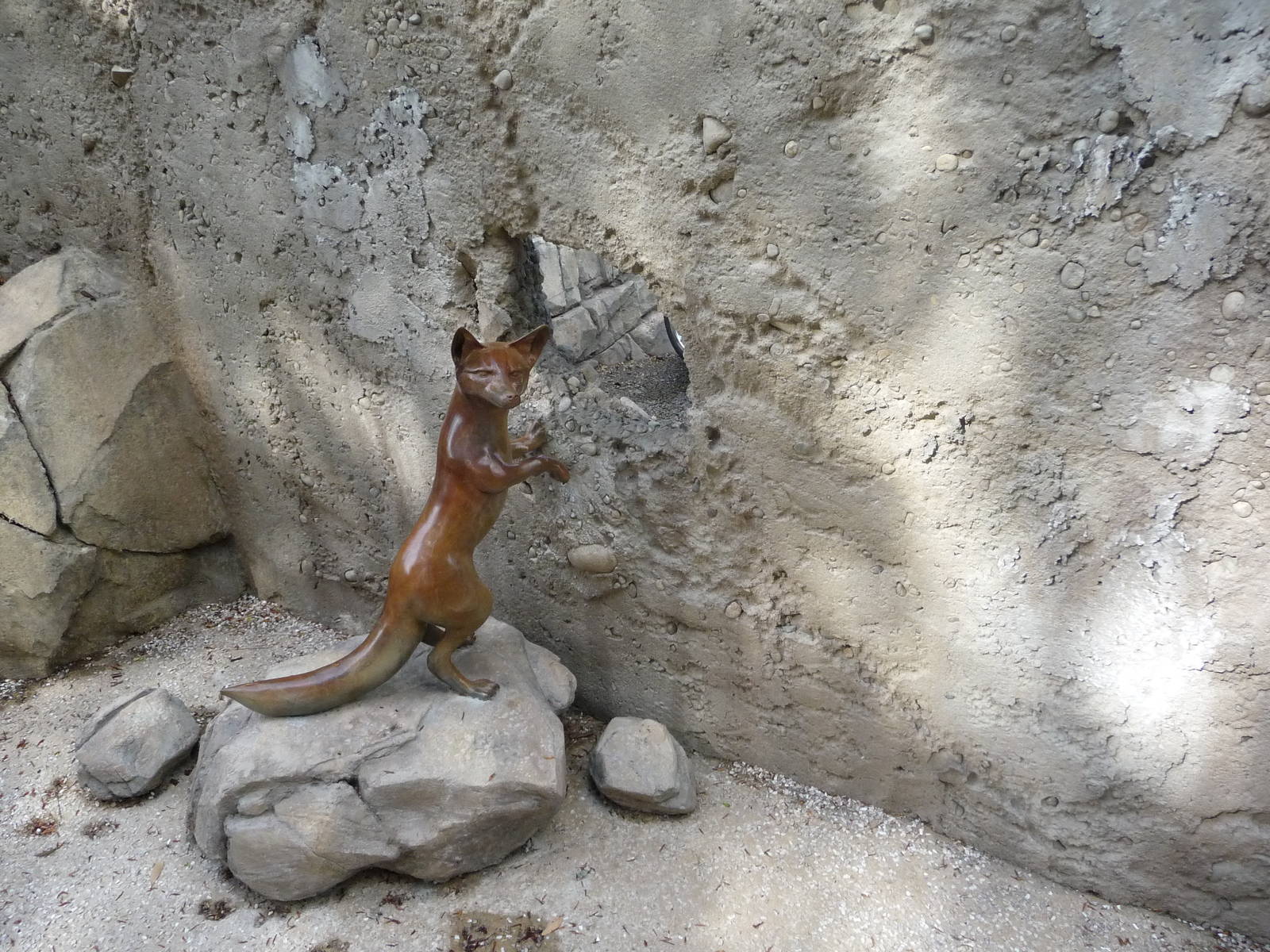
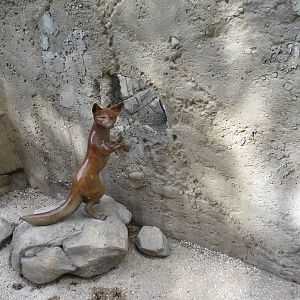
I consider this both an appealing work of art, and a clever obvious reference for zoo visitors that wild foxes will use any given opening to get at the zoo animals inside.
"But the bitter truth we critics must face, is that in the grand scheme of things, the average piece of junk is probably more meaningful than our criticism designating it so."
Ratatouille
Have to say I'm with Sun on this one. This is attractive and light-hearted and there are certainly far more obtrusive statues in zoos around the world.
The little fox statue, which is only about 20 inches high, is a huge hit with kids. They run over and peer through the hole to see what the fox is looking at, and adults probably realize that foxes along the South American coastline are a major threat to Humboldt penguins. Also, the penguin exhibit at the zoo is so large and impressive that a high number of visitors probably don't even notice the fox statue, as it is sort of tucked away at the end of the journey.
I haven't seen the exhibit in person, but I do know that it is a replication of Punto San Juan in Peru, which is a peninsula. A wall was built to barricade off the peninsula to keep the birds apart from the guano mining operation, and probably also to protect the nests from predators. Snowleopard can correct me if I'm wrong, but it looks like the wall in this photo is a replication of the barricade wall, and that fox is a predator wishing to find his way past it to the birds beyond.
I admit that it isn't as clear as it could be, in terms of educating the public about the Peruvian coastline and the real-life wall that has been constructed in one region of that South American nation. The Woodland Park Zoo sent a team down to Peru to study the area, and then diagrams of the protective wall and preserved penguin zone were drawn up. Many of the signs surrounding the Humboldt penguin habitat at the zoo are in both English and Spanish.