. There are only two zoos have Indian rhinoceros (Beijing and Chimelong), only one zoo have black rhinoceros (Chimelong), but the white rhinoceros are common in Chinese zoos.
For the other species you mentioned, in China there may be only 9 gorillas in four zoos (Shanghai, Zhengzhou, Jinan and Taipei), four clouded leopards in three zoos (Chongqing, Huangshan and Taipei), no shoebill, no Sumatran tiger. The orangutan and African elephant are not uncommon in Chinese zoos, but I don't know the exact numbers. Beijing Zoo used to have Indochinese tigers from Cambodia, but now there are not Indochinese tigers in Chinese zoos, however, some so-called south China tigers are identified as Indochinese tigers by molecular method. There are only two zoos have Indian rhinoceros (Beijing and Chimelong), only one zoo have black rhinoceros (Chimelong), but the white rhinoceros are common in Chinese zoos.
Thank you baboon! I taught there are Sumatran tigers in Chinese zoos, and lot of more clouded leopards. Are the Chiniese zoos collaborate with zoos in Japan/other countries for exchange/participation in breeding programmes for the zoo animals (like for gorillas, rhinos?)/
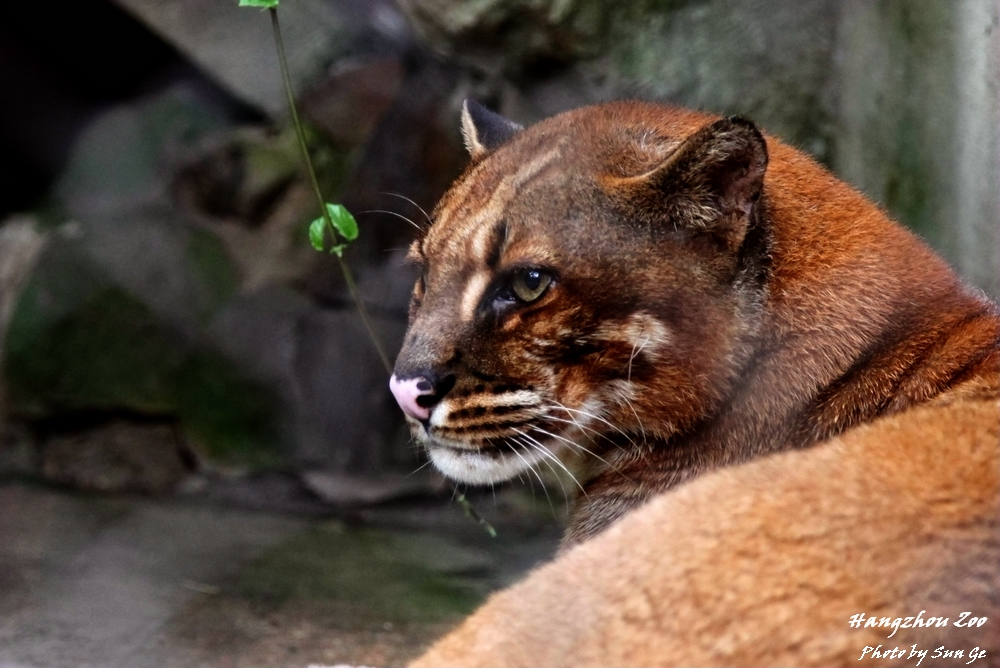
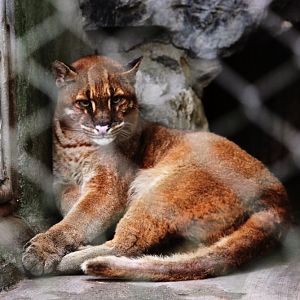
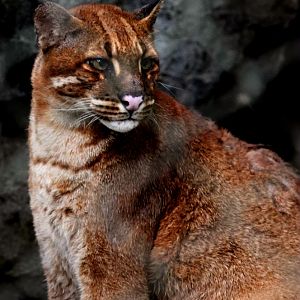
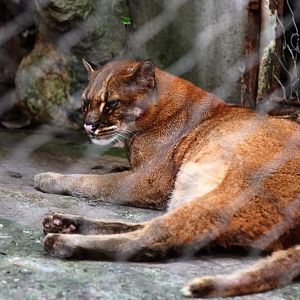
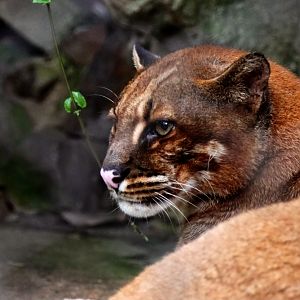
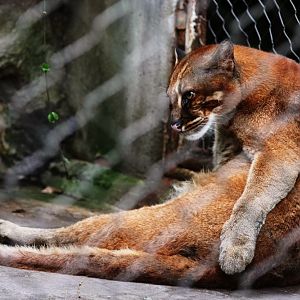
Considering how large the Asian Golden Cat actually *is* I suspect you underestimate the size of their natural prey species - they have been known to kill and eat juvenile water buffalo, various species of goat-antelope and deer in the wild.
Actually I thaught it is a size of caracal, never seen one in person. But it turns out it's bigger (66-105 cm head-body lenght). Thus meat from goat/lamb/pig and small mammals, birds, would be adequate as more-adjusted diet in captivity.
Sorry there are no ocelot-morph golden cats in captivity now, both ones in Beijing Zoo and Lanzhou Zoo died. However the ocelot-morph are quite common among the golden cat populations in central-west China. In fact, almost all the golden cats captured by camera-traps recently in Gansu, SE Qinghai and northern Sichuan belong to this morph.
I've just been looking at the IUCN's page for Asian Golden Cat:
It has not been recorded in Viet Nam since 2005, and extensive surveys carried out in Yunnan, Sichuan, Guangxi and Jiangxi Provinces of China have recorded Asiatic Golden Cat on only three occasions (Wilcox et al. 2014, Beijing Forestry University unpublished data, Chinese State Forestry Administration unpublished data). It is likely to be extirpated from these two countries in the very near future.
No, the golden cats are not so scarce in Sichuan and Yunnan, although they are indeed in quick decline. In some Sichuan reserves such as Tangjiahe, Laohegou and Wanglang, golden cats are not uncommon in camera-trap photos. Several of my friends and classmates conduct camera-trap survey in Sichuan and I know the golden cats are regularly captured by camera-traps. And there are regular reports of golden cats in south Yunnan, although much fewer than Sichuan. And when I was visiting a reserve in Guangxi, the local staff told me that he used to keep a orphan golden cat. Recently I have seen golden cat photos from Gansu (several), Ningxia, Sichuan (a lot), Shannxi.
oh nice, that is excellent news! You should perhaps collate the data and let the IUCN know. Or even author a note in a journal with the data so it is wider received.
oh nice, that is excellent news! You should perhaps collate the data and let the IUCN know. Or even author a note in a journal with the data so it is wider received.
The camera-trap survey in Sichuan is cooperated with Smithsonian, thus I believe IUCN should know the truth easily. I think this text's real meaning is : there is only three golden cat records during the survey carried out by Beijing Forestry University and Chinese State Forestry Administration. This is easily understand, as the survey of Chinese State Forestry Administration was a line transect survey, even if they use camera-traps, the cameras were deployed in the field only for a short time. Meanwhile I would ask my friends to have a look at the IUCN page and see if they like to write something