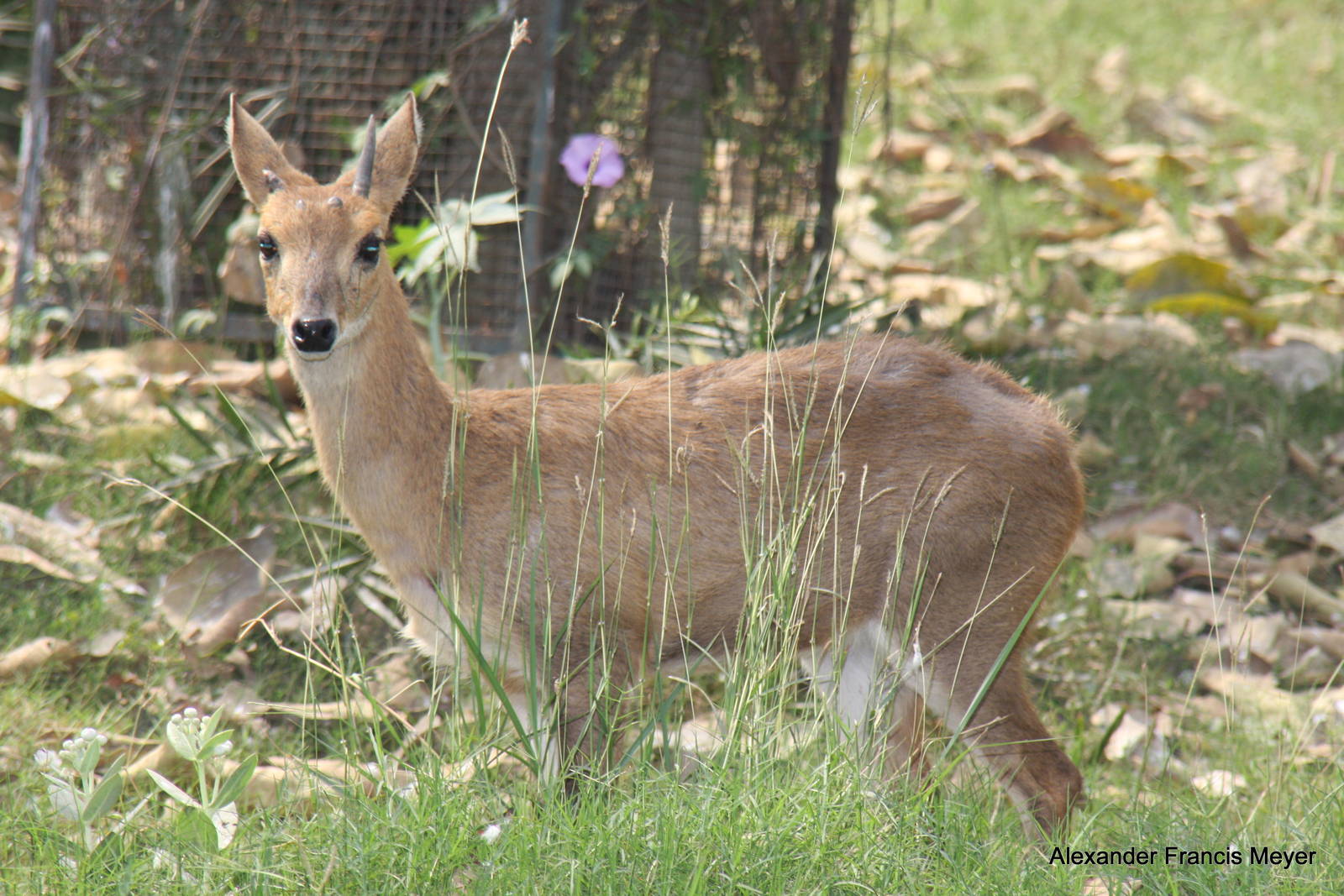
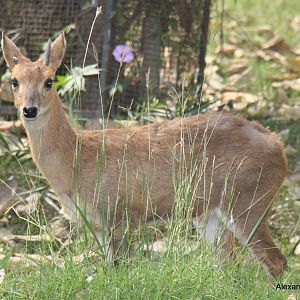
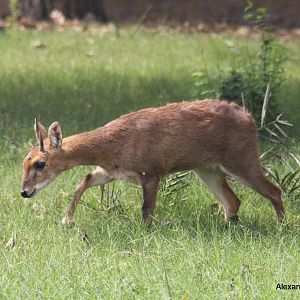
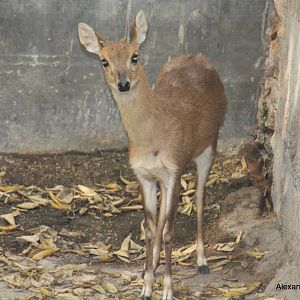
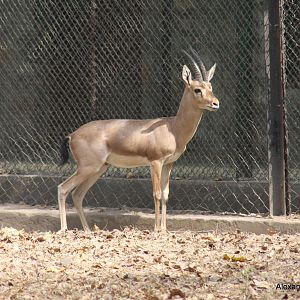
If only one of his two bigger horns wasn't broken. Either way I'm happy you can see the presence of all 4 horns. Probably the animal I was most excited to see in all of India! (besides seeing Tigers in the wild of course...nothing can beat that!)
For what its worth the new Handbook of Mammals of the World claims it should be spelt Chowsingha with the other spelling being an age-old mistake[a similar thing happened with Gavial[should be Gharial].In the recent past Howletts,West Berlin and Paris had the species..perhaps none outside India now.
So the newest edition of Mammals of the World is out? I ordered mine back in June and I don't have it yet. Guess it takes a little longer to get to America..
Does anyone know of any care manuals on this animal. All that I have herd is that they have to be very close to water and are very fragile in captivity.
Does anyone know of any care manuals on this animal. All that I have herd is that they have to be very close to water and are very fragile in captivity.
Hi i look after the ones that were kept at Howlett,s Zoo back in the 80,s, these were kept in paddocks with various group sizes,they were given access to housing which was basic all year round and in winter months the housing was heated, diet wise, they were fed an ungalate ration, plus fruit and veg,along with browse, freshly cut daily. Some more than orthers were nervous,but generlly you could work around them as long as they know you were about. Think am correct in saying Naple,s zoo also kept them.
Look at the thread for the new Handbook Giant Eland and be prepared to have your socks blown off! I didnt know it was Chowsingha either until last week.The ones at Berlin lived to a good age,no-one there ever told me they were tricky or that water was in any way an element of their husbandry.They were kept with Nilgai near the Elephant Gate entrance.London bred the species as long ago as 1882.