Chlidonias

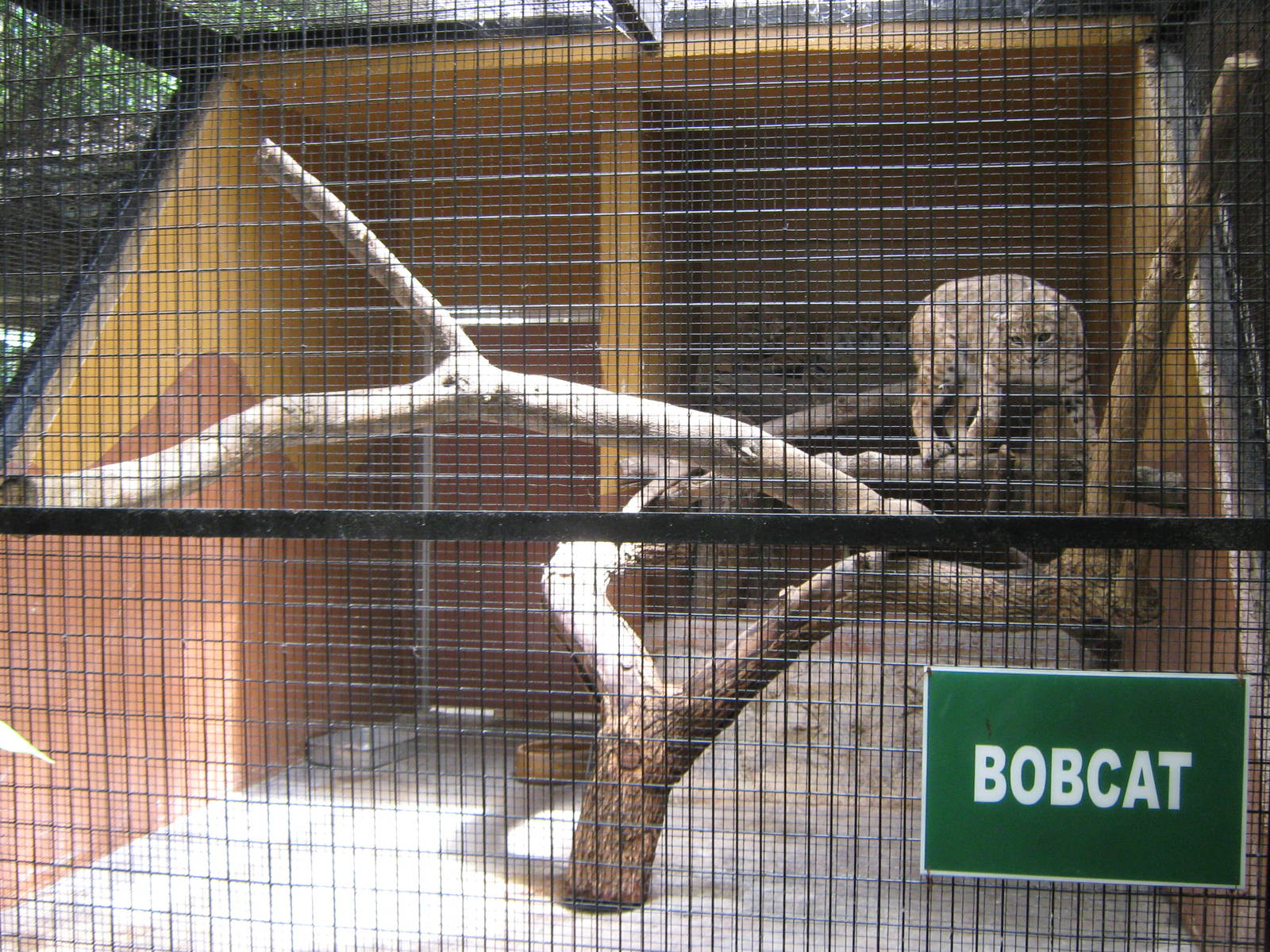
cage for bobcats (Lynx rufus)

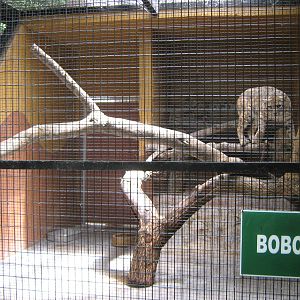
no optical illusions, this cage for the bobcat pair is exactly as small as it appears.

The Small Carnivore House and Small Mammal House (this bobcat cage is in the latter) are appallingly bad and really are a discredit to the Melaka Zoo which otherwise was a pretty good zoo. Each cage in these two houses is identical in size and presentation. The bobcats were the worse off just by virtue of their body size, but no animal of any species deserves to be kept in these conditions.

September 2011
no optical illusions, this cage for the bobcat pair is exactly as small as it appears.

The Small Carnivore House and Small Mammal House (this bobcat cage is in the latter) are appallingly bad and really are a discredit to the Melaka Zoo which otherwise was a pretty good zoo. Each cage in these two houses is identical in size and presentation. The bobcats were the worse off just by virtue of their body size, but no animal of any species deserves to be kept in these conditions.

September 2011
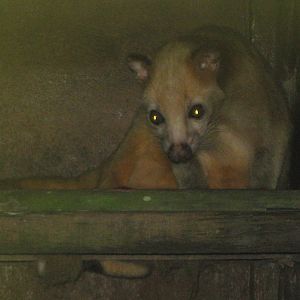
 
there was also a common raccoon (panting ferociously in the heat). Both bobcats and raccoon were pretty surprising to me, especially given that every other animal in the two blocks of cages were local Asian species (apart for an apparently dead domestic ferret).
 
Seems pointless species selection to me. In a country awash with interesting small carnivores why bother with two from North America, any other considerations aside.

That said, that enclosure doesn't look as if anything bigger than Prevost's Squirrel should be kept there.
 
Awful cage.
If they cant do better I wish they would send them to the UK as I'd love to see a bobcat.
 
Precisely, why should San Antonio bother with an African palm civet, when they could easily have a gray fox or raccoon. It's because it's an exotic and unfamiliar animal.
 
this is the account of my visit: http://www.zoochat.com/249/visit-september-2011-a-246355/

and this is the bit about the Small Mammal and Small Carnivore Houses:
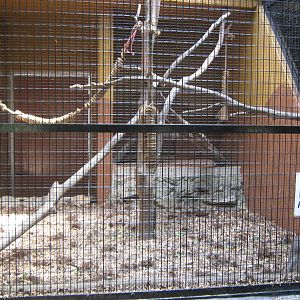
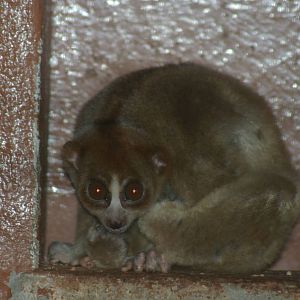
The worst cages by far are those in the Small Mammal and Small Carnivore houses. These two houses are identical, being a rectangular central building for staff access with five outside cages along each long side (so ten cages per house). The cages are small and concrete with a sort of moulded concrete shelf at the back and some branches in the middle. A few had substrate, most were bare concrete. They were fronted with a heavy squarish mesh with quite small holes, behind which were two overlapping layers of even smaller mesh, presumably in order to prevent people pushing their fingers through and getting bitten. The effect for me was like trying to take photographs through a wicker chair!! The Small Mammal house displayed a pair of really angry-looking bobcats, a pair of Asiatic brush-tailed porcupines, a pair of leopard cats, a very sad baby banded leaf monkey, a baby albino crab-eating macaque, a binturong, a masked palm civet, four slow loris, a black giant squirrel (R. bicolor), and a common raccoon that appeared to be suffering a lot in the heat (although it did have water). The Small Carnivore house displayed several masked palm civets, a common palm civet, a Malayan civet, a leopard cat (the cage was empty and the sign said "off-display"), a pair of small-clawed otters, what looked like a very dead domestic ferret, and a flat-headed cat. There's no excuse for cooping up animals in little concrete boxes but really this is typical of how many zoos worldwide keep small mammals. It does really annoy me! The attitude seems to be that because the animal's not very big it doesn't need much room; its even worse if the animal is nocturnal -- say a civet or a porcupine -- because it's asleep all day so gets shoved into an even smaller box than a similarly-sized monkey (for example) would be. There are innumerable examples of this from western zoos in the USA and Europe.
 

Media information

Category
Melaka Zoo
Added by
Chlidonias
Date added
View count
4,742
Comment count
8
Rating
0.00 star(s) 0 ratings

Share this media

Back
Top