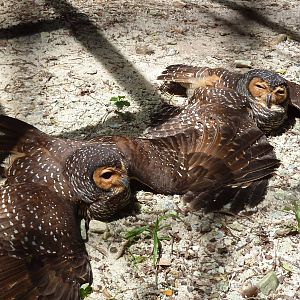
A large enclosure housing two species of porcupine (Malayan and brush-tailed), palm civet, binturong, muntjac and leopard cats. In the distant background is an owl aviary.
Photo taken on the 12th May 2013.
A large enclosure housing two species of porcupine (Malayan and brush-tailed), palm civet, binturong, muntjac and leopard cats. In the distant background is an owl aviary.
Photo taken on the 12th May 2013.
I have never heard of an exhibit with such a diversity of small/medium sized mammals. These sort of mixes, even with just two species (e.g. muntjac + binturong, leopard cat + porcupine) would be extremely rare in any European or American zoo (and completely absent in Australasia), but it seems like a great way to increase diversity in small zoos, and improve the likelihood of visitors spottting an animal in an enclosure.
It was very impressive. There are several specimens of each species too, which is nice. The enclosure itself is large and it's fairly difficult to spot anything by day, but at the start of the night visits, feeding posts in front of these viewing areas are replenished, and most of the animals are visible for a while.
A large enclosure housing two species of porcupine (Malayan and brush-tailed), palm civet, binturong, muntjac and leopard cats. In the distant background is an owl aviary.
Photo taken on the 12th May 2013.
For some reason the words leopard cat and muntjac are sending alarm bells ringing? Surely female muntjacs and their young are vulnerable to the cats? Also, aren't muntjac males known to be aggressive during the rut? Surely they could do harm to any of the other species if annoyed?
(If they don't keep bucks in here then my last two questions are irrelevant! )
For some reason the words leopard cat and muntjac are sending alarm bells ringing? Surely female muntjacs and their young are vulnerable to the cats? Also, aren't muntjac males known to be aggressive during the rut? Surely they could do harm to any of the other species if annoyed?
(If they don't keep bucks in here then my last two questions are irrelevant! )
Presumably they would avoid breeding in this sort of set-up. I guess a young muntjac could be vulnerable to a leopard cat, but I'd imagine the staff would be aware of this and manage it appropriately.
WIth agressive male muntjacs, the other species are either largely arboreal or covered in large spines, so hopefully the muntjac would be unlikely to attack any of them. Again this could be managed sensibly quite easily.