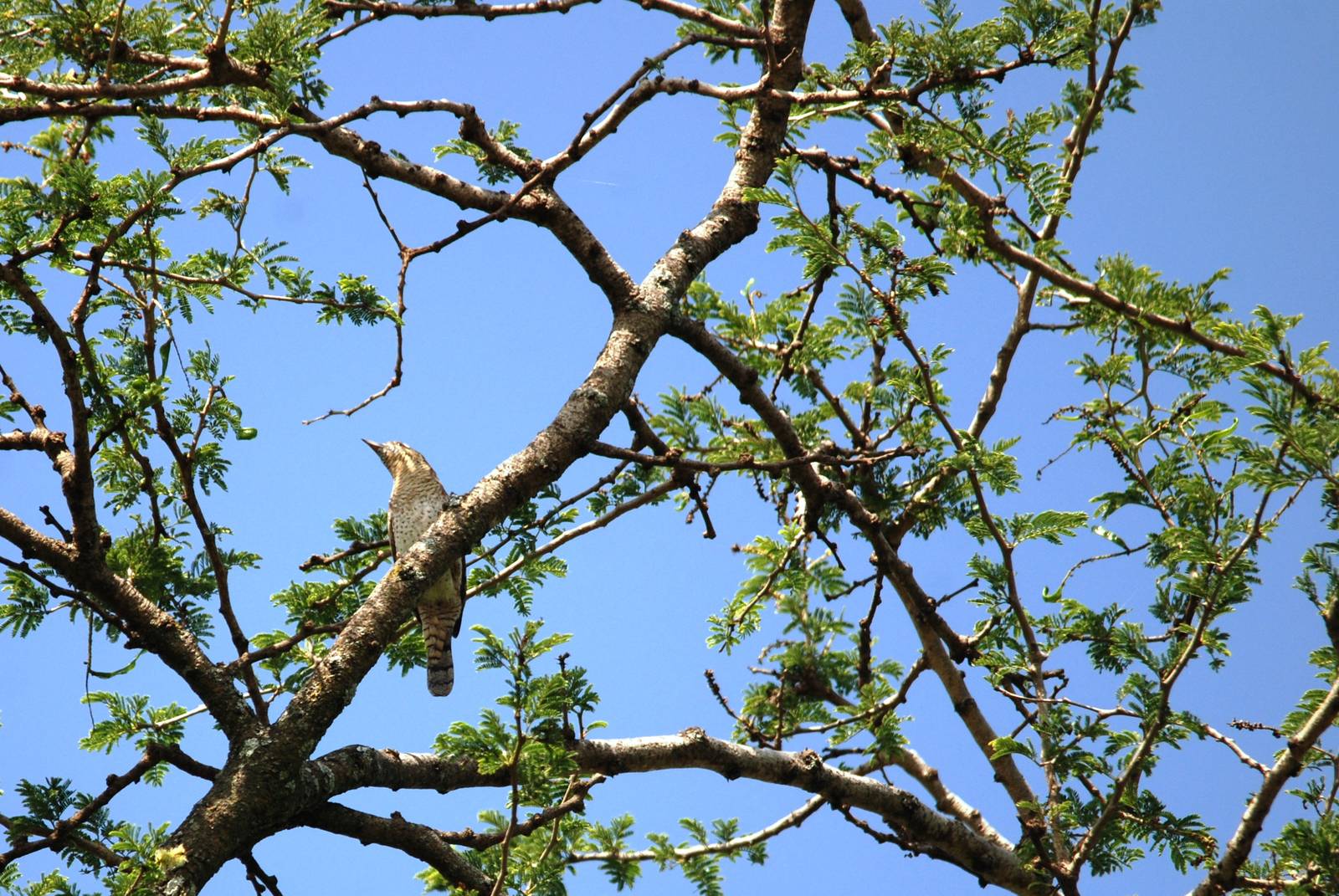
No. And it has always( rather suitably) been my classic 'Jinx' bird too. I have really struggled with this species and only ever seen three in many years of (semi-serious) birding- and only one of those very well. Over the years I must have followed up and searched for a dozen or so others but, like GL's recent one, without seeing them. They can be very difficult to find, even when known to be present. I had another failure this autumn too. At Portland each Autumn they frequently show shots of them 'in the hand' during/after ringing too.
I believe the last English breeders( in Kent?) were in the late 40's/early fifties -and then there was the attempted colonisation of Scotland in the 70's which failed.
I can remember Red Backed Shrike breeding though- as a breeding species they declined similarly but later (1960-70's).
I believe the last English breeders( in Kent?) were in the late 40's/early fifties -and then there was the attempted colonisation of Scotland in the 70's which failed.
Things carried on a bit longer than that; one source I have found online has the following to say on the matter:
Wrynecks used to be common in central and south-east England, breeding north to Durham and Cumbria, and west to Devon and Wales. The population declined to 150-400 pairs in south-east England by 1954-1958, 20-30 pairs in 1966, one pair in 1973 and none in 1974. There were then single breeding records in 1975, 1977, 1978, 1979, 1985, 1986 and 1987, all in south-east England, and probable breeding in Shropshire in 1994. Meanwhile, a few pairs, presumably of Scandinavian origin, colonised northern Scotland and nested annually from 1969, peaking at seven pairs in 1977, then declining with sporadic breeding to 1999, but none since.