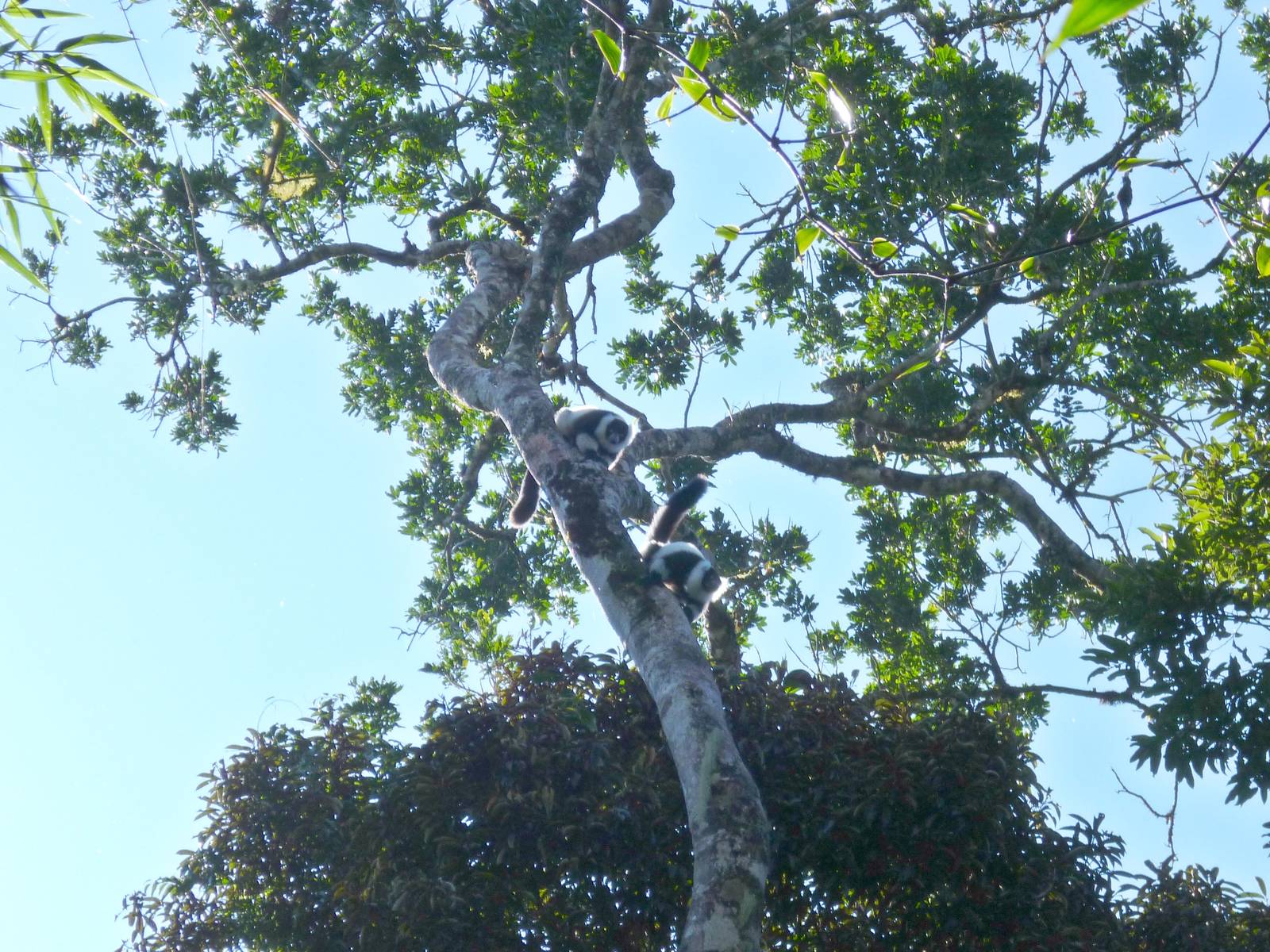
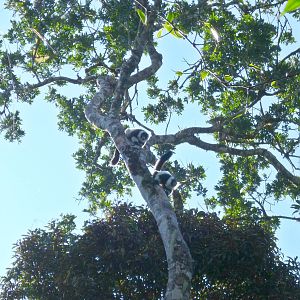
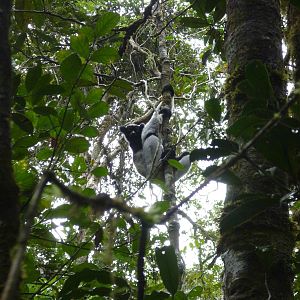
Due to the fact this photograph was taken in Ranomafana National Park, along with features of the pelage, these individuals are certainly both Hill's Ruffed Lemur (Varecia variegata editorum) - this is significant, as the aforementioned taxon is the only Ruffed Lemur to be entirely unrepresented in captivity, despite being critically endangered as is also the case with the other three ruffed lemur taxa.
If, as seems likely, the three "Black and White" ruffed taxa merit full species status, this omission is all the more grave. In this event, Varecia would comprise the following species:
This also means that you are almost certainly one of the few Zoochatters to have seen every taxon within this genus, as I imagine you have seen the other three taxa within UK collections.
On what do you base that these subspecies may be valid species? Both mammals of Madagascar and HMW state that even these subspecies may not be valid because of the huge variation within coat pattern even within populations and the sound also did not seem to differ from personal observation... Furthermore I do not find any support for your claim in scientific literature, also not from research that has done genetic and morphometric comparisons over the whole range:
My primary source for the possibility that these subspecies merit full species status is Lemurs of Madagascar (Mittermeier et al, 2010) - in particular the following passages:
pg.451 said:
Although we believe that there may still be changes in Varecia taxonomy in the future, we for now follow Groves in recognising Varecia variegata and Varecia rubra as full species, and also in recognising the three named subspecies of Varecia variegata: Varecia variegata variegata, Varecia variegata editorum and Varecia variegata subcincta. Some experts believe that all three of the black-and-white subspecies should be elevated to full species, whereas others feel that there is so much variation within populations that no subspecies are truly valid
Individuals with the variegata coat pattern are also found in protected areas further south, well inside the range of V. v. editorum, with which the subspecies may overlap. This needs further investigation, but if there is actual sympatry, these subspecies will require recognition as full species.
I've also seen mention made online that ongoing work suggests that in those areas where subcincta and variegata overlap, they seem not to interbreed - as breeding between Varecia rubra and Varecia variegata subcinctadoes occur in the areas where these taxa overlap, forming an intergrade zone, this is curious.
Talking from personal experience now, from my observation of subcincta and variegata in captive situations they do seem to be rather distinct in appearance from one another and have their own individual "feel" - such that I don't think they are so easily dismissed as "colour morphs" of one another. As a result, as far as this particular debate goes I fall on the side of believing these taxa merit subspecific status at least, but could well merit the full species status suggested by some. My familiarity with editorum is of course limited, so the above personal judgement refers only to subcincta and variegata.
They say exactly the same in HMW, but well it are the same authors... But then in the next sentence they say that there may be too much variation to even recognize subspecies...
That said subcincta is indeed a good recognizable subspecies, at least in zoos, I have not idea how they look like in the wild. But between editorum and variegata I do personally not see to many differences, but I am not too familiar with editorum, and considering subspecies is fine by me. The funny thing is that ruffed lemurs tend to get darker the farther north you go, but with indri the same trend is visible, allthough the variation in indri is even larger in terms of coat pattern.