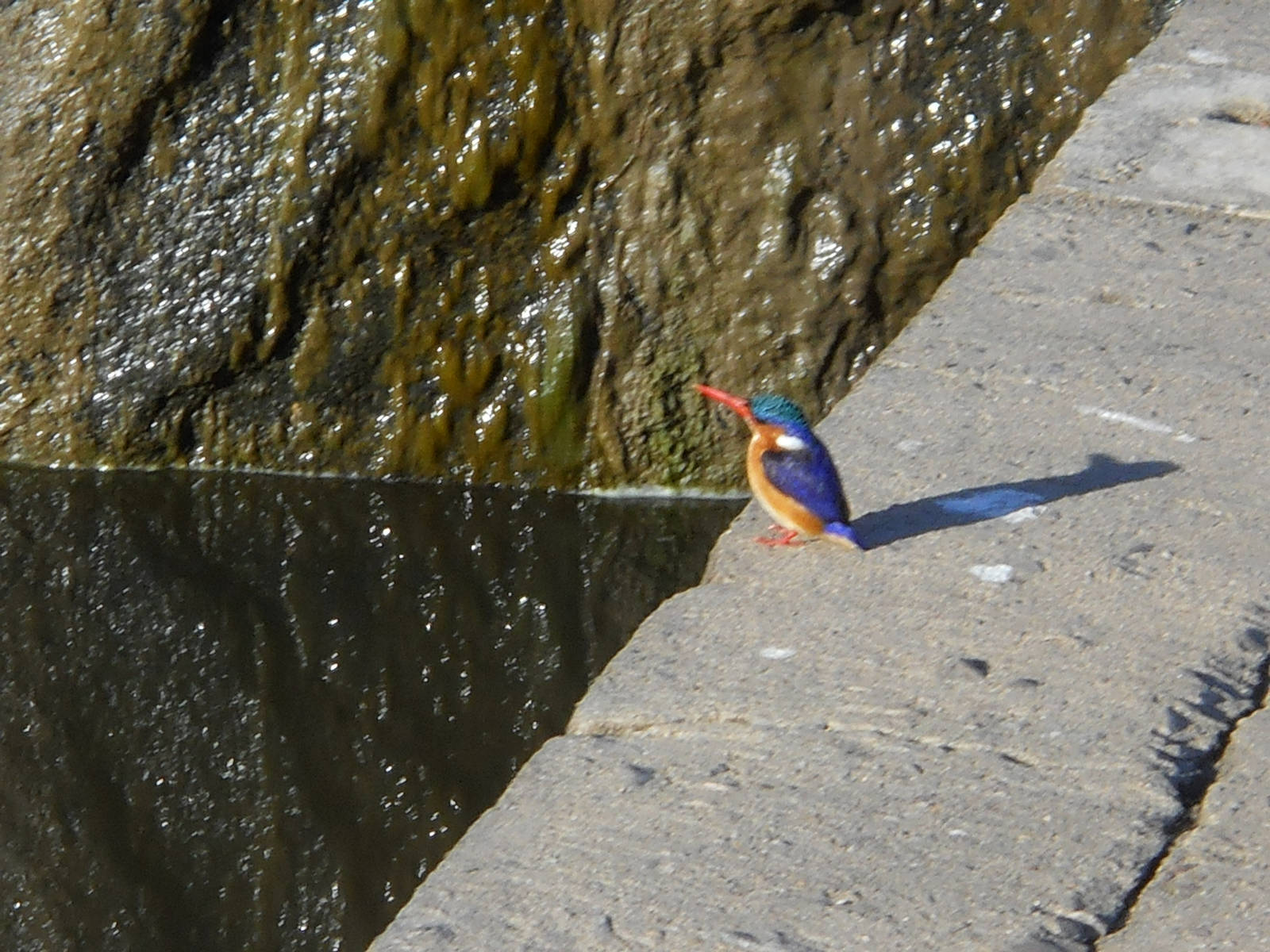
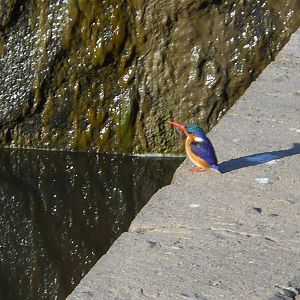
It´s rarely kept in captivity and quite difficult to keep. Unlike the Pygmy kingfisher, with which it has much sillimatary, it feeds mainly on fish.At Walsrode we had both species and the Pygmy´s learned quite fast to accept crickets, mealwurms and stripes of meat. The Malachite only accepted fish which had to be offered in a pool but even so stay quite stressfull and past away one by one.
The Pygmy´s did much better and we even bred them succesfully. It was also bred at Frankfurt Zoo and at the Boehm-collection in the USA and probably other collections as well.
It´s rarely kept in captivity and quite difficult to keep. Unlike the Pygmy kingfisher, with which it has much sillimatary, it feeds mainly on fish.At Walsrode we had both species and the Pygmy´s learned quite fast to accept crickets, mealwurms and stripes of meat. The Malachite only accepted fish which had to be offered in a pool but even so stay quite stressfull and past away one by one.
Most African kingfisher species are like the pygmy kingfisher, they catch prey living on the ground. Only a few are fish eaters, I can only think of the pied and giant kingfishers apart from the malachite. This species reminded me of the European kingfisher, which is a little larger and greener in colour, actually much closer to the colour of malachite. The person who named the species must have colour blind.