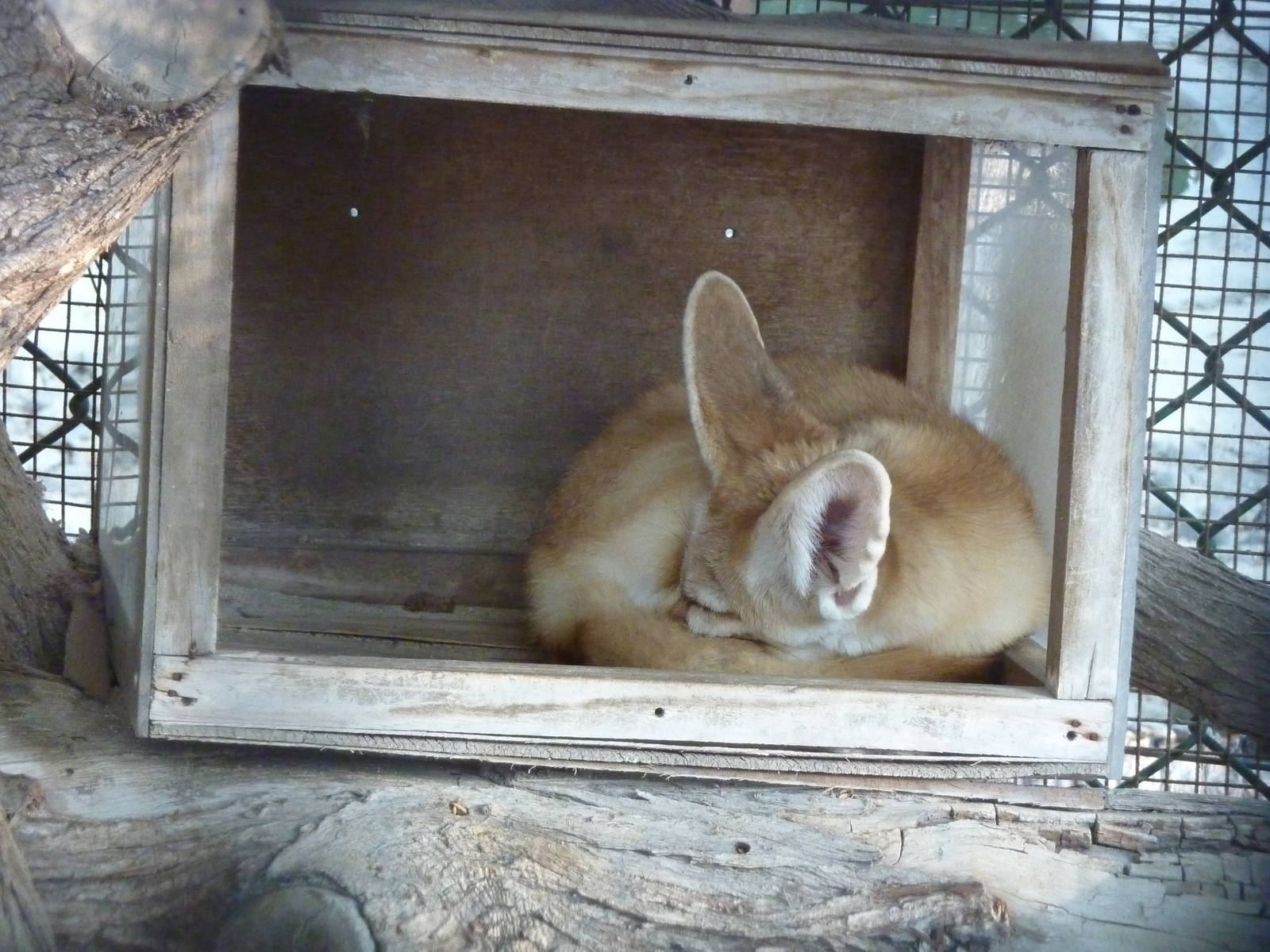
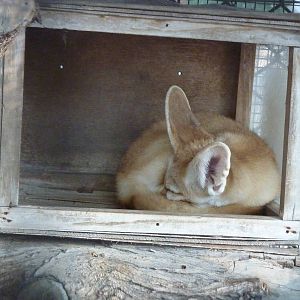
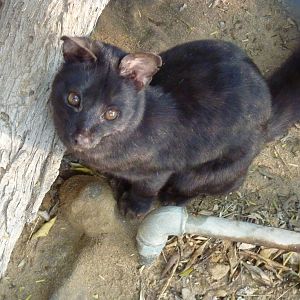
I got that impression too, but I remember thinking it was quite big. Are there any physical features which sway you, or which completely rule out the potential for it to be a Ruppell's?
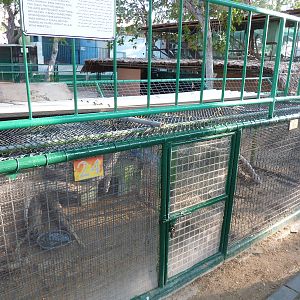
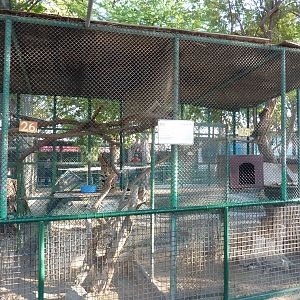
I ought to clarify that it is labelled as a Ruppell's, and as you're probably aware, Dubai falls quite far outside the natural range of the Fennec (but that doesn't mean much, considering this is a captive specimen in a zoo with a lot of African wildlife).
I ought to clarify that it is labelled as a Ruppell's, and as you're probably aware, Dubai falls quite far outside the natural range of the Fennec (but that doesn't mean much, considering this is a captive specimen in a zoo with a lot of African wildlife).
It wasn't significantly bigger - I could have believed it was a large Fennec. However, given that there are photos of even lighter-coloured Ruppell's (e.g. ZootierlisteHomepage and one on this page credited to Dubai Zoo: Protected Areas - there's also a lightly-coloured specimen in the 'Arabian Wildlife Encyclopedia' [2010; ISBN 1905486669] ) and given that apparently some Gulf specimens are easily confused (IUCN redlist geographic listing for the fennec fox: Vulpes zerda (Fennec Fox)), I think I'll give Dubai Zoo the benefit of the doubt until I find a better picture of the same animal, or someone points out defining features.
It wasn't significantly bigger - I could have believed it was a large Fennec. However, given that there are photos of even lighter-coloured Ruppell's (e.g. ZootierlisteHomepage and one on this page credited to Dubai Zoo: Protected Areas - there's also a lightly-coloured specimen in the 'Arabian Wildlife Encyclopedia' [2010; ISBN 1905486669] ) and given that apparently some Gulf specimens are easily confused (IUCN redlist geographic listing for the fennec fox: Vulpes zerda (Fennec Fox)), I think I'll give Dubai Zoo the benefit of the doubt until I find a better picture of the same animal, or someone points out defining features.