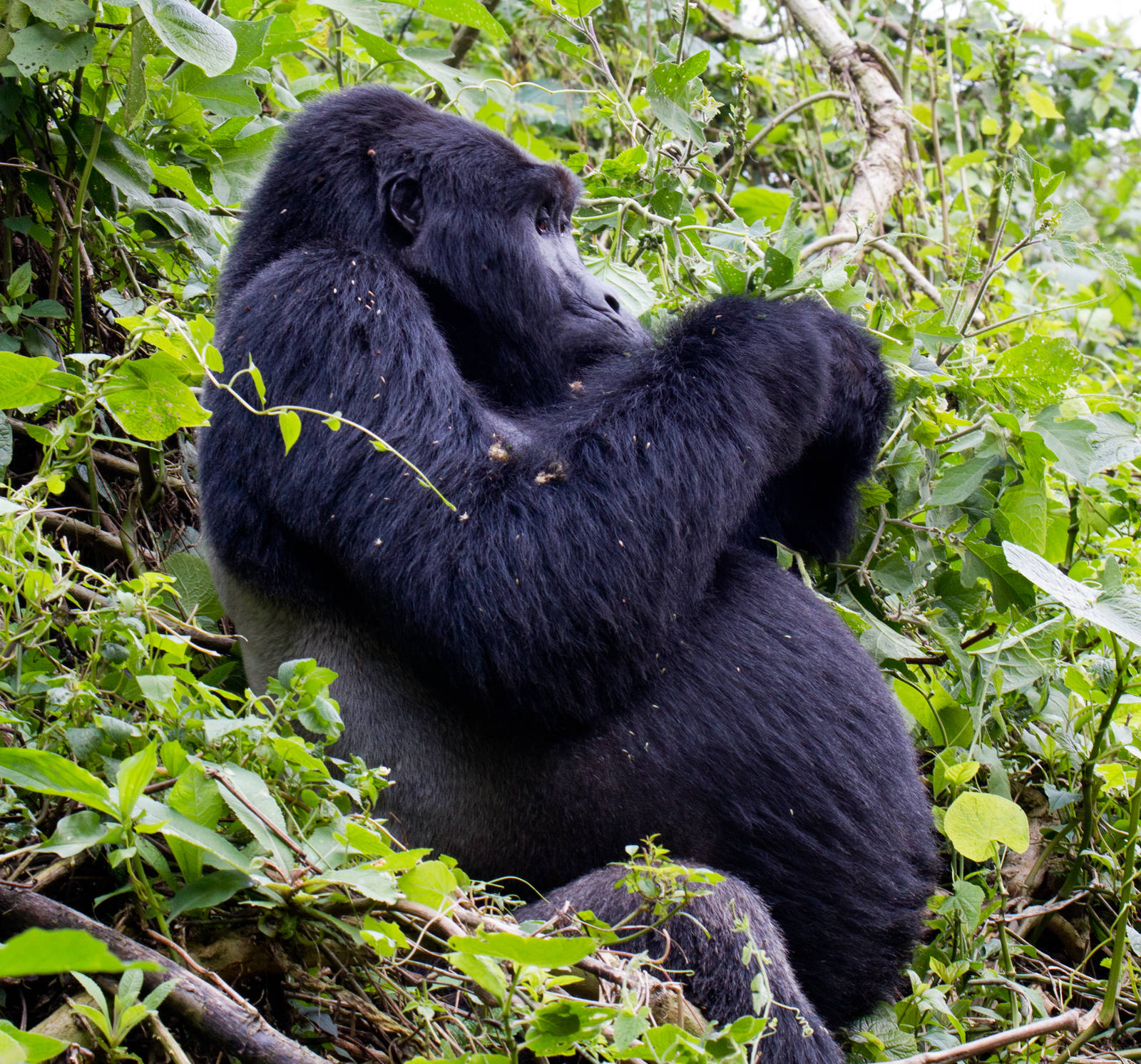
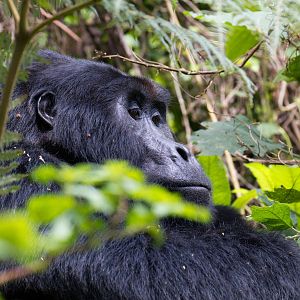
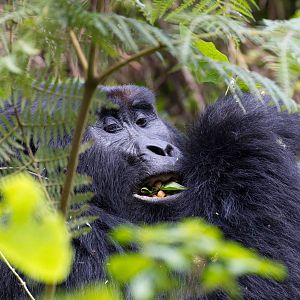
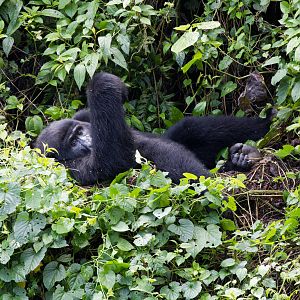
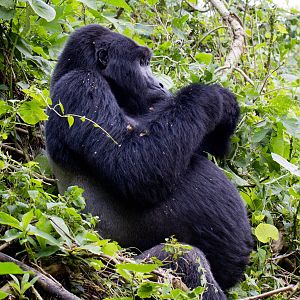
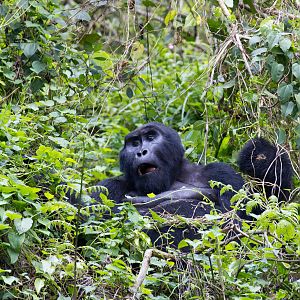
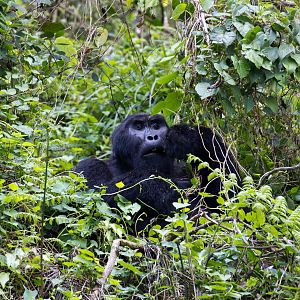
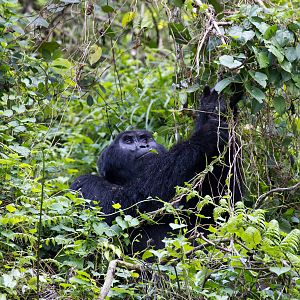
These Bwindi Gorillas interest me a lot. Until quite recently you never saw any photos of them, only the Virunga ones. Taxonomists still don't seem sure where to place them- as true 'Beringei' or as something else. I think they are normally accepted as part of the 'true' Mountain Gorilla population- and as such they comprise about half. They don't seem quite so shaggy somehow- perhaps because of the lower elevations they occur at?
It seems from what you said earlier, that like the Virunga gorillas, they are also a completely isolated population?
Yes they are completely isolated from the others, surrounded by farmland, but I don't know how long it has been that way. Presumably for quite some time. Of course, they might have been isolated historically by other factors as well, such as habitat. It's hard to find good reliable information over there.
I noticed in the Primates issue of HMW that the Bwindi population were illustrated separately, and appeared to be different. If they do split them off to a new species, I'll probably have to do Rwanda at some point in the future, I guess!
its been suggested they are an intermediate form between 'Graueri' and 'Beringei' and exhibit characteristics from both, though to me they resemble more the latter. I don't really trust the taxonomists too much....
Most wild Mountain Gorillas seems to have these big rounded bellies- the full adults(both sexes) at least. I think it must be dietary but I don't know the exact cause. Film/photos of wild lowland Gorillas I've seen they seem rather less so.
The Prague Silverback 'Richard' is a particularly slim/trim male and they do get bulkier with age too- e.g. ex Taronga 'Kibabu'.
My guess is that a wild gorilla is very bloated from eating very large quantities of vegetation with low nutritional value. Zoo gorillas eat a lot of vegetables and fruit that have much more calories, which means zoo gorillas eat a lot less, and they eat things that are easier to digest and cause less gass = smaller belly.