You seem to have labelled the subspecies for all of the mammals, what is your source for finding out what subspecies is where? (assuming you do it geographically). Particularly for some such as subspecies of African Leopard where it is not the generally accepted subspecies.
It's easy for birds, but I often struggle with mammals.
(I am enjoying all these great pictures by the way )
Yes, mostly geographic and mostly based on HMW's listings (although, in species terms, most mammals are in HMW volumes yet to come, in terms of ones you actually see and photograph most are in the already-released volumes). I tend to list both if there's a recently disputed lump/split (like with African Lions and Leopards, and with Damara/Burchell's Zebra).
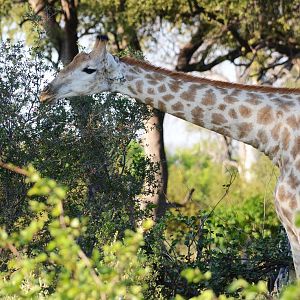
There are some cases where the animals are a bit close to the subspecies boundary to be sure (unless there are physical differences), but it's usually pretty sound. In some cases, like the giraffe and zebra, I double-checked in the journal literature (the giraffes here used to be assumed to be Angolan until they were actually checked via DNA!).
Yes, mostly geographic and mostly based on HMW's listings (although, in species terms, most mammals are in HMW volumes yet to come, in terms of ones you actually see and photograph most are in the already-released volumes). I tend to list both if there's a recently disputed lump/split (like with African Lions and Leopards, and with Damara/Burchell's Zebra).
There are some cases where the animals are a bit close to the subspecies boundary to be sure (unless there are physical differences), but it's usually pretty sound. In some cases, like the giraffe and zebra, I double-checked in the journal literature (the giraffes here used to be assumed to be Angolan until they were actually checked via DNA!).
I mean where do you find out what the subspecies boundary is?
I know there are some places that list the subspecies that there are (mammal species of the world, for example) but it's often difficult to find the distribution of each subspecies.
I mean where do you find out what the subspecies boundary is?
I know there are some places that list the subspecies that there are (mammal species of the world, for example) but it's often difficult to find the distribution of each subspecies.
HMW gives descriptions of the ranges of the overwhelming majority of the subspecies it lists. There's also field guides, including a book called 'Okavango: Field Guide' that was quite useful (also with butterfly IDs!). Most of the time quite broad descriptions are enough to be sure - countries or regions thereof are usually sufficient and if not, it's always worth a google to see if there is a paper on the subject.
It very much depends on the locality - mammal subspecies were a fair bit more complicated in Ethiopia than in Botswana, where there is only one realistic option for most of the species.
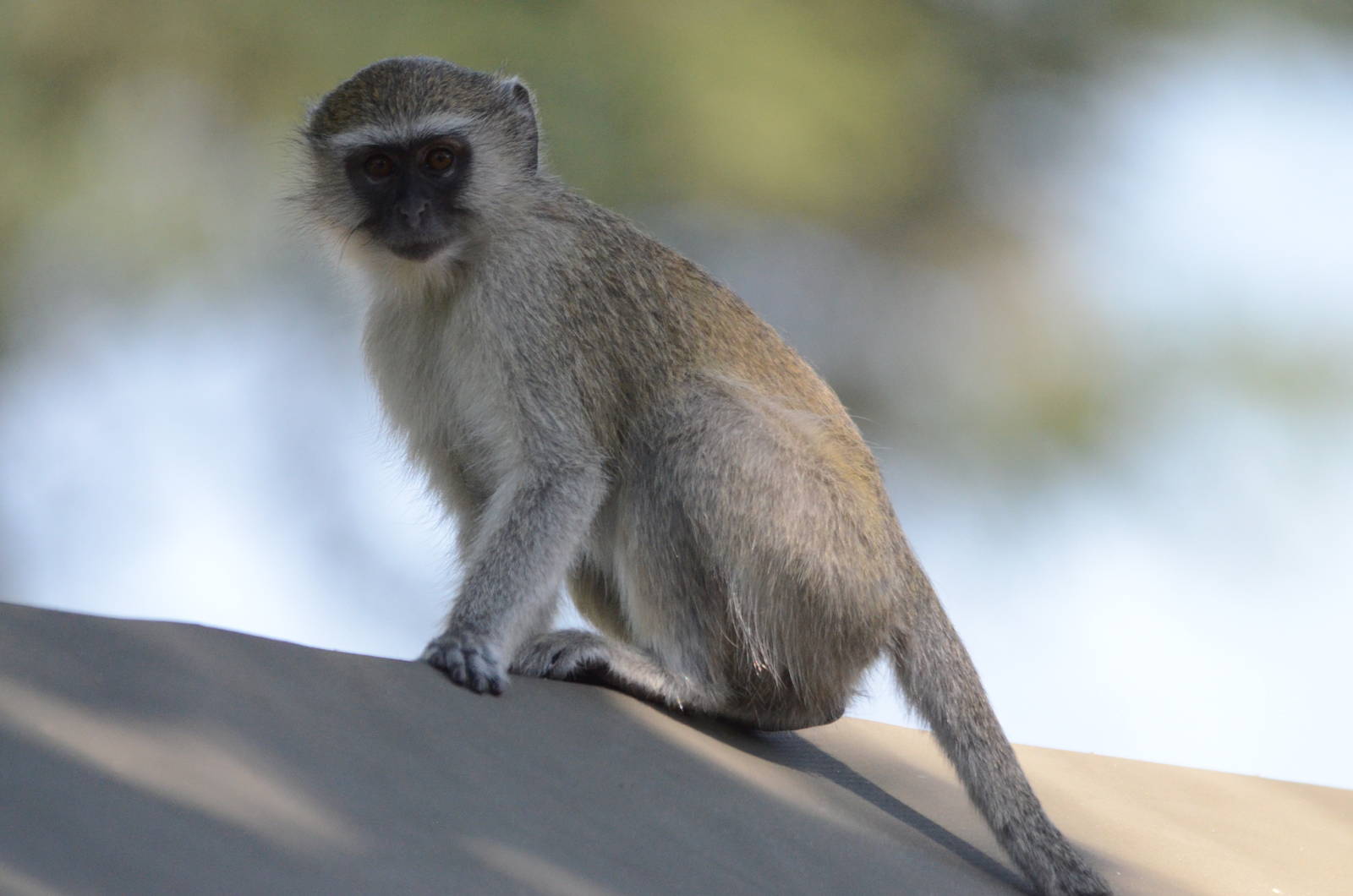
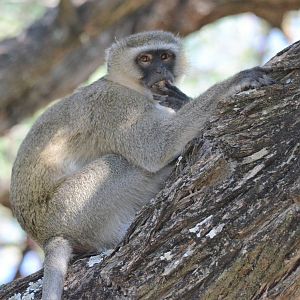
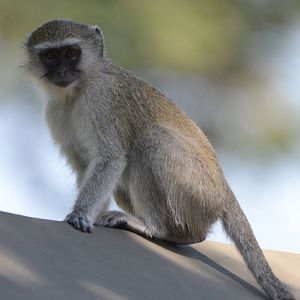
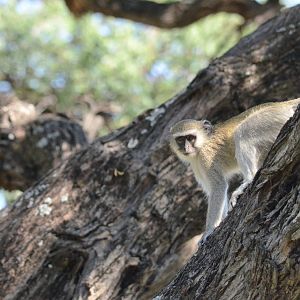
In the case of Chlorocebus - there are two species in northern Botswana - Vervet and Malbrouck. Malbrouck has a pale face, Vervet has a dark face - so we're looking at Vervet. Within Vervet Monkey, the only subspecies to occur in Botswana is the nominate - whose range is given as "Botswana, Zimbabwe, S. Mozambique, Namibia, South Africa (KwaZulu-Natal and Transvaal provinces), Swaziland and Lesotho, south of the Zambezi River". The other subspecies listed are excubitor (NE Kenya), hilgerti (S Ethiopia, SW Somalia, E Uganda, Kenya and N Tanzania), nesiotes (E Tanzania) and rufoviridis (SW Uganda, Rwanda, Burundi, W Tanzania, Malawi, N Mozambique and E Zambia).
So in Botswana, it's C. p. pygerythrus without any reasonable doubt - the nearest population of another subspecies is the other side of the Zambezi. But if you were in, say, central Tanzania, it'd be much harder to say, and would need more research.
HMW gives descriptions of the ranges of the overwhelming majority of the subspecies it lists. There's also field guides, including a book called 'Okavango: Field Guide' that was quite useful (also with butterfly IDs!). Most of the time quite broad descriptions are enough to be sure - countries or regions thereof are usually sufficient and if not, it's always worth a google to see if there is a paper on the subject.
It very much depends on the locality - mammal subspecies were a fair bit more complicated in Ethiopia than in Botswana, where there is only one realistic option for most of the species.
In the case of Chlorocebus - there are two species in northern Botswana - Vervet and Malbrouck. Malbrouck has a pale face, Vervet has a dark face - so we're looking at Vervet. Within Vervet Monkey, the only subspecies to occur in Botswana is the nominate - whose range is given as "Botswana, Zimbabwe, S. Mozambique, Namibia, South Africa (KwaZulu-Natal and Transvaal provinces), Swaziland and Lesotho, south of the Zambezi River". The other subspecies listed are excubitor (NE Kenya), hilgerti (S Ethiopia, SW Somalia, E Uganda, Kenya and N Tanzania), nesiotes (E Tanzania) and rufoviridis (SW Uganda, Rwanda, Burundi, W Tanzania, Malawi, N Mozambique and E Zambia).
So in Botswana, it's C. p. pygerythrus without any reasonable doubt - the nearest population of another subspecies is the other side of the Zambezi. But if you were in, say, central Tanzania, it'd be much harder to say, and would need more research.
That's great, thanks.
I had been struggling with a few subspecies of African mammals until I got The Kingdon Field Guide to African Mammals which has distribution maps for most subspecies. Though I've been struggling to find out the distribution of the subspecies for things such as Red Squirrels when split to more than 17 subspecies.
That's great, thanks.
I had been struggling with a few subspecies of African mammals until I got The Kingdon Field Guide to African Mammals which has distribution maps for most subspecies. Though I've been struggling to find out the distribution of the subspecies for things such as Red Squirrels when split to more than 17 subspecies.
for that one specifically, try Squirrels of the World by Thorington et al (which has 22 subspecies, by the way). It has the distributions and colourations of the different subspecies, which might make things easier. The red squirrel subspecies are on pages 74-5 and I just found them available on Google book results (the viewable pages vary according to country, so hopefully you'll get them too). It's a cool book, so worth buying.
My mammal lists have loads of "unknown subspecies" because it is often really difficult or even impossible to work out precise geographical limits from the published material, especially with the amounts of opposite opinions on validity in the field.
Do you have the article for that one, I saw quite some giraffe in southern Zambia and northern Botswana and noted them as Angolan, but they could thus very well be Cape giraffe...
Do you have the article for that one, I saw quite some giraffe in southern Zambia and northern Botswana and noted them as Angolan, but they could thus very well be Cape giraffe...
I do - PM me your email address and I'll send it over (unfortunately it's no longer on the website I got it from as the site has been reconfigured and the page about the (now-complete) project is no longer there).
It was a big continent-wide study - I remember noting that Chester Zoo were credited with part-funding it.