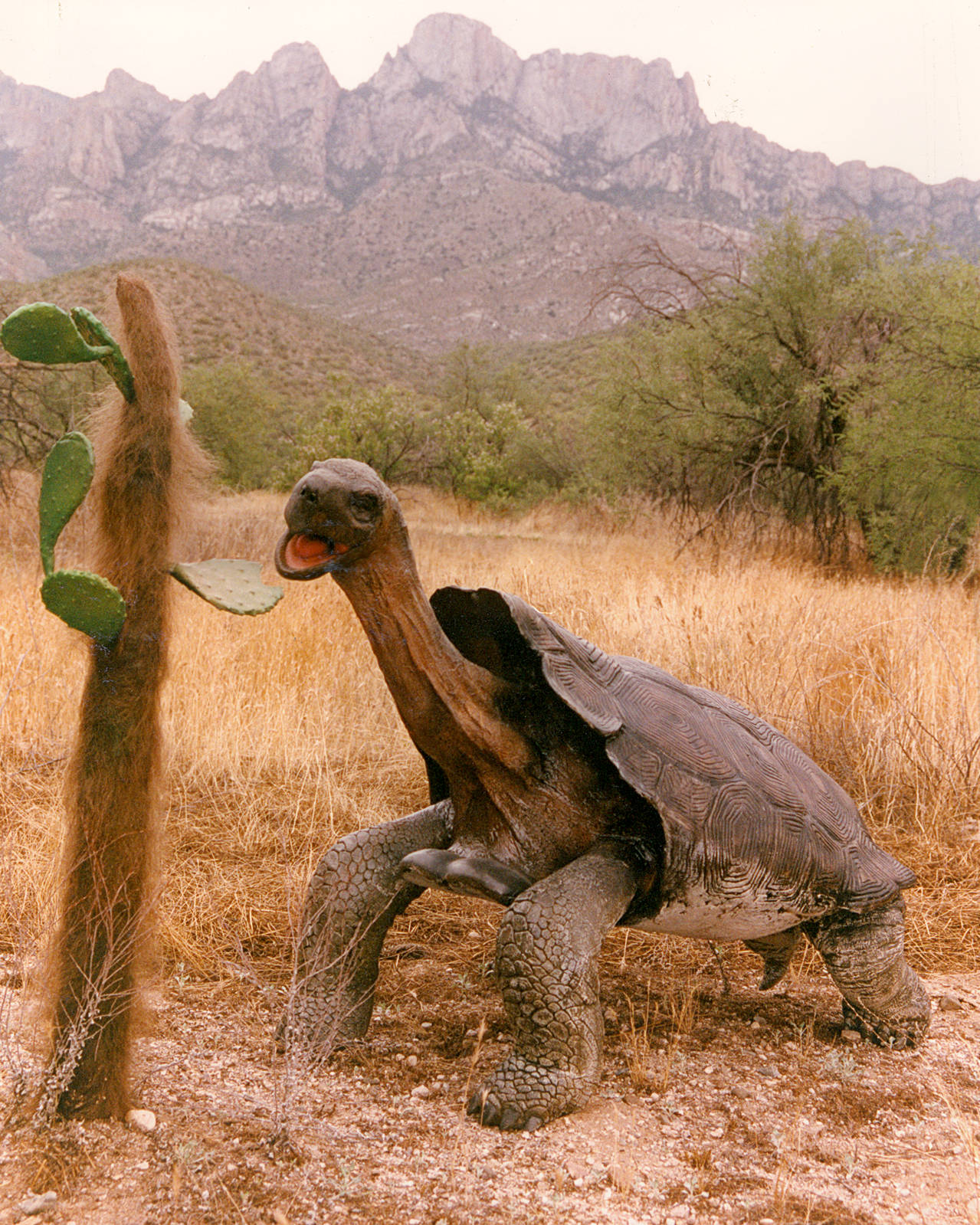
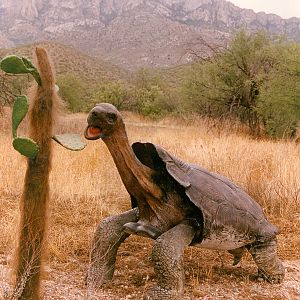
Thanks for your comments. I was working from photo references. Did not have an actual specimen in my presence to examine some of the anatomical detail. As with all art, we grow as artists by taking on challenges, and we learn as much from where we succeed as where we may fall short of perfection.
It's mostly made with sculpting epoxy over a white styrofoam sculpted inner shape. There's a medal armiture also embedded, to support it standing and allow it to be bolted to a special landscaped base (not shown).
You can see the details of construction at: 2402 Tortoise
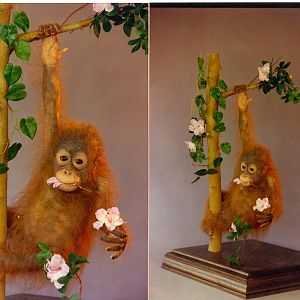
That was the goal, actually, to create a work of art that can be mistaken for a real live animal, but a weird thing happened when they were shown in some art galleries. People assumed they were real taxidermy, and got quite emotional, especially with the primates like the baby Orang. They wondered "who in God's name would shoot a baby orangutan?" (flawed assumption that all taxidermy animals were hunted, when some are bodies taken from natural mortalities at zoos and private collections). But this reaction caused many people to be initially disgusted with what they saw, when they assumed the figures were real deceased specimens taxidermied the traditional way.
Then there were the hunters who like real taxidermy, and think synthetic taxidermy is "second class". They'd rather shoot the real thing and stuff it.
Between those two perceptions, the art form never really gained popularity as a widespread form of wildlife art.