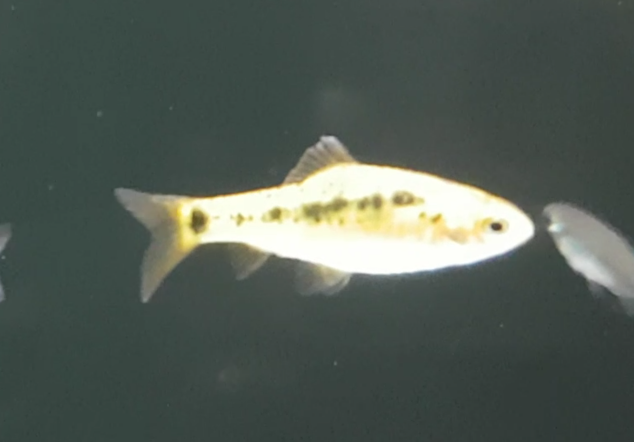
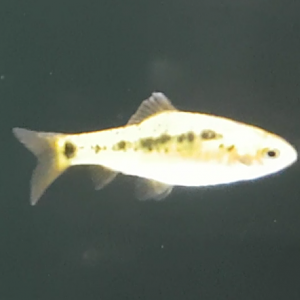
I think there has been some doubt whether this 'schuberti' form is actually a variety of B. semifasciolatus, as has been said for many years, or of another species. It could be sorted by DNA analysis - but I don't know if anyone has bothered to do this.
@gentle lemur Now that is interesting, as I thought the strain was first developed in the 1960s- is the suggestion that the barbs the gold strain is descended from are a different species to the 'green' semifasciolatus infrequently still seen for sale?
@Swampy I kept these fish in the '60s. I would sum them up as colourful but not characterful. I don't recall ever seeing the wild-type semifasciolatus in the aquarium trade, but they may be the sort of fish that isn't memorable when you see a shoal of juveniles in a dealer's tank. My old copy of Gunther Sterba's Freshwater Fishes of the World (the original German edition was published in 1962) mentions that it might be a hybrid and suggests Barbus sachsi as a possible wild type. The photo on the Fishbase page for Puntius sachsii looks rather like 'schuberti'. The semifasciolatus hypothesis may be well true, but I don't know of any proof.
Fair enough; I've read in various sources that the variety was developed in the '60s, I assumed this was documented and not just one of several possible hypotheses. I have seen wild type semifasciolatus only once, in a hobbyist's tank; they were quite pretty, with greenish sides and orange bellies. The name P.sachsii also seems to be rather dubious, with some considering it a synonym of semifasciolatus
amazing how such a common aquarium fish can have unresolved taxonomy- especially in this day and age when, as you say, it could easily be sorted by DNA analysis.
I also kept Schuberti barbs back in the 1960s when I was a small child.
I have a copy of Exotic Aquarium Fishes by William Innes (the person after whom the neon tetra was named).
The section on Barbus semifasciolatus in this book states "Mr. Thomas Schubert, of Camden, New Jersey, has developed a handsome golden strain of this species which breeds true".
My copy of this book is the 1955 edition so, whatever the exact origin of this form, this colour variety was certainly developed before the 1960s.