Pat, I did an 8-month internship in Cairns in 2007. I spent a week in Sydney in September, went down to the Brisbane area in December (Sea World Gold Coast and Australia Zoo) and in January, just before I left Australia, I went down to Victoria to see the ZoosVictoria trio (Melbourne, Healesville, Werribee), Melbourne Aquarium, and lastly Adelaide Zoo. Saw Adelaide Zoo two years before the panda circus arrived in town and loved it; small, cosy, respect for its history, splendid animal collection for such a small zoo, some housed very well while others so not; I fear it has lost the cosy athomsphere after the black and white things arrived, but still plan to see it if I find myself in Adelaide again. I only regret not being able to travel more outside the major cities, as I missed most of the countryside parks (didn't have a car) and didn't get to see the Perth or Canberra zoos.
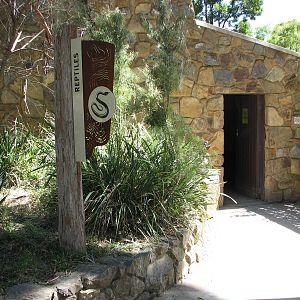
Healesville Sanctuary is lovely; in retrospect at least I don't regret the time and trouble it took to get there by public transit. Very simple enclosures (those on this forum who are obsessed with Disney's Animal Kingdom should stay away but that seems more of a rule than an exception in Australia's regional zoos, in my experience at least. The snake show and reptile house was disappointing, but everything else was all right as far as I remember.
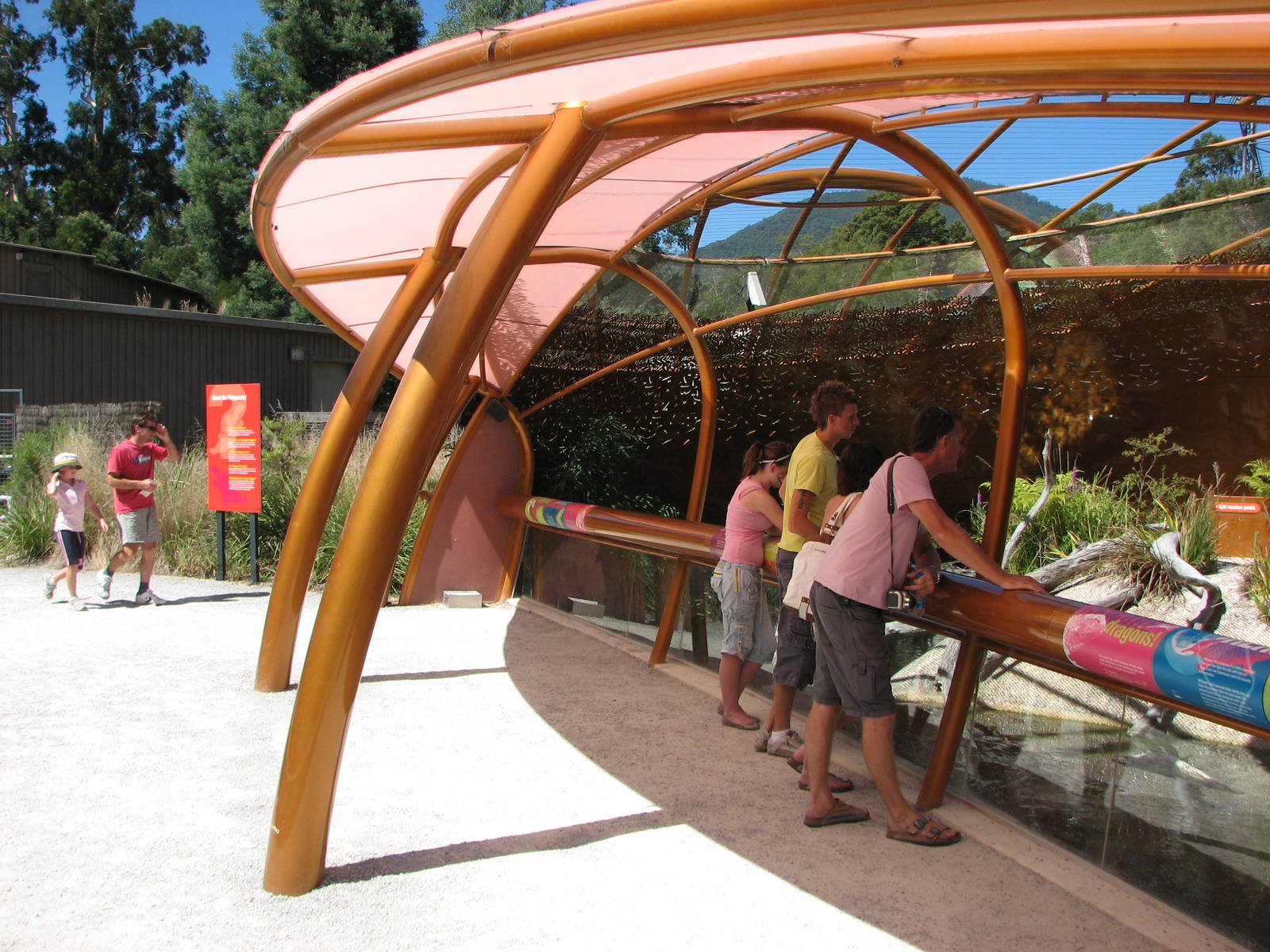
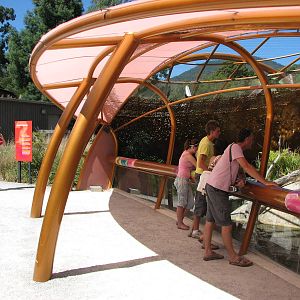
As to this Platypus exhibit; apart from that it looks like a space station, it seemed all right, even if I didn't see a Platypus there, I saw it inside instead (my favourite Platypus exhibit continues to be that at Sydney Aquarium; the one in Melbourne Zoo, with all due respect, disappointed me). I wasn't sure what you meant by 'debated' so I took a look at another photo with some discussion about it. People seem convinced that it is good for the animals, and I don't doubt that, but honestly it looks absurd. But I think I can look past it as long as it brings some breeding results (and it has, right?)
Pat, I did an 8-month internship in Cairns in 2007. I spent a week in Sydney in September, went down to the Brisbane area in December (Sea World Gold Coast and Australia Zoo) and in January, just before I left Australia, I went down to Victoria to see the ZoosVictoria trio (Melbourne, Healesville, Werribee), Melbourne Aquarium, and lastly Adelaide Zoo. Saw Adelaide Zoo two years before the panda circus arrived in town and loved it; small, cosy, respect for its history, splendid animal collection for such a small zoo, some housed very well while others so not; I fear it has lost the cosy athomsphere after the black and white things arrived, but still plan to see it if I find myself in Adelaide again. I only regret not being able to travel more outside the major cities, as I missed most of the countryside parks (didn't have a car) and didn't get to see the Perth or Canberra zoos.
Healesville Sanctuary is lovely; in retrospect at least I don't regret the time and trouble it took to get there by public transit. Very simple enclosures (those on this forum who are obsessed with Disney's Animal Kingdom should stay away but that seems more of a rule than an exception in Australia's regional zoos, in my experience at least. The snake show and reptile house was disappointing, but everything else was all right as far as I remember.
As to this Platypus exhibit; apart from that it looks like a space station, it seemed all right, even if I didn't see a Platypus there, I saw it inside instead (my favourite Platypus exhibit continues to be that at Sydney Aquarium; the one in Melbourne Zoo, with all due respect, disappointed me). I wasn't sure what you meant by 'debated' so I took a look at another photo with some discussion about it. People seem convinced that it is good for the animals, and I don't doubt that, but honestly it looks absurd. But I think I can look past it as long as it brings some breeding results (and it has, right?)
I believe the successful breeding at Healesville has all occurred in the older--and in my opinion far superior--indoor exhibit ("World of the Platypus"), located close to this monstrosity. Sydney Aquarium's exhibit is quite nice, I agree.
This architectural ego piece is to me the 21st century equivalent of the infamous Tecton penguin pool at the London Zoo-- both are examples of architectural sculpture that may work as "art" but fail as respectful, educational homes for the animals they were built to house.
I only have this one photo to go by, and have no idea what the animals' area looks like inside, but this architecture doesn't say "spaceship" to me. Instead it feels like something one would make from bamboo in Japan. Very organic and unlike "the infamous Tecton penguin pool".
But in person perhaps it is different?
I only have this one photo to go by, and have no idea what the animals' area looks like inside, but this architecture doesn't say "spaceship" to me. Instead it feels like something one would make from bamboo in Japan. Very organic and unlike "the infamous Tecton penguin pool".
But in person perhaps it is different?
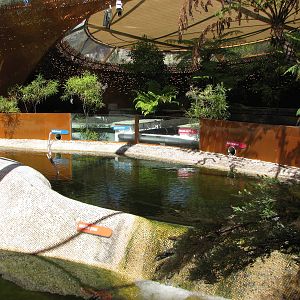
Beyond the outlandish flamboyance of the structure (which really "stands out" in the otherwise subtle grey/green landscape of Healesville), my greatest objection to this exhibit is that the primary substrate offered to the animals is--I kid you not--a matrix of glass marbles set into concrete!
Beyond the outlandish flamboyance of the structure (which really "stands out" in the otherwise subtle grey/green landscape of Healesville), my greatest objection to this exhibit is that the primary substrate offered to the animals is--I kid you not--a matrix of glass marbles set into concrete!
@reduakari This exhibit has been retrofitted into a very successful amphitheater for a platypus education talk that is held a few times a day. The keepers bring out a succession of wetland animals (a yabbie (crayfish), duck, turtle) and end with the platypus. The educational content was excellent with engaging information about wetland ecology and conservation and the natural history of the animals.
They release the platypus into the glass-fronted tank at the start of the presentation so you can see it swimming around throughout the presentation. At the end people can go look at it close up, which is a nice contrast to the dimly lit views of them that you get in the nocturnal house.
They have managed to convert what was apparently a weird exhibit into a very good one, by shifting its purpose somewhat.