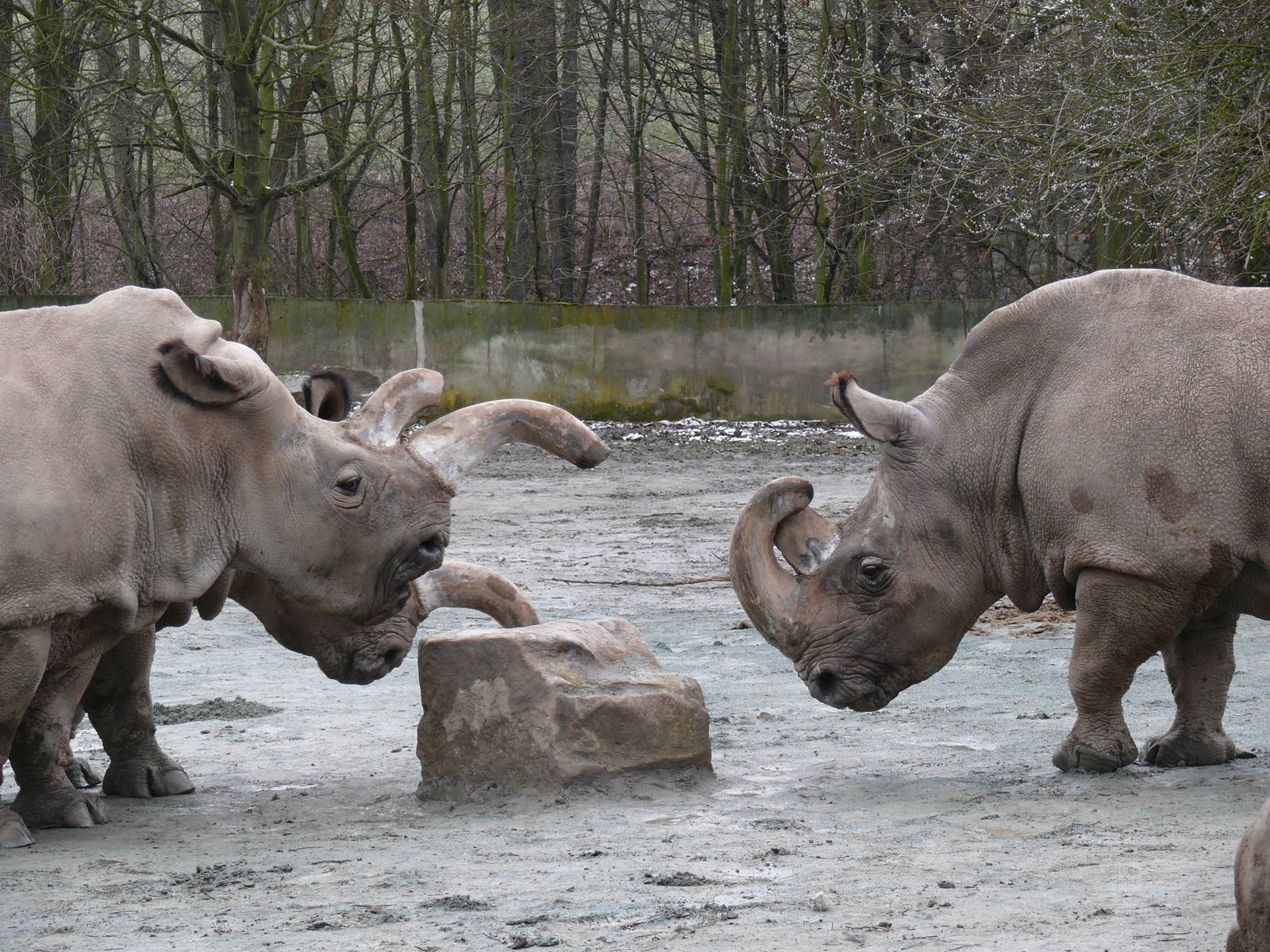
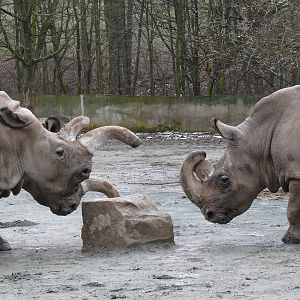
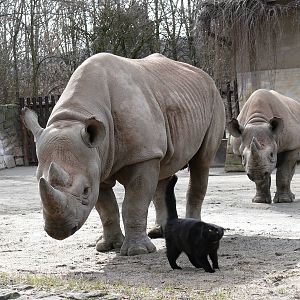
@Eagle I don´t know what happened to them. The male right is a wild-caugt animal, both females left were born here. So it´s probably caused by anythink in their enviroment at Dvur, and not by their genetic backround.
@phoenix Could you be please more detailed and say, what exactly you hate on Dvur´s holding of this subspecies? Or better, what would be your decision on them, if you were the responsible zoo director?
@phoenix Could you be please more detailed and say, what exactly you hate on Dvur´s holding of this subspecies? Or better, what would be your decision on them, if you were the responsible zoo director?[/QUOTE]
i've had this argument a number of times but the fact remains this.
1) dvur kralove has FAILED to save this taxon. its functionally extinct.
2) since dvur kralove an unarguably FAILED to save this subspecies clearly its chances lied elsewhere. it was obvious the zoo wasn't providing the ideal breeding scenario. and to me something this valuable deserved the ideal. instead dvur kralove selfishly contributed to its demise.
so what should have been done?
well, ten years ago we were not at the same level of understanding about rhino reproductivity that we are now. thus - i would have favoured actually introducing them into a semi-wild state in a highly protected sanctuary in kenya - since zoos probably couldn't have offered them much in terms of assisted reproductive technology at the time. and then, hopefully after having some success in breeding - attempted - and i know its a long shot - but attempted to use that success as leverage to lobby the DRC into allowing wild caught animals to be translocated to the preserve. realistically, that was the way i see them as having the highest chance of success as a species. the other reasonable alternative to that was consolidating the entire population at the SDWAP, which i believe would have had a higher chance of success for a number of reasons.
the priority now should be to try to introduce the northern subspecies genes into a population of southern whites in northern africa. to give the population there a boost of the advantageous genetics that was unique to the animals living in the north of africa. at the same time genetic material from all living animals should be preserved, so in the future we can clone back the current population using SWR as surrogates and then have a crack at creating pure population again, further down the track introducing genetics from the hybrid population only if needed.
thanks for that taun - i've been following the story (or lack of) the NWR for some time.
unfortunately its all a little bit of too little too late and i support the IRF in not allocating valuable fund on such a pathetically last ditch effort, for what is, afterall, just a subspecies.