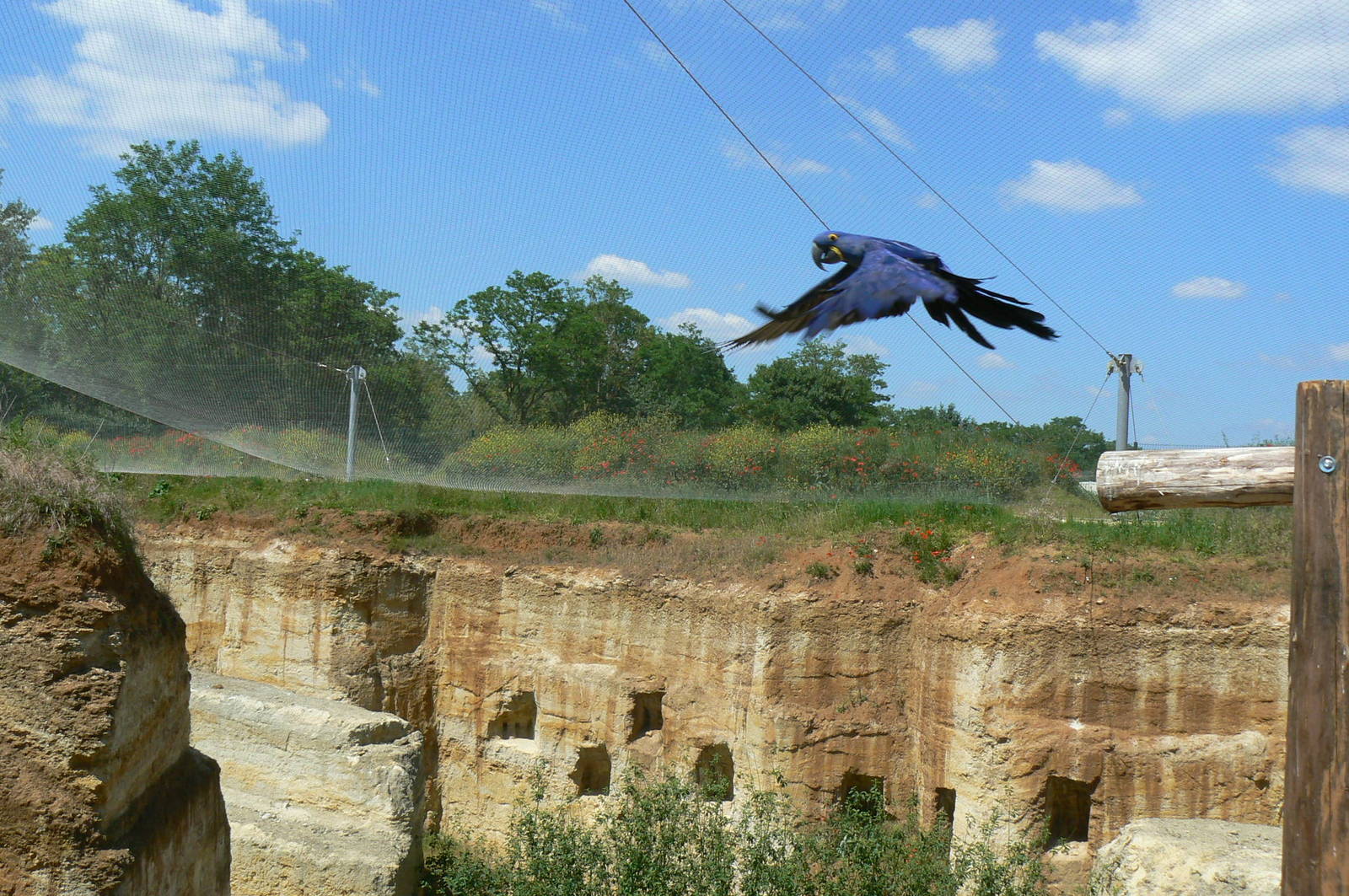
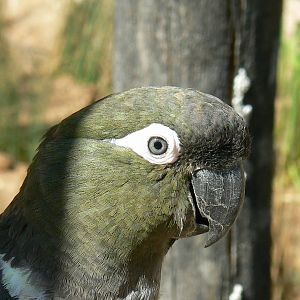
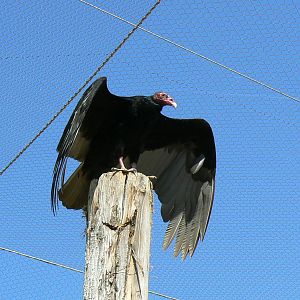
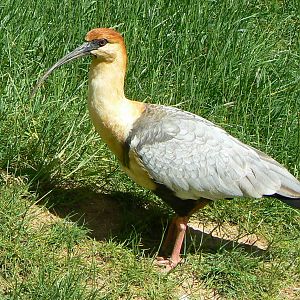
Sedgwick County Zoo has a very large walk-through aviary with free-flying hyacinth, green-winged, scarlet macaws, as well as at least a dozen other parrot species.
Definitely not. Actually I do not like the practice of clipping or pinioning birds at all, even though every major U.S. zoo I can think of (including mine) does it. Macaws with clipped wings on a fixed branch is so standard, even (or especially) in AZA zoos, that it seems to be just accepted. But I cannot see how that is much different than surgically chopping a tiger's legs off at the knees so you can put them on display without a fence. (Of course there would be an international outcry if someone actually tried this). Why no outcry over preventing flying birds from flying?
Frankly, if the anti-zoo lobby really did want to make a push on animal welfare, they would have focussed on pinioning birds. As Arizona Docent very succinctly points out, it is a deliberate act of mutilation.
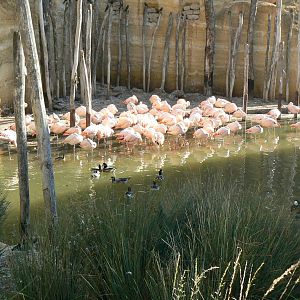
It's surely no coincidence that those taxa where pinioning is most prevalent so often have patchy breeding records - think cranes, flamingoes, pelicans, storks.
That is interesting as in the UK I think nowadays it is the exception rather than the rule though I can think of a few that still keep Macaws like this- Colchester, Cotswold, Longleat(?) even Jersey did, and may still do- I am sure there are still a number of others too. it is a very sorry spectacle and a sad way to view these powerful fliers- it must border on cruelty though of course societies involved with animal cruelty either don't recognise it, or 'turn a blind eye' as it involves exotic birds kept in Zoos, not domestics in people's homes.
At one time several bird parks in the UK had free flying 'homing' macaws which provided an excellent spectacle. However very few (of those that haven't closed), still seem to do so, probably due to losses(e.g. in high winds and wandering) of valuable birds. A number of Zoos these days also use them as free-flyers in bird shows which means the birds at least get short periods of proper 'free flight' flying exercise.
Many other Macaws in the UK nowadays live in aviaries but they often aren't huge like this one so the birds can't fly very long distances. Of course this all ignores the huge numbers of these spectacular birds that live their unfortunate lives indoors or in close confinement in private homes as pets etc.
Frankly, if the anti-zoo lobby really did want to make a push on animal welfare, they would have focussed on pinioning birds. As Arizona Docent very succinctly points out, it is a deliberate act of mutilation.
It's surely no coincidence that those taxa where pinioning is most prevalent so often have patchy breeding records - think cranes, flamingoes, pelicans, storks.
I've come to increasingly dislike Pinioning- it is quite barbaric really- as someone mentioned above, as serious a mutilitation as chopping off half a tiger's leg. But because the result is largely 'invisible' afterwards(unless the bird attempts to fly) people and anti-cruelty lobbies just don't seem to have picked up on it seriously. That's apart from the impediments it causes to mating/breeding in some species.
I believe there are moves by some zoos to phase out pinioning altogether- Paignton for example is one which has taken a stance on this when designing new enclosures/aviaries for birds- I hope more follow.
Both Edinburgh and Bristol keep their flamingos roofed over. I guess this was done as an anti-fox measure, since both enclosures are right on the zoo's perimeter.
Both Edinburgh and Bristol keep their flamingos roofed over. I guess this was done as an anti-fox measure, since both enclosures are right on the zoo's perimeter.
Bristol were definately losing Flamingos before they did this. Possibly Edinburgh too. At Bristol foxes used to take Penguins in the old enclosure too.