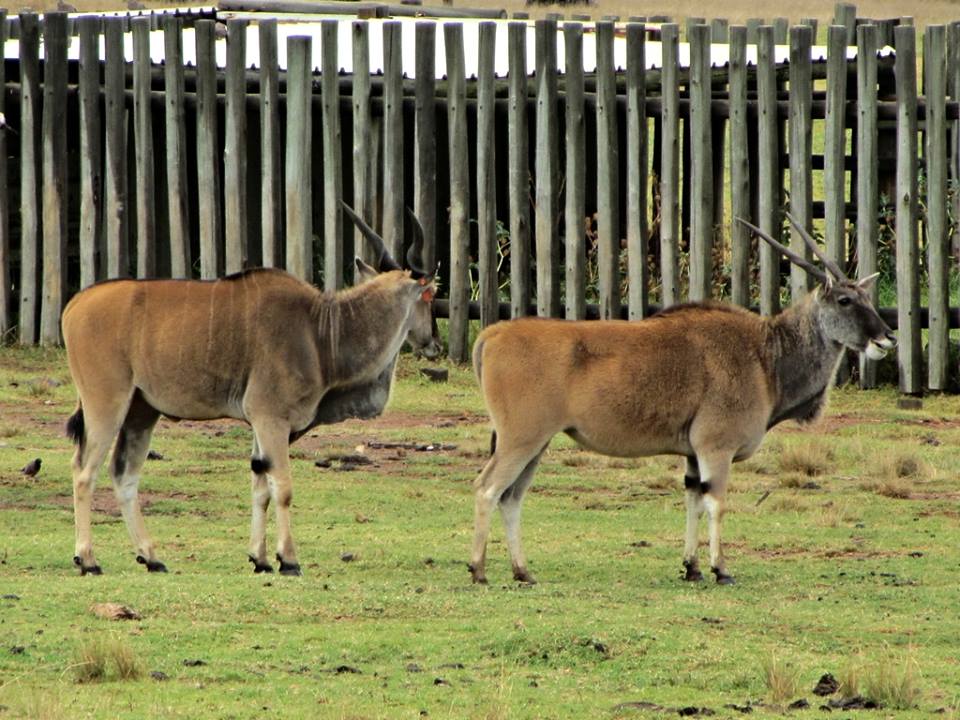
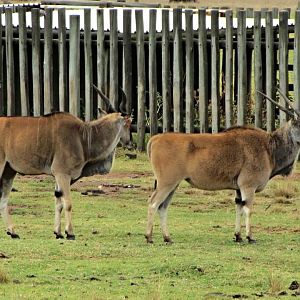
While not native to South Africa, the Livingstone's eland has become unfortunately common in the private sector (especially on hunting ranches and reserves) because of its more attractive striped coat and larger size when compared to the native Cape eland. Similar issues have arisen with sable and roan antelope in South Africa, with western Zambian sable and western roan having been historically imported into the country because of their more impressive horns/more beautiful coloration. During my time at the Conservation Genetics Research Centre at the National Zoo in Pretoria, I spent much of my time analyzing sable and roan blood samples for private individuals to determine the origins of their stock. It is now illegal to keep western Zambian sable and western roan in South Africa, but I am not aware of any such regulations on Livingstone's eland. In fact, I do not remember ever seeing eland samples come through the labs.