I agree, I remember when I was at school, (about 20 years ago) getting excited about a pair of long billed Corellas, that suddenly appeared in the area, and also seeing a male Red rumped parrot flying around with a family of Eastern Rosellas (obviously an aviary escapee) now we have at least 8 types of Parrot visiting us. Brush tailed possums also only moved into our area in the last 10 years!
... seeing a male Red rumped parrot flying around with a family of Eastern Rosellas (obviously an aviary escapee) now we have at least 8 types of Parrot visiting us. Brush tailed possums also only moved into our area in the last 10 years!
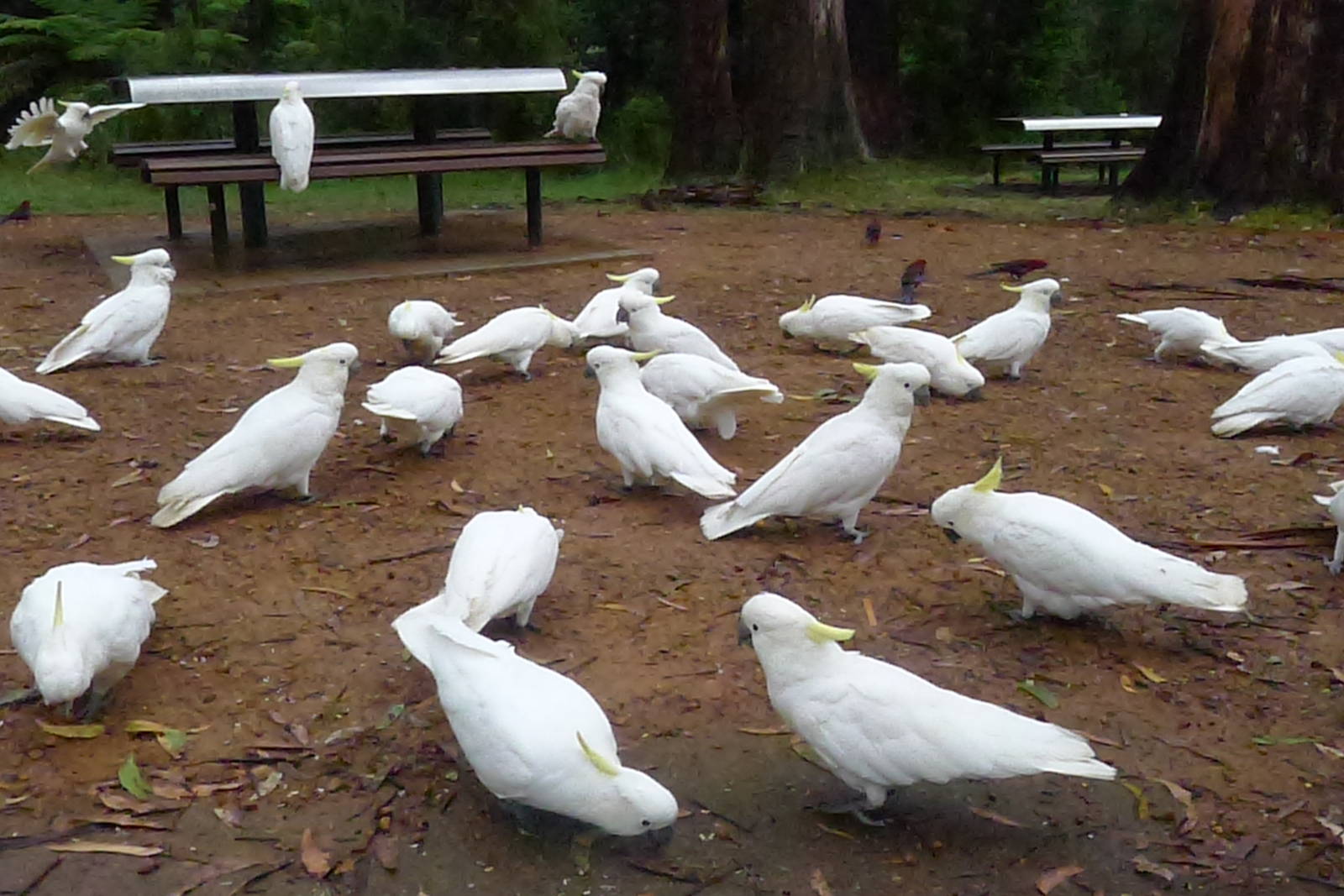
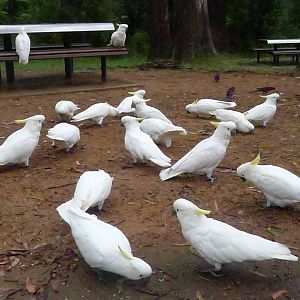
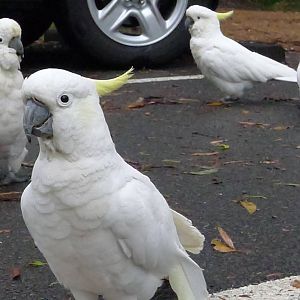
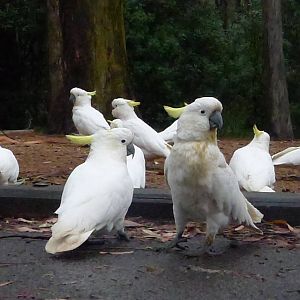
Redrumps are not uncommon around Melbourne, but often overlooked. Very surprised that anywhere in Melbourne suburbs would not have had brush-tailed possums, but there has seemed to be a growth in numbers for both possum species now that cats are more commonly kept inside at night. However all species of white cockatoo, as well as galahs, are far more common in the Melbourne region than they were 30 years ago. Crested pigeons were totally absent 30 years ago but are now common. Signs of climate change?
Some of my highlights include gang-gangs, king parrots, and tawny frogmouths but all of these were seen around Box Hill, Burwood, and Mount Waverley so quite close to the Dandenongs.
Redrumps are not uncommon around Melbourne, but often overlooked. Very surprised that anywhere in Melbourne suburbs would not have had brush-tailed possums, but there has seemed to be a growth in numbers for both possum species now that cats are more commonly kept inside at night. However all species of white cockatoo, as well as galahs, are far more common in the Melbourne region than they were 30 years ago. Crested pigeons were totally absent 30 years ago but are now common. Signs of climate change?
I don't think it's climate change, I think it's just the animals adapting to the urban environment. Of course, in recent years we have become more wasteful, so theres a lot more food around for them too. And perhaps the decline of arboreal carnivorous marsupials has also contributed to their population increase.
I remember seeing my first Crested Pigeons in Sydney at Macquarie University in 1994. Now they're everywhere. A National Parks & Wildlife Officer told me once that 50 years ago there were no Sulphur-crested Cockatoos or Galahs in Sydney, they were all confined west of the Great Dividing Range. Pet escapees contributed largely to the initial population, but how much natural incursions contributed to the present population I don't know.
Very surprised that anywhere in Melbourne suburbs would not have had brush-tailed possums - 30 years ago when we moved to our suburb, it was a new subdivision in open farmland with very few large trees in the area, the possums would not have been that far away, but not in our immediate area. Like wise, Crimson Rosellas were commonly seen 1km away in older housing areas, but rarely ventured to where we lived, although the Eastern Rosellas were plentiful. I agree many species of birds and mammals have adapted to suburban life.
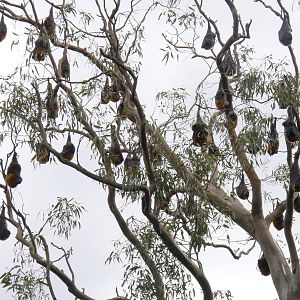
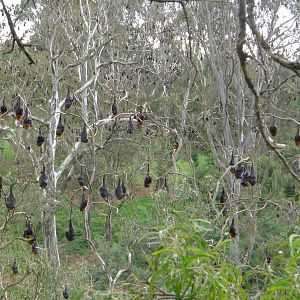
There has definitely been an influx of parrots into the inner northern suburbs where I live. Much for the same reason flying fox numbers have radically increased, I think it has more to do with the greening of these suburbs than climate change. The inner suburbs was a much, much more barren environment when I was growing up. Eucalyptus and other natives specifically became more appreciated and planted by councils and homeowners in the 20-30 years and these are now mature and flowering. But regardless of species there has just been a huge increase in tree cover in general.
Rainbow lorikeets would have to be one of the most common inner-city Melbourne birds and as well as the ever present red-rumps, galahs and sulphur crested cockatoos, I've even seen yellow-tailed black cockatoos in the inner north a number of times over the last decade.