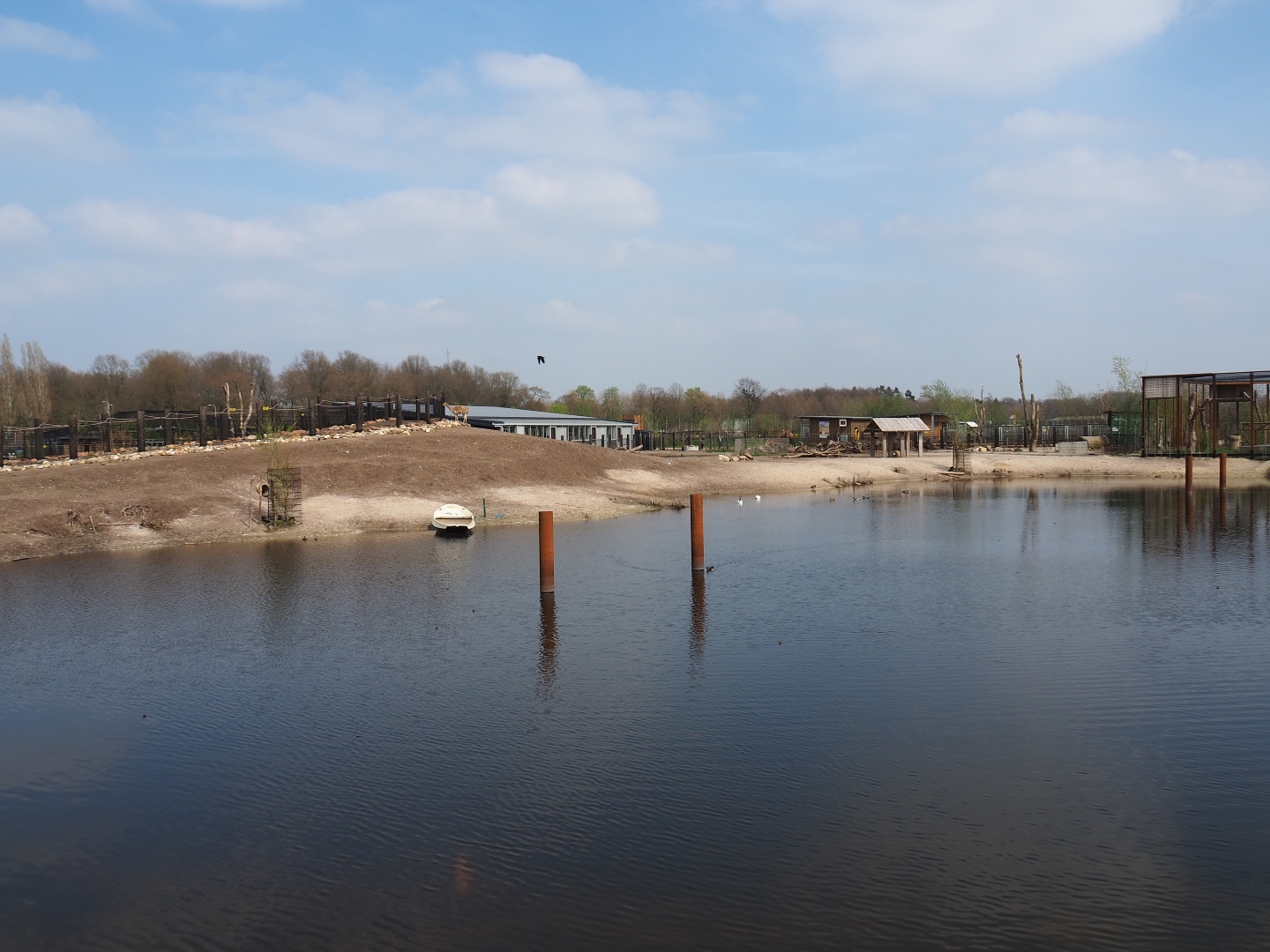
With the dirt berm separating the two sections of the exhibit on the left side and the South American house in the background, just left of center. The Steller's sea eagle aviary can be seen in the background on the right side.
The mixed South American exhibit is the largest exhibit at Zie-Zoo by far and houses the following species (admittedly several of these are from North America rather than South America):
- South American, Brazilian or lowland tapir (Tapirus terrestris) - One pair with a calf born in February 2019 housed
- Capybara (Hydrochoerus hydrochaeris) - At least a pair with pups (born after my visit) housed
- Vicuña (Vicugna vicugna) - Small herd
- Patagonian cavy or Patagonian mara (Dolichotis patagonum) - Small herd
- Greater rhea or common rhea (Rhea americana) – Small flock
- Black-necked swan (Cygnus melancoryphus) - A pair seen
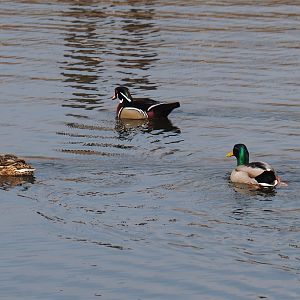
- North American wood duck (Aix sponsa) - Several males seen
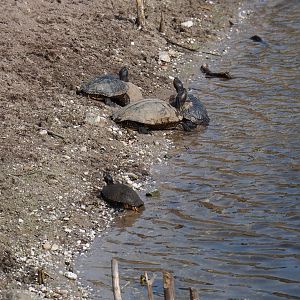
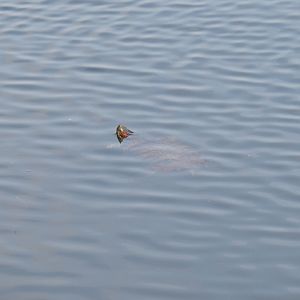
- Red-eared slider (Trachemys scripta elegans) - A couple dozen sliders (red-eared and Cumberland) seen around the lake in the exhibit once the sun started to shine more brightly
- Cumberland slider (Trachemys scripta troostii) - A couple dozen sliders (red-eared and Cumberland) seen around the lake in the exhibit once the sun started to shine more brightly
The tapirs and capybaras have their indoor housing in the South America house, which also houses the indoor exhibits for the blue-and-gold macaws, white-nosed coatis, rock cavies, guira cuckoos, Azara's agoutis and the giant anteater who have their outdoor housing within the South America house's structure or around it.
The vicuñas, Patagonian maras and greater rheas have stables in a separate complex that also houses Chacoan maras, ferruginous pygmy owls, plains viscachas and Yucatan squirrels. This building is located on the other side of the dirt berm that separated the two parts of the South American enclosure (with a tunnel for the animals underneath the visitor walkway on top of the berm that connect the two areas).