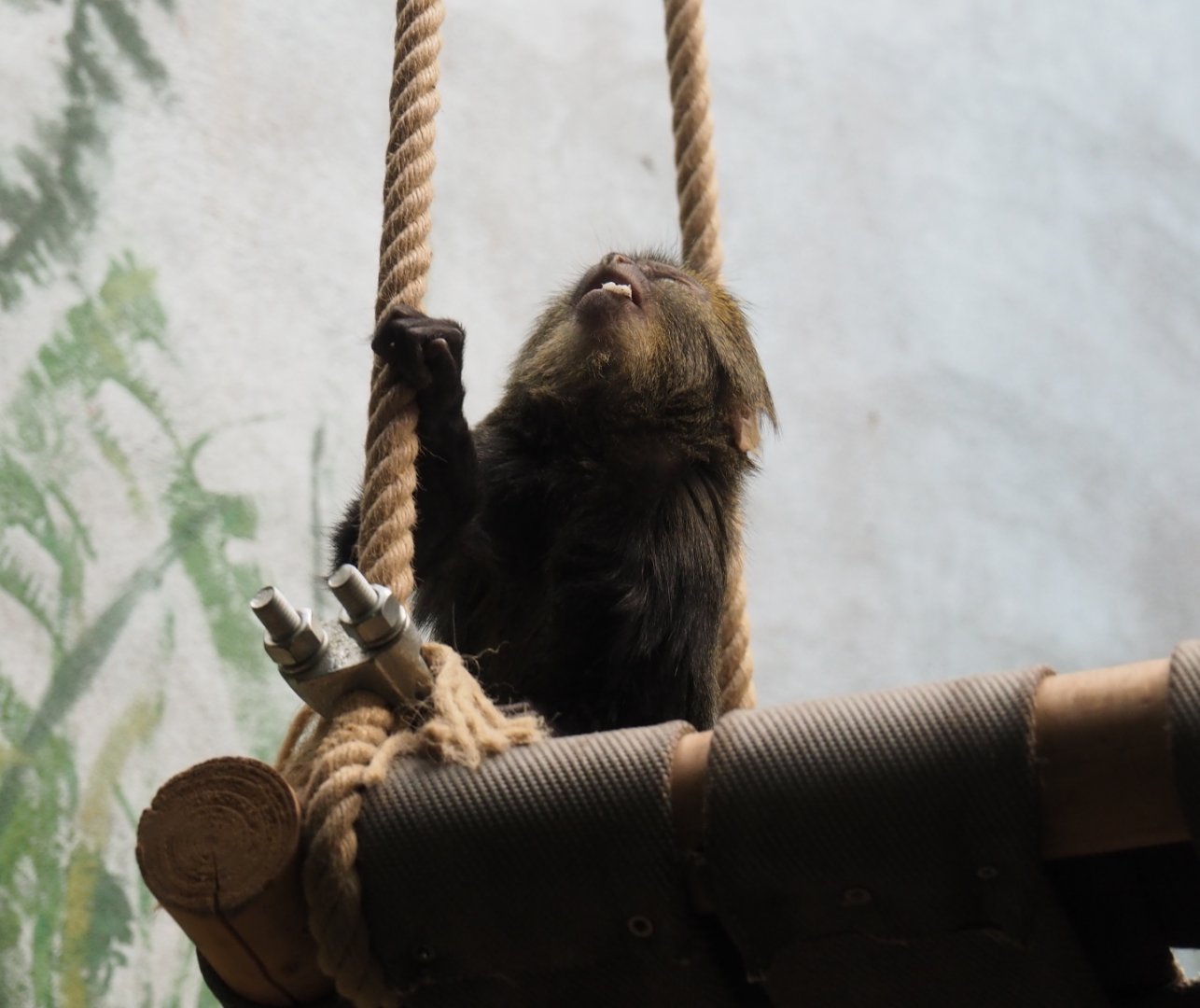
@DelacoursLangur I don't know about the current population makeup, but given that there are still only 8 holders in Europe currently and that these groups generally aren't large I don't think this species is kept in very large numbers. Also, it is not very common to see young being born. So even if the population is not in an absolutely dire situation anymore, this species still isn't doing too great in European zoos.
Hoping someone who knows the current population info chimes in, with only 8 holders I imagine that maybe half have breeding groups. Hopefully they are being managed well and have some genetic diversity so the population can expand.
This is true, although many of what are considered successful zoo populations have very limited founders so I wouldn't give up hope just yet. However if all the current stock is closely related it will prove much more of a short term problem.
The article from Zoo de la Palmyre (Mulhouse, France) did say that there were at the time it was written (not sure when though) only 3 institutions breeding this species currently, and some new breeding pairs had been established. I hope that these breeding pairs were formed from individuals as unrelated as possible, but I have not information on that issue.
That said, I agree with you that there is still hope for these species in European zoos, but it isn't looking all that great either I think.