Thanks! The weather was overcast so it was ideal for photography (no harsh shadows from bright sun).
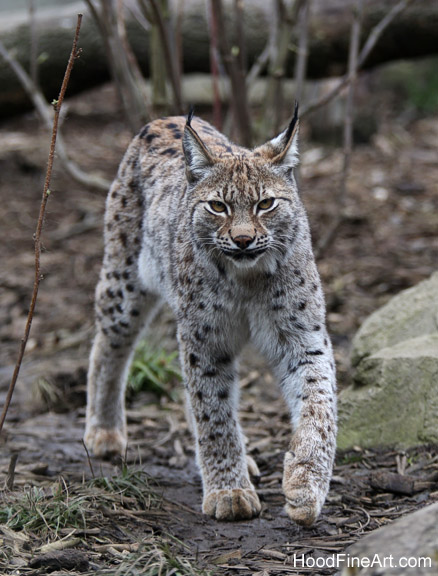
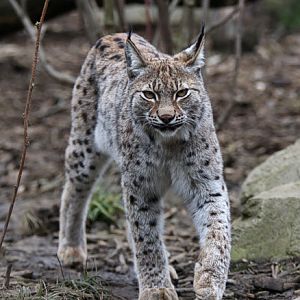
The lynx kept walking back and forth along the front length of the exhibit. So I laid down on the ground at the righthand glass viewing area and just rapid fired in burst mode as it walked towards me. I did this several times and just kept the best two or three.
Most of the Eurasian lynxes I have seen are of the Siberian subspecies, which has almost no spotting. I really like the spot pattern of the European subspecies - almost looks like an Iberian lynx.
Most of the Eurasian lynxes I have seen are of the Siberian subspecies, which has almost no spotting. I really like the spot pattern of the European subspecies - almost looks like an Iberian lynx.
That said, most Northern Lynx are rather less spotted than this individual is; were it not for the fact the origin of the Paris individuals is known, I would have suggested this was a Carpathian Lynx.
Given that the Iberian Lynx was once much more widespread through Europe, as was the Carparthian, I have often wondered if the Carpathian Lynx represents a former "intergrade" between the Northern and Iberian.