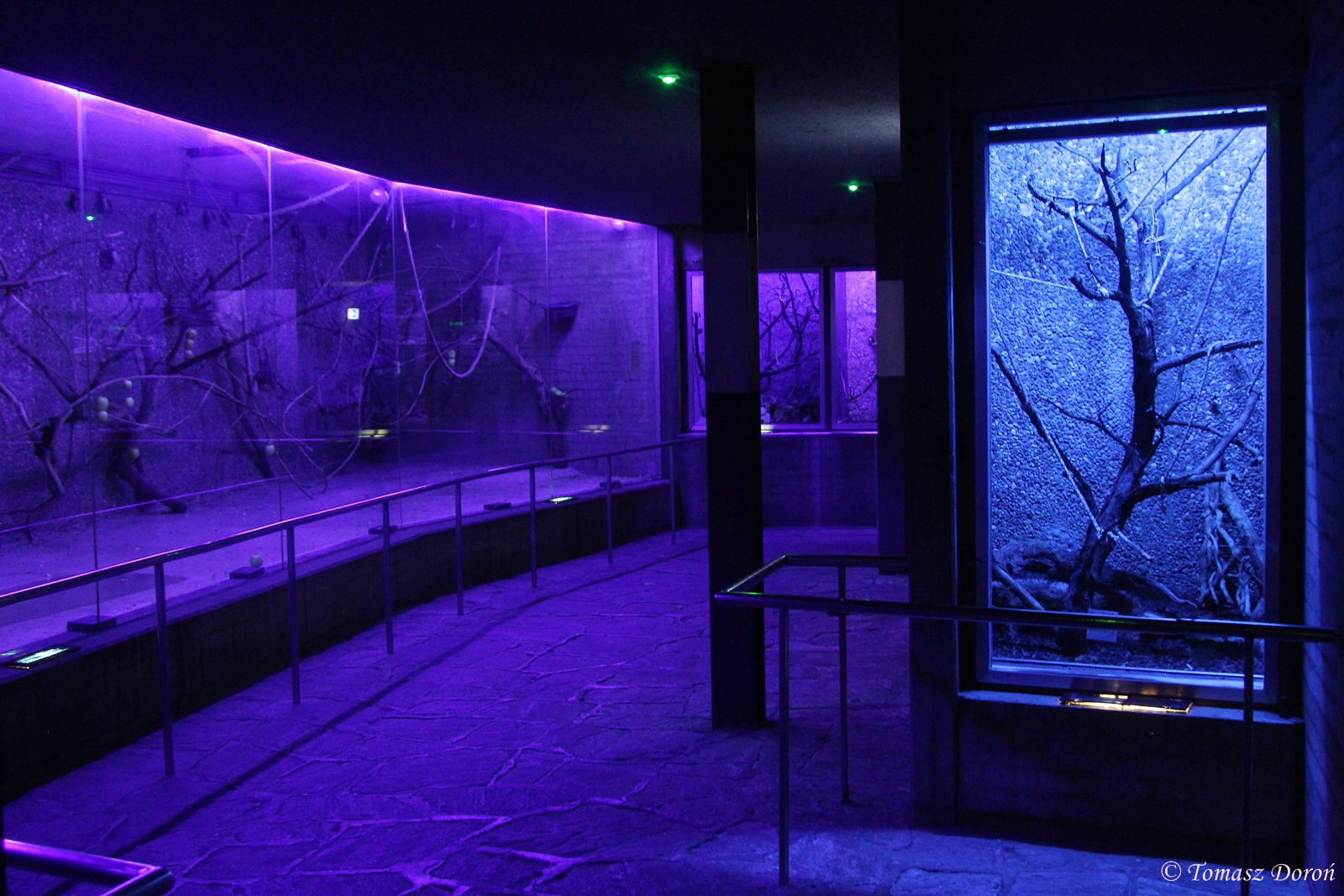
@snowleopard: I agree with lintworm; in general, the numbers (and quality) of nocturnal houses in European zoos has been decreasing over the years. Among others, this could be related to the ongoing decline of species suitable for such settings. Occasional nocturnal exhibits as parts of larger buildings and zoo nights /night tours are still popular in Europe, though.
This is the thing - they're still there, but like Reptile and Bird Houses and Aquariums, most places don't build them as separate entities. Think of Prague, which has a number of small nocturnal sections that combined would be an excellent nocturnal house, or Vienna, with at least four separate nocturnal exhibits around the zoo - but just no 'Nocturnal House' on the map.
The small mammal house is under reconstruction and will be reopend after it is completed, and a new nocturnal house is to be planed as part of the upcoming new elephant house.
By the way-this nocturnal house was opened in 1962 as the first one on the main part of Europe.The bat enclosure was splitted in two exhibits, in the first cage chinese pangolins were kept togehter with echidna -but the pangolins died soon.And in the small cages in the back I've seen byself cacomistle,Olingo and Kinkajou!
This is the thing - they're still there, but like Reptile and Bird Houses and Aquariums, most places don't build them as separate entities. Think of Prague, which has a number of small nocturnal sections that combined would be an excellent nocturnal house, or Vienna, with at least four separate nocturnal exhibits around the zoo - but just no 'Nocturnal House' on the map.
Perhaps that's no bad thing. It allows for a greater degree of control of photo periods and humidity, which in turn might help to get better breeding results.
The Wilhelma had also a second nocturnal House-the"Kiwi Nachthaus" for kiwis, swimming rats, sugar gliders,echidnas and cuscus, opened in 1984, but it was closed many years ago to make room for the Amazonia rainforest Building.
Interestingly enough, in North America there is a long list of zoos that have all fairly recently closed down their nocturnal houses or nocturnal "wings" of small mammal houses. There have not been any built and it seems as if cost-cutting measures have been the main reason for the multiple closures.
Financial reasons is what I've heard too. I know that was the official reason that the Woodland Park Zoo gave for their closure of a very popular exhibit.
Does anyone know why nocturnal houses are expensive compared to other indoor facilities? The lighting, maybe?
Thanks! I was allowed to visit the now closed section some days but i lack a good picture of the Giant salamander and Hellbender in their tanks. When they were living there. Did anyone take one?