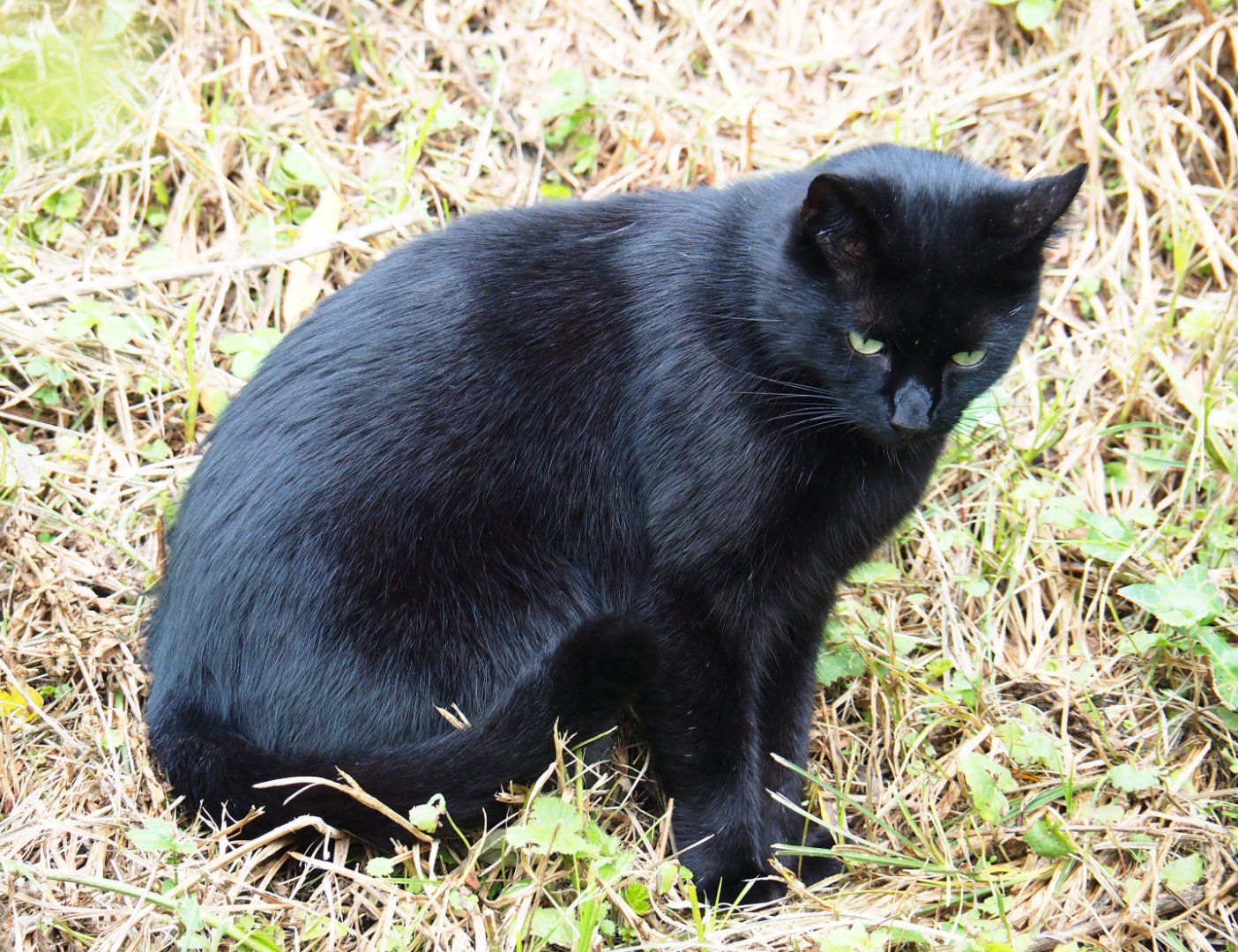
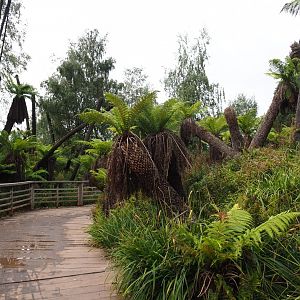
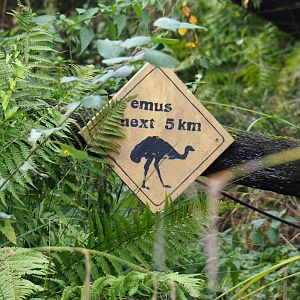
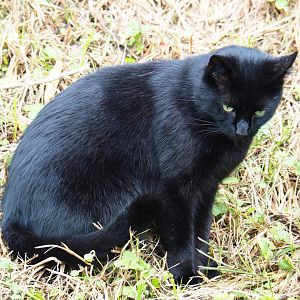
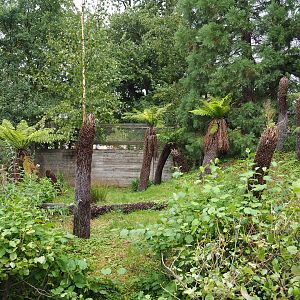
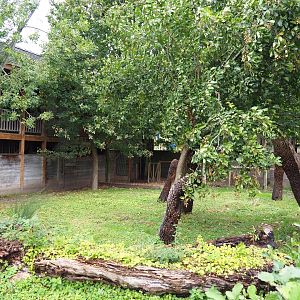
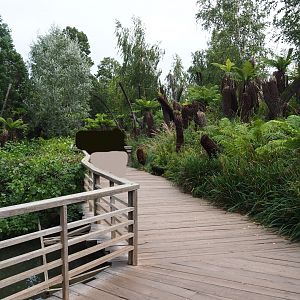
Seen in the tree fern valley. I presume this is either a free-roaming cat that somehow got into the park or a cat kept by Pairi Daiza to help control pests like rats and mice.
Ironic... domestic cats are one of the greatest threats to Australia's native fauna - both directly, and as the most serious reservoir of Toxoplasmosis, a disease of huge importance in both wild and captive macropods.
@Andrew Swales Yes, the unfortunate irony of seeing a cat turning up in the Australian area wasn't lost on me either, as I am aware of at least some of the invasive species issues in Australia.
With regards to the toxoplasmosis, given that this cat was seen in area close to where macropods of three species are kept, I hope that they monitor their animals closely for this issue.
The disease is well advanced by the time any outward symptoms show, so I am not sure it can be 'monitored' - other than to assume, as a default, that ALL cats carry it. Primates are very susceptible too...
A bit of 'Googling' will show the very real danger of cats - an example = Toxoplasmosis: how feral cats kill wildlife without lifting a paw
The organism needs to pass through two mammal hosts in its life cycle, but one has to be a cat, as the sexual part of the cycle has to take place in a cat. So far as I know all cats are equal in this respect, but I would stand corrected if I am wrong. All mammals (including humans) and birds can be affected and in any it can be very serious, leading to permanent disability and blindness. From what I understand most of the casualty Lumholtz Tree Kangaroos taken into rescue centres, and very slowly filtering through to zoos, present with some kind of Toxoplasmosis related blindness. Other spp such as certain Bandicoots die within a few weeks. Interestingly it also appears to affect the behaviour of the secondary host spp, theoretically making capture and consumption by the required cat, more likely; and surviving previously infected females produce higher ratios of male offspring.