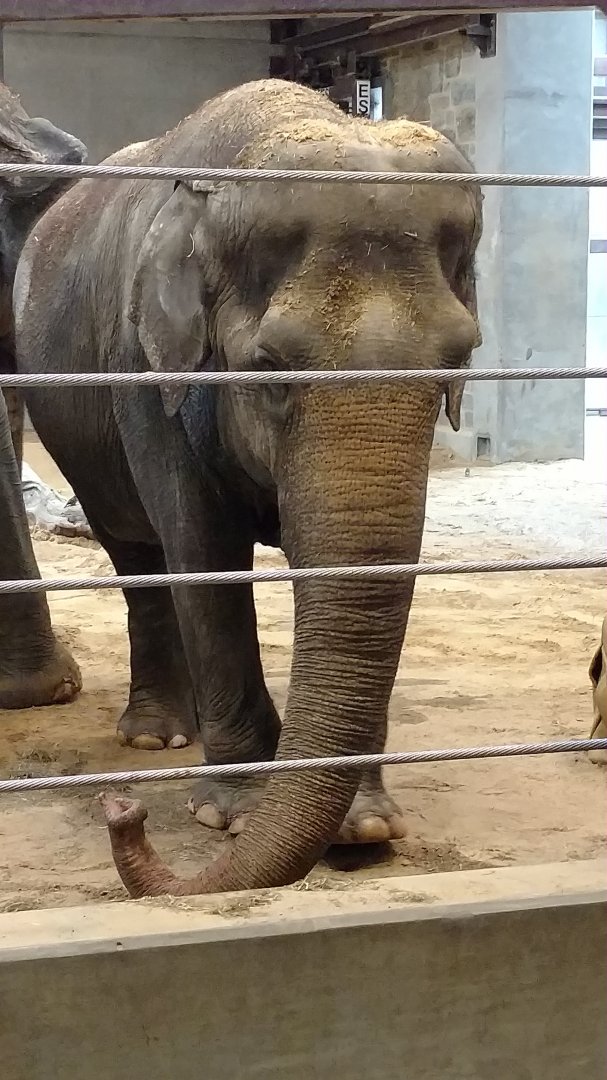
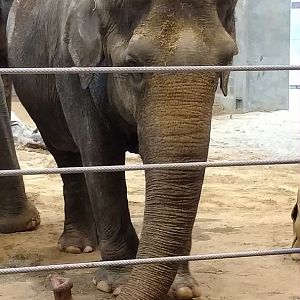
Believe it or not, there are a few other grande Dames of the elephant world. Ambika is tied as the third-oldest Asian elephant in North America. Ringling's Myesore is oldest at 75, Shirley from the amusement park in Valdosta, GA is 73, and another Shirley at the Elephant Sanctuary is also 71. Myesore could have died without it being publicized, so there is really no way of knowing except by checking the studbook, which is no longer available to the general public. In any case, she has been a great joy in my life.
You're not entirely wrong at all. Between all the skewed statistics from activists and the fact that we seldom get official word on ages from the AZA, and the difference.between Asians and Africans, estimates vary tremendously. If anything 65 is unfortunately too high. I think the oldest Asian males are just at or above 50, while there are a SD eral females between 50 and 70. The biggest "chunk" in the demographic is elephants aged 40-50. The CITES Treaty of 1976 outlawed importation of endangered animals, so in the few years leading up to 1976, there were a lot of imports. Those animals are now reaching the end of their life, as most elephants die in their 40s, largely from arthritis. Since breeding has not produced as many new births as deaths even before now, the deaths of these 40+ will begin a drastic reduction in captive populations, which have remained somewhat steady at around 230-250 until now.
I hope new breeding efforts reflect this demographic and change their focuses. I always thought when I was very young (8 or so) that elephants were one of the most endangered animals but was surprised when I found out that Africans are 'only' vulnerable...
I guess now I have realised that danger is really impending and just how important the captive population of Asians is. This demographic is therefore extremely alarming to me, as I'm sure it is for others on Zoochat.
I guess it is now up to zoos like Prague, Bronx, National zoo, SDZ and Oregon to start programmes to bolster captive populations. SDZ should certainly start trying to breed their elephants; if it means exporting their Africans, so be it.
All of the institutions you mention have been actively breeding since the late 80s. But between a shortage of breading-age females, lack of knowledge about breeding, and the high toll taken on the birth population by EEHV, there are already more deaths than births each year. One institution began breeding in the late 1950s, even before there was no ban on imports. That zoo is Oregon, then the Portland Zoo, and they had one of the first living elephant calves in NA. Look up Packy in Wikipedia, and for a couple of dollars on Amazon you can get a book called Packy and Me by Matthew Maberry. Great story about how breeding started in the US.
I really wish I could get a shot just like this but with her eyes visible. It's very clear that a "conversation" is happening when she looks you dead in the eye for 2".
What if we just imported already captive elephants from South/east Asia? They're already captive so no harm to the wild pop and we're giving them better lives