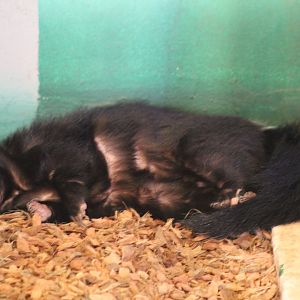
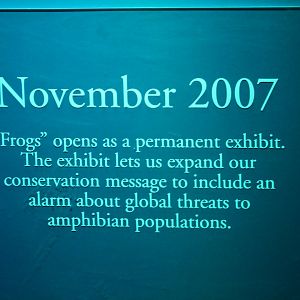
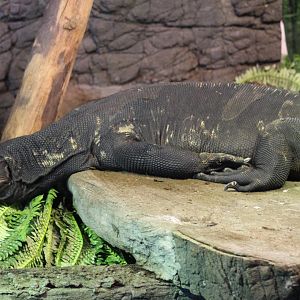
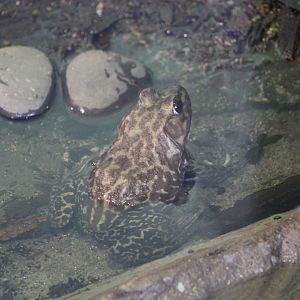
Outdated signage on the aquarium's timeline talking about the old amphibian exhibit which was recently destroyed in favor of a series of horribly small and bland enclosures for "more popular" species such as skunks, owls, macaws, and caiman. March 30, 2019.
That's really a shame, as amphibians are such a highly threatened group of tetrapods, and in my opinion zoos and aquariums need to do more for both in situ and ex situ conservation of amphibians worldwide. Zoos can put in amphibian exhibits and breeding areas for many species for just a fraction of the cost of their bigger exhibits. If I were the AZA, or any similar group associated with zoos, I would make amphibian conservation among members a very high priority.
@Anniella I agree 100%. In the past, the aquarium featured about 21 species of amphibian in the exhibit. Today, the aquarium has about 7 or 8 species remaining all of which are commonly seen. I am personally pretty disappointed in the "Just Add Water" development.
Yeah, last time I checked the AZA TAG phase-in recommendations, there were ten or fewer species of amphibians, mainly coquis from the Caribbean and a couple North American species. I consider that unacceptable with the amount of amphibians threatened with extinction. And zoos can certainly present the amphibians in ways that make visitors appreciate them and care for their conservation needs. For instance, I visited LAIR at L.A. Zoo with a family member who isn't fond of most reptiles, and they liked that exhibit complex a lot, because of how the reptiles were presented.
I don't have access to the original files, and that list is from 2008's TAG. But still...only eight species? As for coquis, I don't think they are widespread, but I do think some zoos have them. I'd have look around to be certain though. And one has to remember that some of the species Philadelphia Zoo has bred are Haitian frogs related to those in the list. In my opinion, individual zoos should take leadership on this issue.
@Anniella There are some Common Coquis and a handful of Red-Eyed Coquis in US zoos and the private trade but no endangered species afaik. Unfortunately as far as I know the Philadelphia program has had a few successful breedings but most species have died off by now.