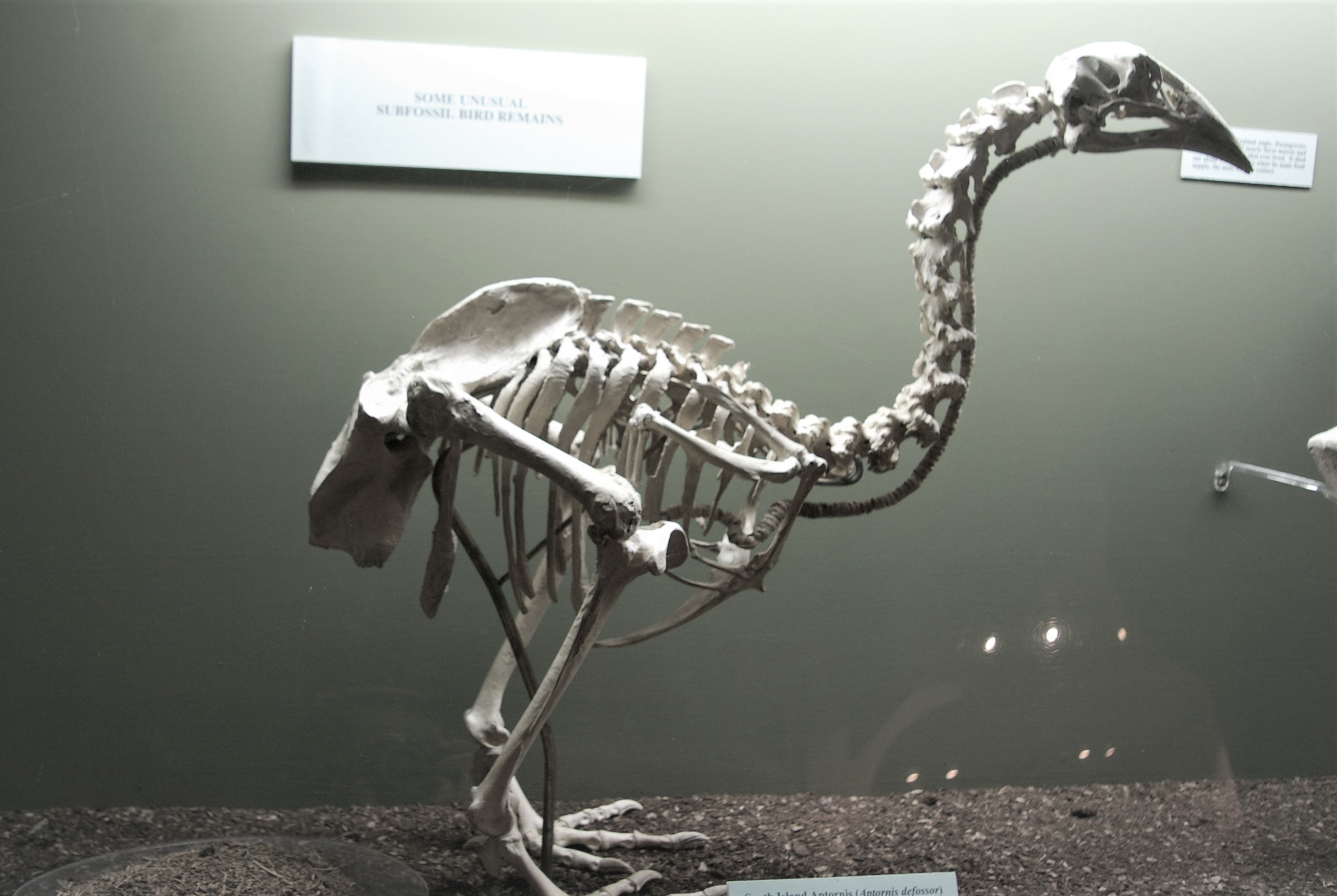
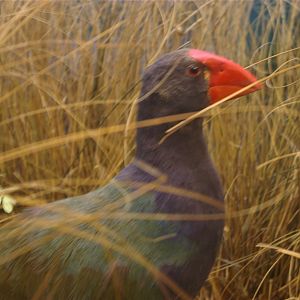
This is a composite skeleton from remains collected from the Pyramid Valley site in north Canterbury, and on display in the Canterbury Museum in Christchurch. Adzebills became extinct after the arrival of humans to New Zealand c.1000 years ago.
Adzebills stood around a metre tall with an estimated weight between 15-20kg, and had a very large bill which was presumably used for digging. Chemical analysis of their bones show that they were predators. Their bones were originally thought to be from small moa when first discovered, and since then have been associated with a few different birds including Kagu. The most recent genetic studies show them to be rails, and that their closest living relatives are the tiny flufftails of Africa. Mitochondrial Genomes from New Zealand’s Extinct Adzebills (Aves: Aptornithidae: Aptornis) Support a Sister-Taxon Relationship with the Afro-Madagascan Sarothruridae