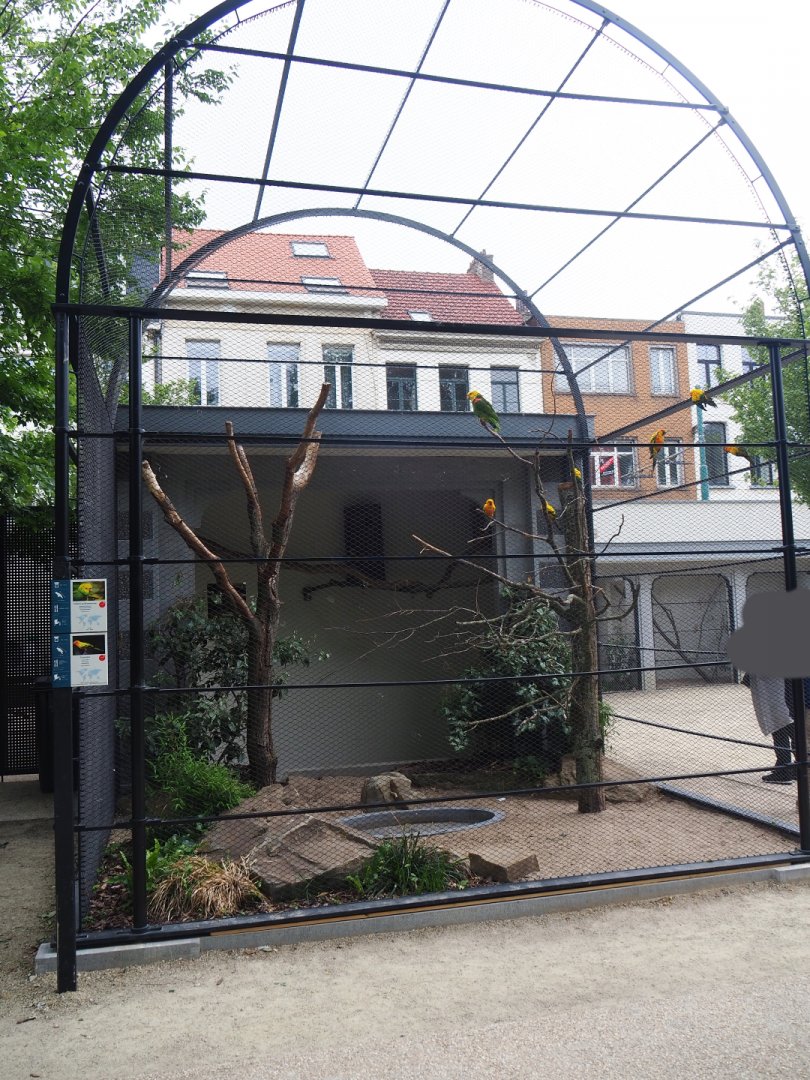
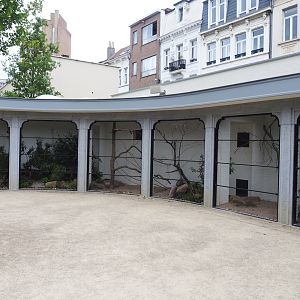
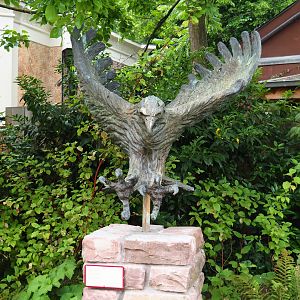
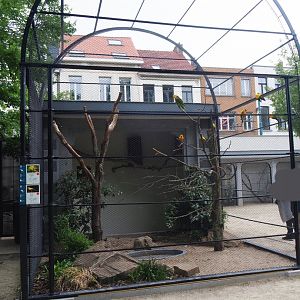
These ancient bird-of-prey aviaries, designed by Charles Servais and built in 1855-56 (and therefore, together with the Egyptian Temple, the oldest surviving buildings in the zoo, which first opened in 1843), were formerly found in between the ape house and what at that time was the children's zoo (playground, restaurant, red panda, meerkat and rabbits exhibits). Raptors and vultures were actually housed in the largest of the old aviaries until the early 2000's.
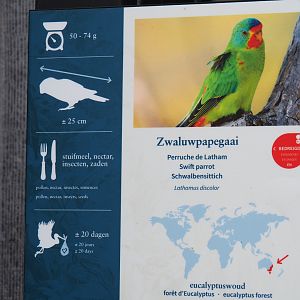
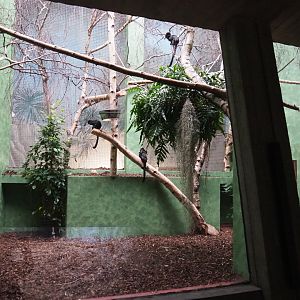
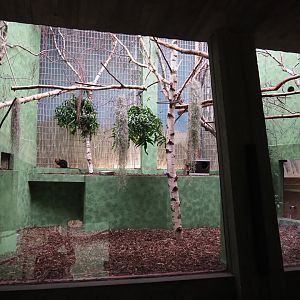
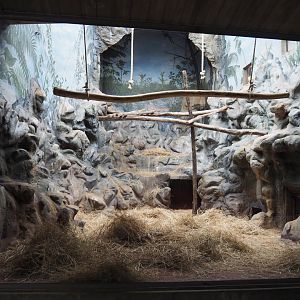
That situation existed until 2013, when the aviaries were dismantled and demolished. A playground temporarily replaced them at this location until a few years later the construction of the new outdoor chimpanzee and gorilla exhibits that now sit at this site began. From 2018 onwards the reconstruction of the aviaries began on a part of the zoo's expansion zone, behind the okapi house, began, and it was finally finished in early 2020 with the new inhabitants moving in. In their current form these aviaries will be used to house a nice selection of parrot species (as well as California quails and grey-winged trumpeters).
The bluestone building elements and the rock structures from the old aviaries were salvaged and stored for cleaning and restoration, and were used during the rebuild. The mesh structures of the cages were constructed anew during the rebuild as the original cages were so rusty they could not be salvaged. Old techniques were used in this process. The reconstruction included the complete rebuilding of the left wing of the aviary complex, which was demolished in 1969.
The aviaries were reconstructed adjacent to a modern building with modern indoor aviaries and are now located behind the Moorish Temple (okapi house). This area that is part of the expansion zone for Zoo Antwerpen that was realized between 2008 and 2010 after 31 houses that were gradually acquired by the zoo over the years were demolished.
The completion of the project was delayed for months due to issues with the mesh wiring of the aviaries. The first version was deemed to be unsatisfactory and potentially not parrot-proof. It took months for a new version to be placed, but the parrots finally moved in in early 2020, not long before the Covid-19 crisis struck.
I was finally able to see the finished parrot aviaries during my May and June 2020 visits. I am relatively enthusiastic about these aviaries to be honest and they are a new favorite spot of mine at the zoo - but that is probably largely due to the fact that I really have a thing for parrots and consider them to be one of my favorite animal groups.