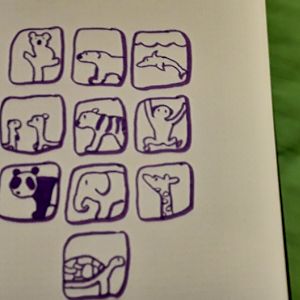
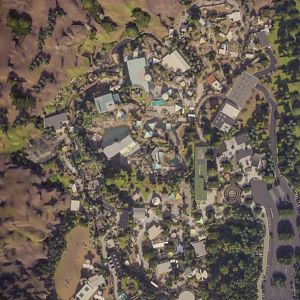
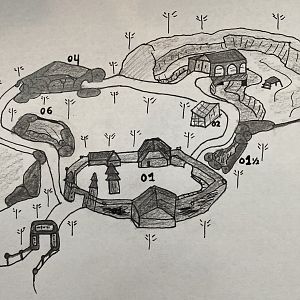
The fourth part of my submission on Ecuador for the thread "Make an Exhibit for that Country". This part focuses on the habitats and species of the Galapagos Islands. A legend for the numbers can be found below, a full discussion in the thread.
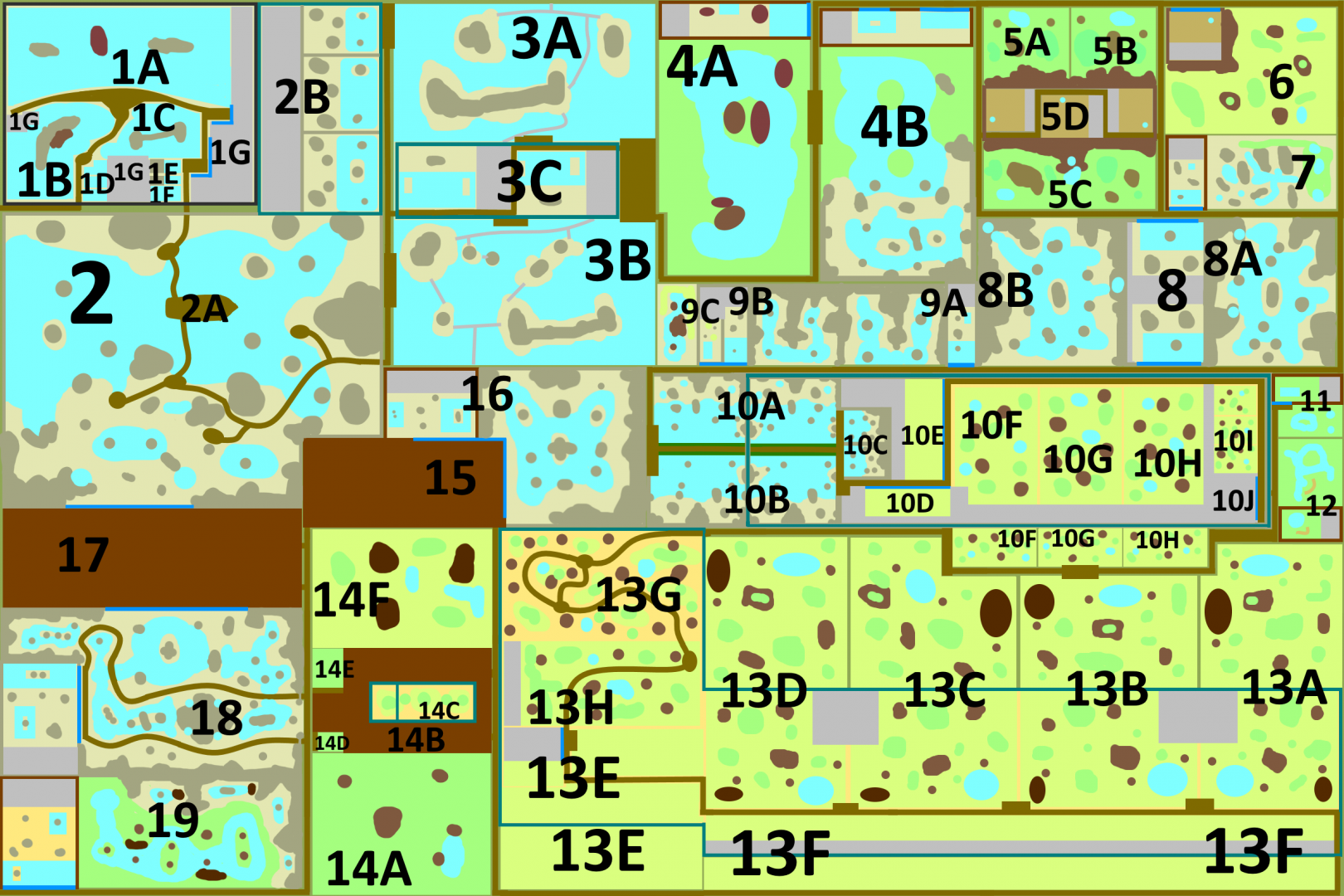
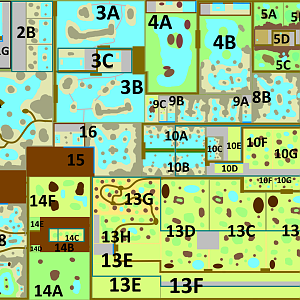
2A – Main viewing area: replica of deck of HMS Beagle, with underwater viewing area in cellar underneath with education on Charles Darwin, the theory of evolution and the ecology of the Galapagos coasts
2B – Galapagos seabirds indoor exhibits in greenhouse structure, three large on-show exhibits and several more smaller off-show exhibits
3 – Pinniped exhibits
3A - Galapagos fur seal (Arctocephalus galapagoensis)
3B - Galapagos sea lion (Zalophus wollebaeki)
3C – Greenhouse with main indoor pinniped exhibits, holding areas and surrounding visitor areas
4 – Flamingo and Pelican aviaries
4A - American flamingo (Phoenicopterus ruber), American oystercatcher (Haematopus palliatus galapagensis) and Galapagos pintail (Anas bahamensis galapagensis)
4B - Galapagos brown pelican (Pelecanus occidentalis urinator) and Galapagos great blue heron (Ardea herodias cognata)
10F - Galapagos land iguana (Conolophus subcristatus)
10G - Galapagos pink land iguana (Conolophus marthae)
10H - Santa Fe land iguana (Conolophus pallidus)
10I – Exhibits for somewhat larger, older and stronger juvenile land iguanas
10J - Nursery room with incubators and raising vivariums for smaller and younger iguanas and smaller reptiles, with visitor viewing window
11 - Galapagos rail (Laterallus spilonota)
12 - Belted kingfisher (Megaceryle alcyon)
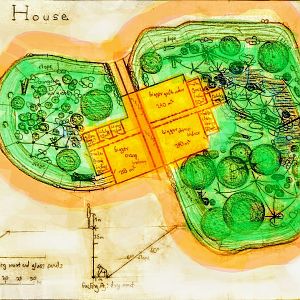
13 - Charles Robert Darwin House
Large greenhouse building with exhibits within and around it
13A-E Galapagos giant tortoises, dome and saddle shell shapes and intermediates represented
13A - Española/Hood Island Tortoise (Chelonoidis hoodensis) [Saddle shell type]
13B - Western Santa Cruz Tortoise (Chelonoidis porteri) [Domed shell type]
13C - Sierra Negra Tortoise (Chelonoidis guentheri) [Intermediate shell type]
13D - Volcán Darwin Tortoise (Chelonoidis microphyes) [Intermediate shell type]
13E – Rearing area for juvenile Galapagos giant tortoises with different pens indoors and outdoors for different sizes of juveniles and a nursery room with incubators and vivariums for new hatchlings
13F – Mockingbird and Darwin’s finches aviaries, indoor and outdoors
13G - Charles Robert Darwin Galapagos Botanical Collection with species such as Scalesia species or Asteraceae shrubs/trees sometimes called the giant dandelion trees of Galapagos, Opuntia species or prickly-pear cacti, Candelabra cactus Jasminocereus thouarsii, Lava cactus Brachycereus nesioticus, Galapagos carpet weed Sesuvium edmonstonei , Gray matplant Tiquilia nesiotica, Darwin’s cotton Gossypium darwinii, Galapagos tomatoes Solanum cheesmaniae and Solanum galapagense, Darwiniothamnus lancifolius and Pleuropetalum darwinii set in an area landscaped to replicate the landscapes and habitats of the Galapagos islands
13H Galapagos walk-through aviary with native plant species
Galapagos dove (Zenaida galapagoensis)
Large tree finch (Camarhynchus psittacula)
Medium tree finch (Camarhynchus pauper)
Small tree finch (Camarhynchus parvulus)
Large ground finch (Geospiza magnirostris)
Galapagos flycatcher (Myiarchus magnirostris)
Darwin’s flycatcher or Little Vermillion flycatcher (Pyrocephalus nanus)
14 - Farm area with introduced and invasive species
14C - Greenhouse with an aviary housing Smooth-billed ani (Crotophaga ani) and a collection of plant species known to be invasive in Galapagos such as guava Psidium guajava, balsa Ochroma pyramidale, avocado Persea americana, hill raspberry Rubus niveus, red quinine tree Cinchona pubescens, elephant grass Pennisetum purpureum, common lantana Lantana camara, Cuban cedar Cedrela odorata, Angel’s trumpet Brugmansia species, Aristolochia odoratissima, Citrus trees Citrus species and Small-leaf spiderwort Tradescantia fluminensis
14D - Black rat (Rattus rattus) and House mouse (Mus musculus) cages
14E - Domestic cats (Spayed, from shelter) (Felis catus)
Ground floor: Museum room with educational displays on the environment of Galapagos and conservation, including animal replicas and natural history species, viewing windows into the indoor and outdoor exhibits for Red-footed boobies and Brown noddies and two indoor vivarium rooms
- Darwin's giant centipede (Scolopendra galapagoensis)
- Santa Fe Galapagos Rice rat (Aegialomys galapagoensis bauri)
Upper floors: laboratory rooms and offices for researchers and conservationists
16 –Red-footed booby (White and brown morphs) (Sula sula) and Brown noddy (Anous stolidus galapagensis)
17 – Restaurant building serving sustainable seafood dishes and dished inspired by Ecuadorian cuisine with ingredients sourced as sustainably as possible, with viewing windows into seabird aviaries on both sides
18 – Coastal walk-through aviary with Nazca booby (Sula granti), Galapagos Shearwater (Puffinus subalaris) and Franklin’s gull (Leucophaeus pipixcan)
19 - Yellow-crowned night heron (Nyctanassa violacea pauper) and Great egret (Egretta garzetta)