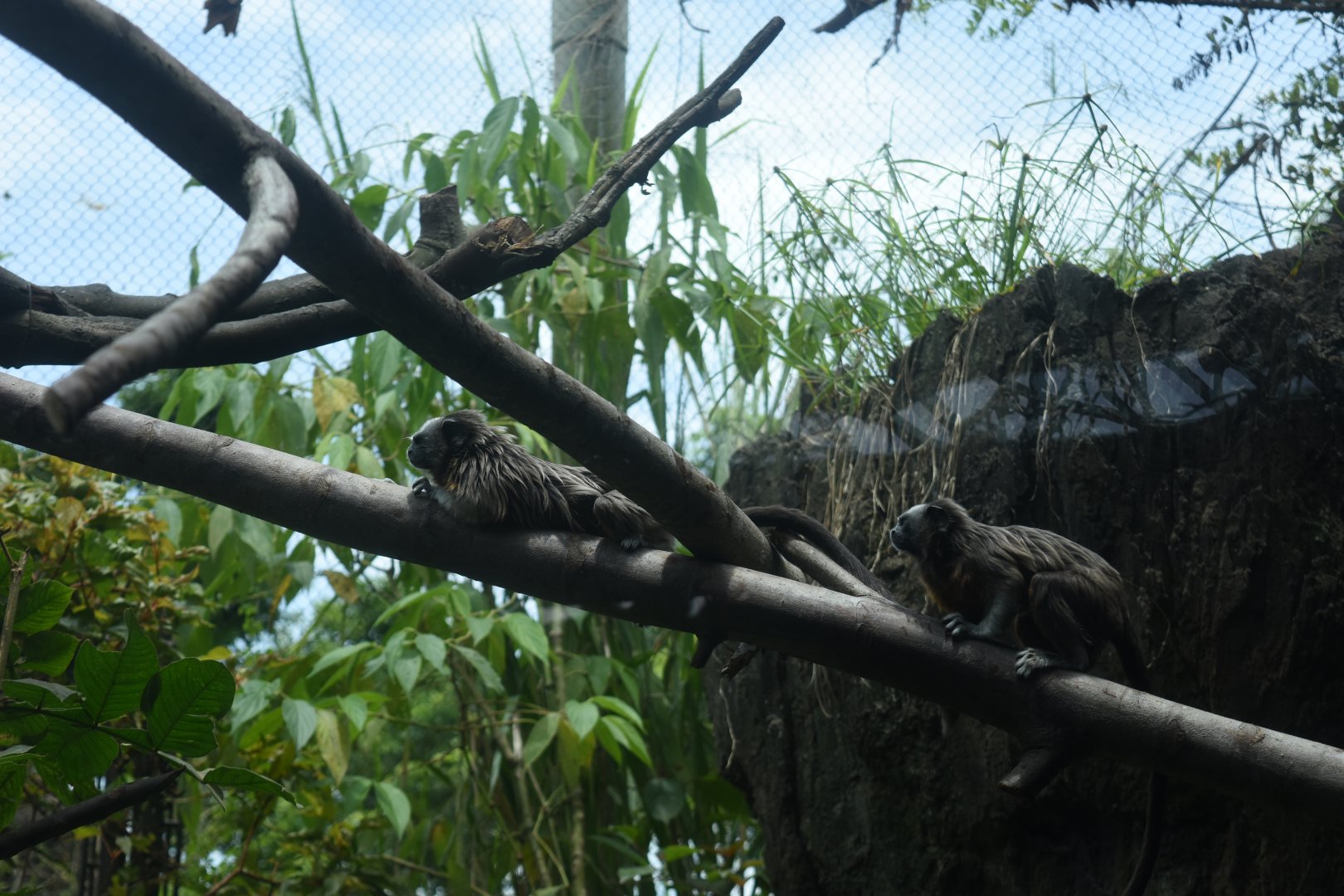
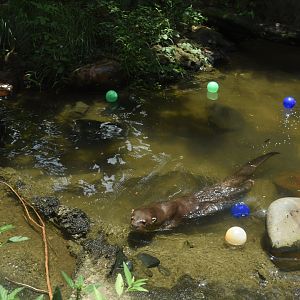
Great to see these in what seems to be a decent enclosure and facility as I know there is a great need to establish this species ex-situ up there in Colombia. @toto98 Do you know if this place has had any success with captive breeding yet ?
@Onychorhynchus coronatus The unfortunate reality of this species is that it is extremely common in the illegal pet trade, so almost all zoos in Colombia have lots of them. Rescue centers are also saturated with the species and often males are kept separate from females to avoid breeding due to the high numbers that institutions have. The Colombian Zoo Association (ACOPAZOA) has attempted to send some breeding pairs to Europe for quite some years now (Durrell, Beauval...) because of their constant support in the conservation projects for the species, but unfortunately the Ministry of Environment here vetoes such international transfers.
@toto98 I've been following this situation with and the efforts to conserve the species in-situ in Colombia with interest and admiration for quite some time and I agree it is ironic (to put it mildly) that so many places have them ex-situ in the country but yet they cannot be sent to zoos like Jersey and Beauval due to bureaucratic intransigence. It is somewhat the reverse situation here in Brazil with our two endangered marmosets which are also wanted by Jersey and Beauval. Few zoos keep them, fewer have had success breeding them and the Ministry of Environment...well that is complicated
It is indeed such a shame. The legal issues arise from well-intentioned laws made decades ago which attempted to curve international pet trade, which was rampant at the time (resulting in the huge numbers of cotton topped tamarins abroad in comparison to its numbers in the wild). Unfortunately for the Ministry of Environment zoos don't really seem to play any important role and that is why they are so reluctant to allow native animals to leave. It is often a multi-year process by the end of which individuals have lost valuable reproductive age years or have died in the process.
On a side note, I'm just curious to know why the Cotton-topped tamarin trade was so successful in establishing large populations everywhere, yet the white-footed tamarin (with a very similar range to that of the CTT) did not.
@toto98 The rumours of Durrell, Beauval etc. importing white-footed tamarins have resurfaced recently and EAZA has started an EEP for them. Do you know anything about this - is the transfer likely to be blocked again?
Similarly, @Onychorhynchus coronatus: Would the two marmoset species that Durrell and Beauval are interested in be the buffy-headed and the buffy-tufted? Again, EEPs have been set up for both species - do you think there is a good chance of exports in the near future?
@Gavialis Yes, the two species I am referring to are indeed the buffy-headed and the buffy-tufted and there are indeed very close links with Jersey and Beauval (and other zoos too) in terms of the efforts to conserve this species both in-situ and ex-situ.
I think there is a good and stronger chance that the buffy-tufted marmoset (Callithrix aurita) may one day be held by Jersey zoo particularly, however, this is far from being certain so do not quote me on that.
I do not think this would be the case with the buffy-headed marmoset (Callithrix flaviceps) which is in a far worse situation in the wild (the priority for this species has to be urgent ex-situ but here in Brazil).
That is about all I can say regarding these two species but I hope that gives you a clearer picture of this complex and evolving situation.