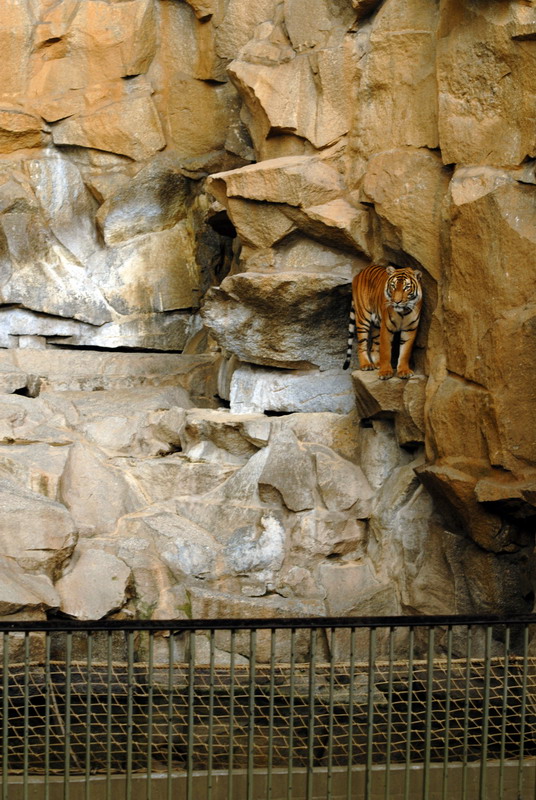
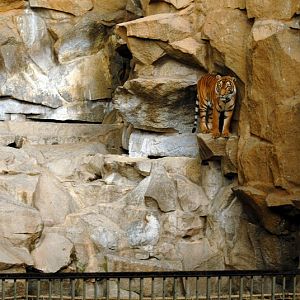
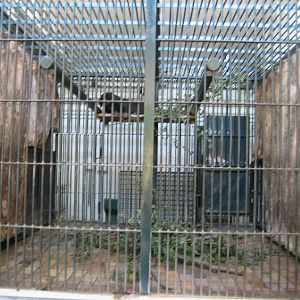
Thank you so much! I am both fascinated and horrified by this house. The carnivore cages are old-school and far to small. But the indoor moated enclosures for tigers and lions are incredibly interesting!
Then the sheer size of it all! Interesting architecture and and very exciting use of colours inside. Built in the beginning of the 1960s or something like that?
Then the sheer size of it all! Interesting architecture and and very exciting use of colours inside. Built in the beginning of the 1960s or something like that?
The background story for the Alfred-Brehm is typical for several larger public buildings in the GDR at that time (1963): like the Pachyderm House more than two decades later (1989), it was supposed to present an object of prestige for the GDR regime-true to the maxim: Let's beat the capitalistic West(ern zoos) by building the biggest and best animal house! Well, in terms of modern husbandry ideas, one can certainly not call it the "best" animal house nowadays-but its sheer size, architecture and collection of species is still remarkable. Preservation orders limit major modifications.
I personally recommend visiting the central 'rainforest' hall in the morning or the evening, when the Indian flying foxes are most active.
Sun Wukomg wrote:
"The background story for the Alfred-Brehm is typical for several larger public buildings in the GDR at that time (1963): like the Pachyderm House more than two decades later (1989), it was supposed to present an object of prestige for the GDR regime-true to the maxim: Let's beat the capitalistic West(ern zoos) by building the biggest and best animal house!"
That is a very interesting comment, Sun Wukong. I have, in fact, thought just along those lines when contemplating this house. Architecturally and historically, it is incredibly interesting. From my standard point of view - the animal welfare aspect - it is a nightmare, at least as far as the cats are concerned.
But anyway, I am most grateful to Animal for having shown me all these great shots!