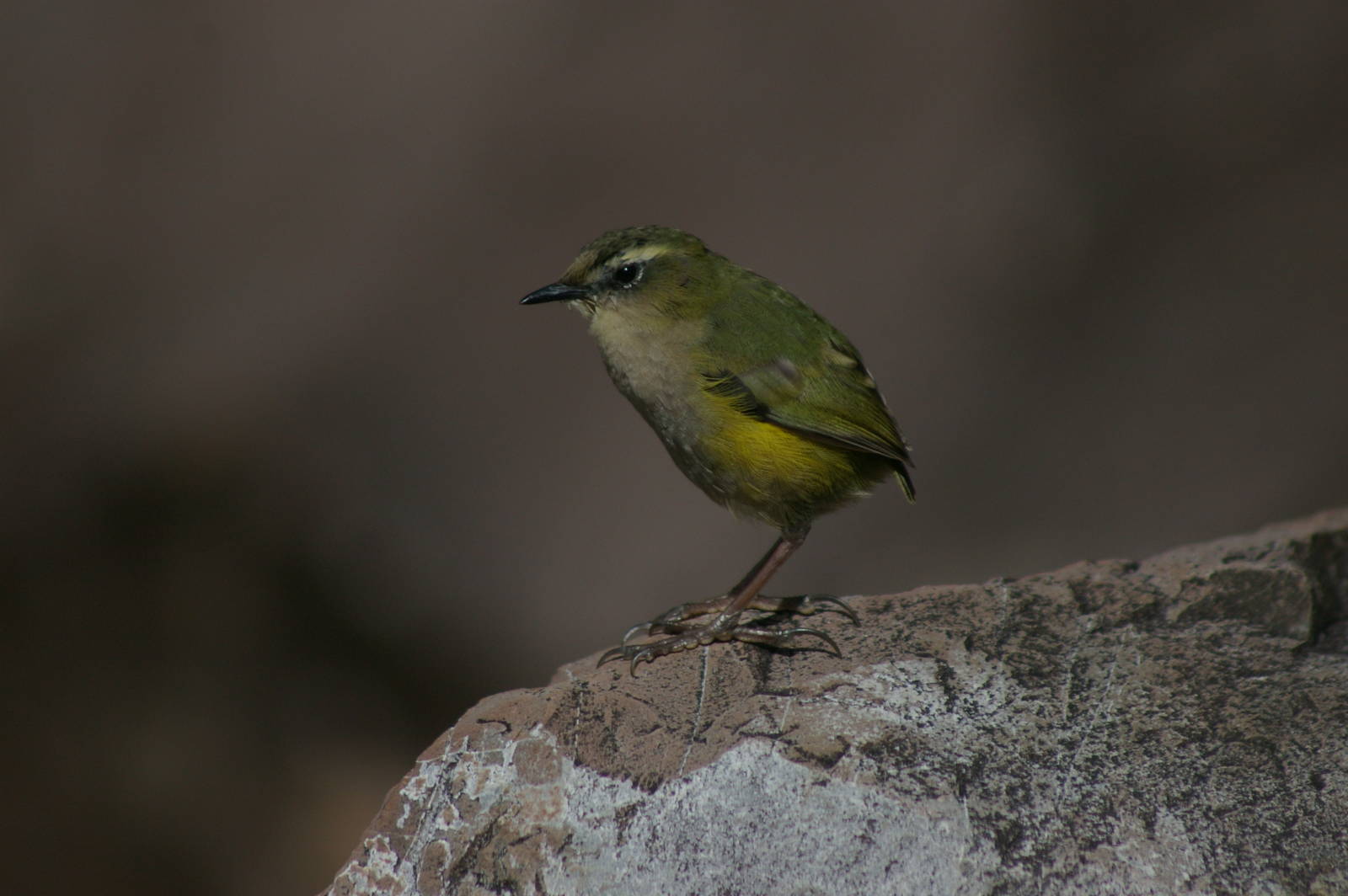
I thought I might put some zoological information onto this photo.
New Zealand wrens are really primitive passerines, not at all related to Old World wrens although they are roughly similar in general appearance. There used to be six species but now only two survive.
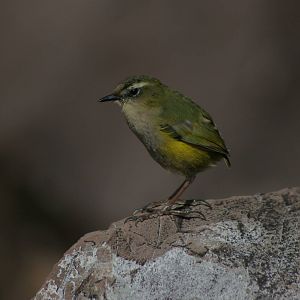
The rock wren lives only in the mountains of the South Island, largely above the tree-line where there are few introduced predators. During the winter they often live under the snow, creeping through the crevices of the boulder jumbles. They *may* have once occurred throughout the lowlands but the subfossil bones are difficult to distinguish from those of some related species so it isn't certain. This particular specimen (one of a pair) was photographed in the upper reaches of the Otira Valley at the top of Arthur's Pass.
The other extant species of NZ wren is the rifleman which is still widespread through the forests. It is the smallest surviving native bird.
The other extinct species are the Stephens Island wren, the stout-legged wren and the curve-billed wren, all of which are thought to have been flightless. Apart for a species of bunting from the Canary Islands these are the only known flightless passerines. Both of the latter wrens became extinct before European arrival (wiped out by Polynesian rats introduced by the Maori), but the Stephens Island wren held out upon tiny rat-free Stephens Island until wiped out finally by cats around 1895 (it used to be found over the entire country).
@the racoon has spoken - this particular bird I think was easy, from memory. Rock Wrens are extremely unpredictable - sometimes they are right where you expect them to be and sometimes they aren't. You normally have to just sit around and wait for them to show up, but when they do they are quite fearless.