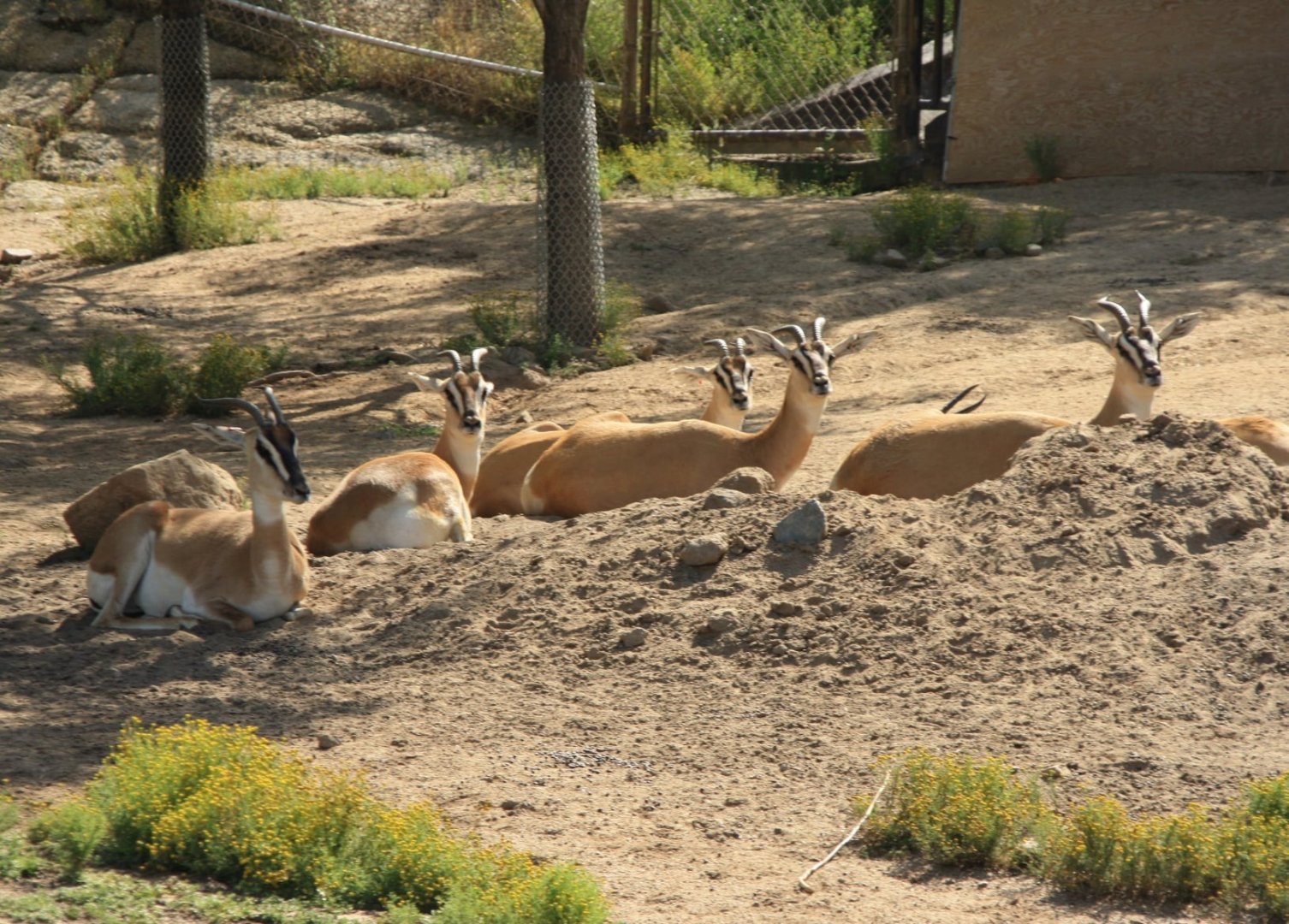
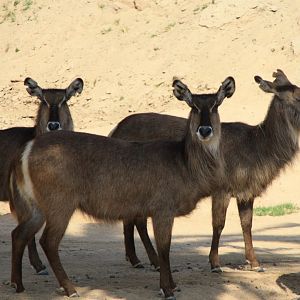
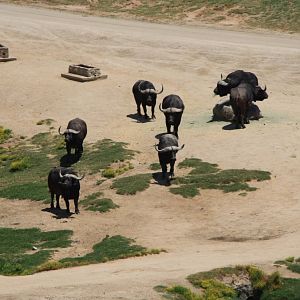
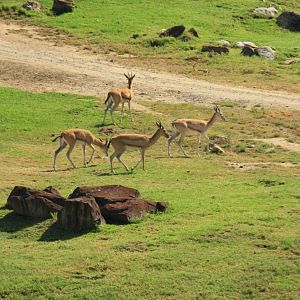
@SivatheriumGuy They are absolutely gorgeous animals. The safari park has built up a very impressive herd— 20 individuals, currently— and they’re committed to continuing with the species.
I visited Saint Louis Zoo on Saturday. Seems they only have three individuals of this species at the moment. Not sure what their long-term plans with the species are.
@nczoofan - The park is downsizing their hoofstock collection, this is true, but they are doing it in a very systematic way and they are not throwing away all of their rarities either. The majority of the species they are going out of are species that they were single-handedly managing/were on their way out anyways, with a few exceptions-- greater kudu (to focus on bongo and sitatunga), Turkmenian markhor (to focus on Nubian ibex), Bactrian wapiti (it's becoming increasingly difficult to move Cervus species in the United States, so they are choosing to focus on the more unique white-lipped deer), and generic giraffe (they are fully switching to Masai). The older populations are being left to age out (gaur, Indochinese & Mandarin sika, Barbary deer, etc.), while those with more breeding age animals are being shipped out for management in the private sector (Nubian red-fronted gazelle, Uganda kob, red lechwe etc.). By reducing the number species and switching to managed breeding vs. free-breeding, the park will be able to better manage the populations they are maintaining and better cooperate within the AZA. The way the park has been historically managed was not sustainable. Everyone is disappointed to see the size of the collection decrease (park management perhaps most of all), but they have come to find that you can't save anything if you try to save everything.
Thanks for laying that out. You with your knowledge and explanation make it sound a lot more rational, than others had described it. I have been among the select few I would say that are supportive of the zoo doing this, having reviewed a lot of the TAG documents and meeting proceedings recently. Again its sad but zoos like San Diego have been trying for decades with many of these species, and do not arrive at phase-outs easy. I mean lets be real, we can't manage 80 species of hoofstock in AZA zoos and affiliates like some would like on this site.
@Ituri - They should have five-- 2.3. The hoofstock team there is pretty actively involved with aridland hoofstock conservation and seems committed to the species. They aren't the easiest species to work with, but I believe they intend to carry on with them.
@nczoofan -- Exactly. It is not realistic to expect us to be able to carry all of the hoofstock species currently managed into the future, as sad as that is. It's just not sustainable. There's not enough space or interest. Zoos like San Diego, the Safari Park, Miami, St. Louis, Gladys Porter, Bronx, etc. have tried for decades to keep these populations afloat, but they cannot do it alone. The management of these parks and the TAGs have spent long and hard years working through these dilemmas and making these decisions. It is absolutely a case of they can't save anything if they try to save everything. By making these tough decisions now, the hope is that they will be able to still save as many populations as possible. It is very likely that without these phase-outs and management plans coming into effect now, we'd see a lot more losses down the line due to continual booms and busts in populations, species coming in and out of fashion, a continual upper management shift away from hoofstock etc. And I say all of this as a hoofstock aficionado actively working in a hoofstock care and management position.
@Kudu21 The only decision you've listed which just does not make sense to me is the Bactrian Deer phase-out. The AZA population is over twice the size of the European one, and is one of the few deer populations genuinely viable here. Meanwhile, the situation is reversed with White-Lipped, where we have less than half of Europe's population split between two zoos. Even with recent breeding success at both, you've mentioned to me in the past that many of the existing animals are fairly old and there are only about half a dozen males left in the country (which themselves live reduced lifespans compared to females). It's just a very bizarre decision to focus on what is surely a dead-end taxa but then phase-out an entirely viable one that has multiple other zoos with much larger holder facilities already committed to the species. The Safari Park houses about a quarter of the AZA population of Bactrian Deer, and the potential removal of those animals into private hands could cause a major blow to the surprisingly well-maintained and growing population kept between The Wilds and now the Bronx.
@ThylacineAlive -- I don't disagree. I was very surprised to hear that they were planning on phasing out the Bactrians in favor of the white-lippeds, especially considering the current management's focus on sustainable programs. They seem firm in wanting to continue with the white-lippeds, so it will be interesting to see how they are going to make that work given the smaller, aging population. I don't know what the plan is for the Bactrian herd; I don't know if the animals will be split between The Wilds and the Bronx, if they will be sent to new holders, or if they will be dispersed into the private sector. It will definitely be interesting to see how it plays out.