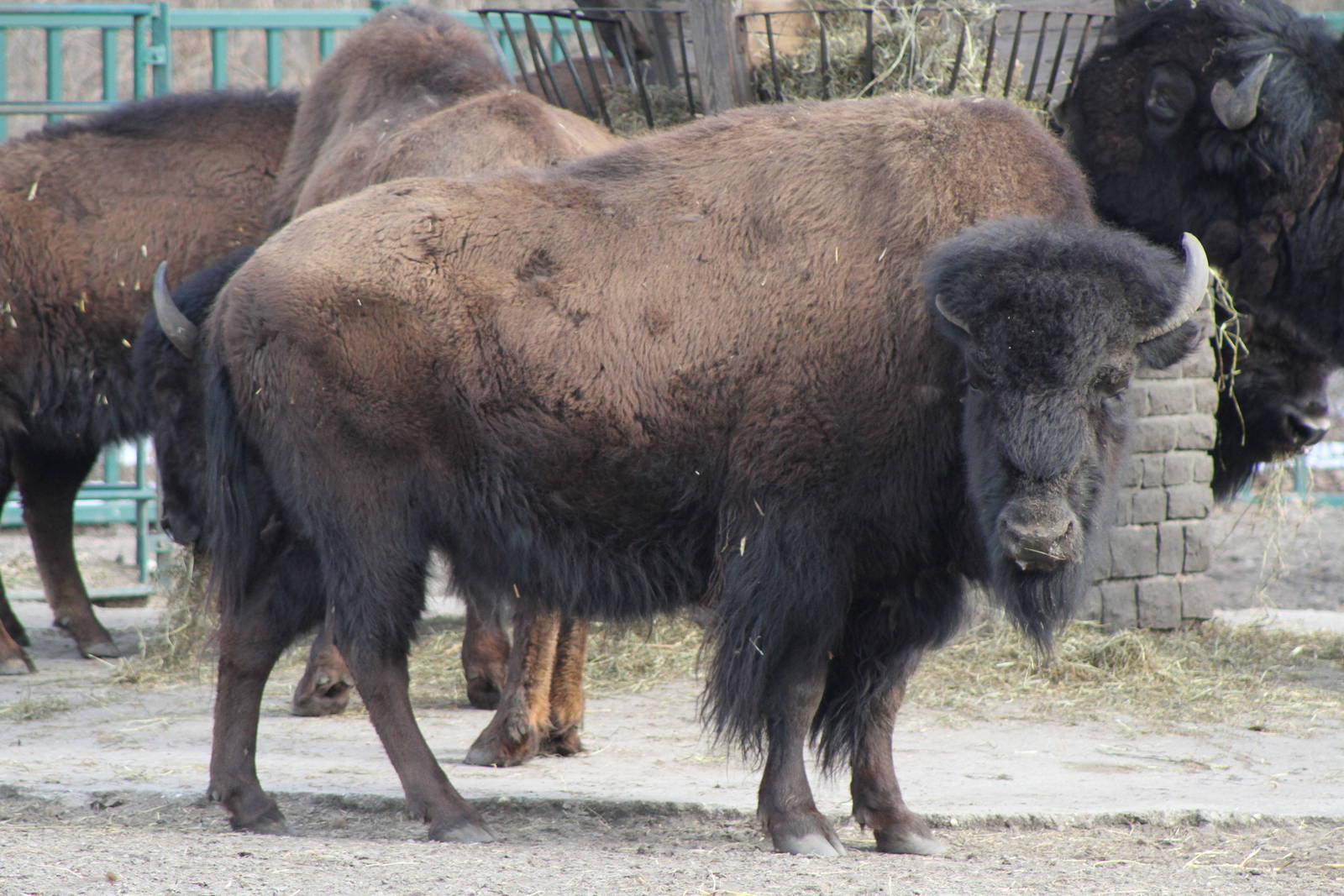
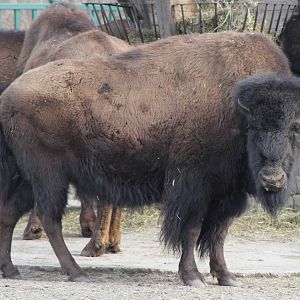
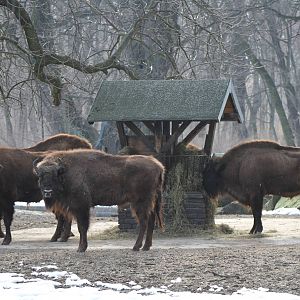
Yup, thats the American bison subspecies that Tierpark Berlin has, but Berlin Zoo has Plains bison, there are not many Wood bison in Europe so it is nice to see that Tierpark Berlin has them
Technically, no one has Wood Bison. The subspecies is extinct in its pure form. Since we don't even have any holotypes to go on, we can't even say what percentage of the current "Wood Bison" are Wood Bison.
Technically, no one has Wood Bison. The subspecies is extinct in its pure form. Since we don't even have any holotypes to go on, we can't even say what percentage of the current "Wood Bison" are Wood Bison.
Quite unlike the Barbary lion sitution, where essentially everybody recognize its distinction, but there is no evidence that supports its continued survival. (though I'd be entirely unsurprised if lions with a small percentages of Barbary genes exist out there; the result of hybridization generations ago.)
Much has been said regarding the possible validity of the wood bison, but three things are worth establishing:
1) The holotype of the wood bison is still in existence. It is at the Canadian Museum of Nature in Ottawa. As usual for high value specimens, it isn't on exhibit, but still available for research.
2) While work by primarily Geist has presented widely quoted morphological evidence for invalidating the wood bison, this work had its issues and other publications have provided features for separating wood and plains, primarily using adult males.
3) Genetics published so far do not support the two American bison subspecies. However, some–but not all–of these have been based on things (e.g. microsatellites) that are of questionable value at this level of taxonomy.
So, while questions remain, we do have some answers: Today there are two forms of American bison that can be separated based on morphology, but not clearly (based on presently available evidence) from genetics. As a consequence, this becomes an biological taxonomy vs. phylogenetic taxonomy question. In the former, taxa are not required to be monophyletic, which is a requirement in the latter.
Additionally, as hinted by jbnbsn99's comment, the purity of the surviving woods is in question: It is known that hybridization happened when it was near extinct about a century ago. What we don't know is how impure they are, and I've heard claims (with little hard evidence to back it up) ranging from anywhere between 25% and <5%.