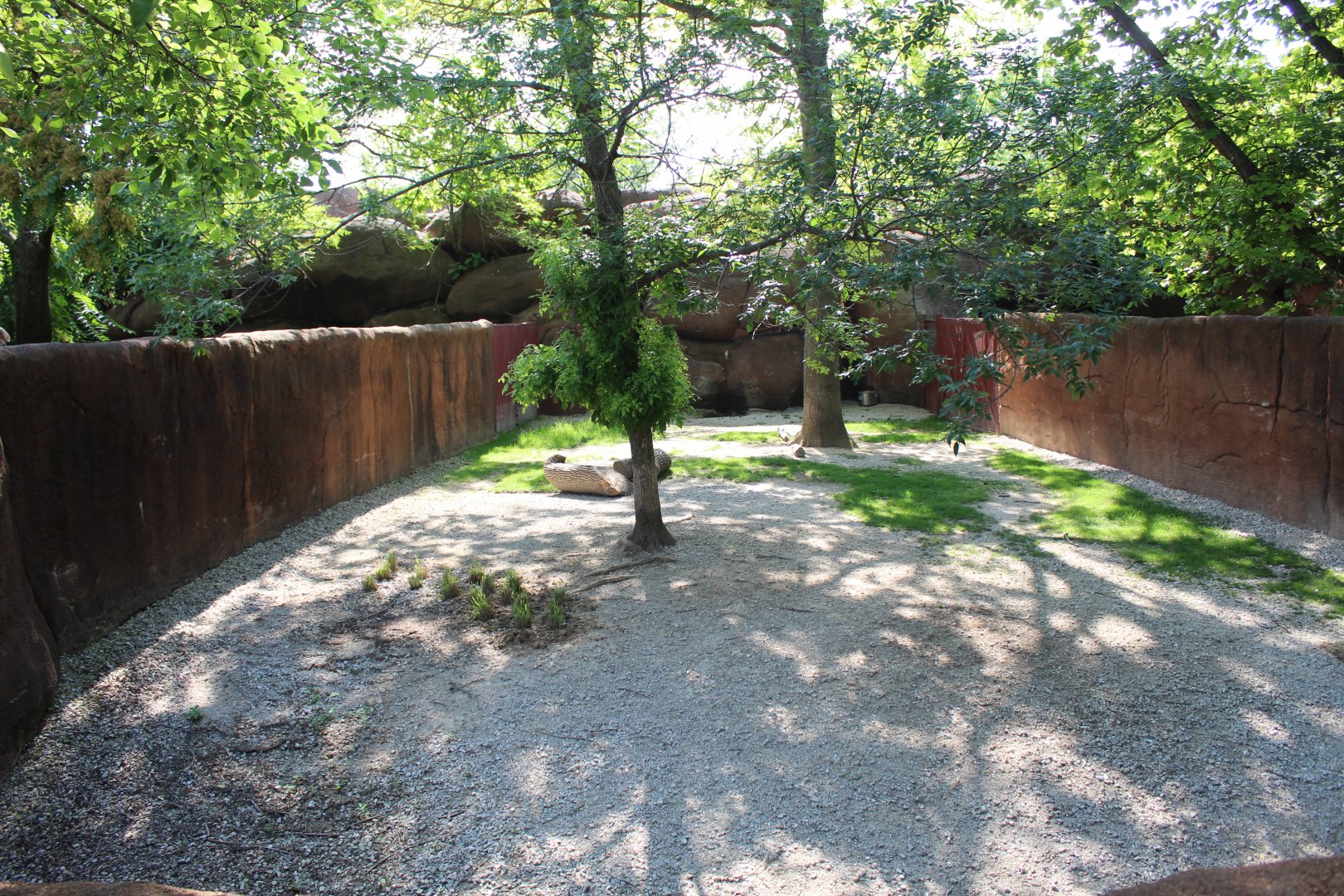
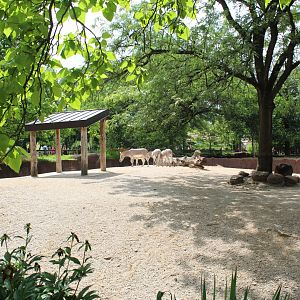
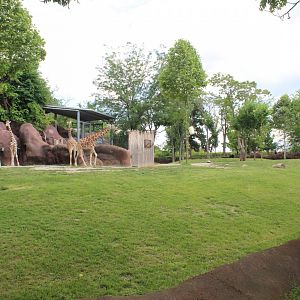
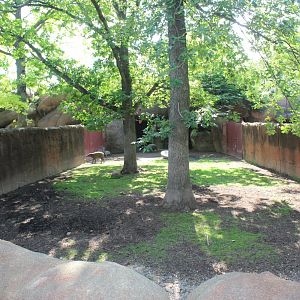
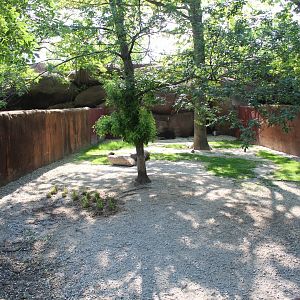
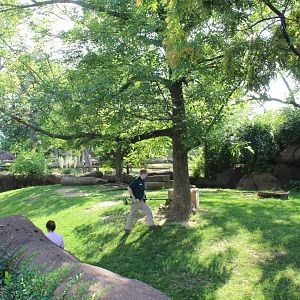
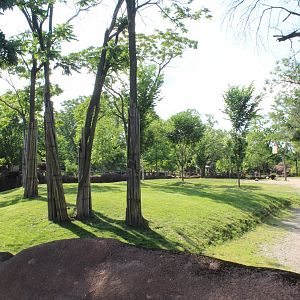
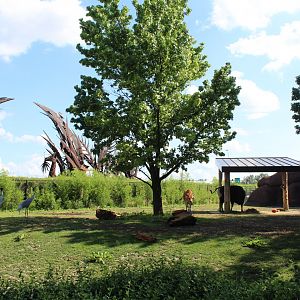
From a husbandry standpoint, this series of Speke’s gazelle yards make a lot of sense. Speke’s are prone to both hoof rot and skin conditions, so keeping them on a mostly dry, coarse substrate will help tremendously in preventing/managing these conditions. Speke’s are also incredibly flighty and fragile, so keeping them in a series of smaller, solid-walled yards is safer — it keeps them from gaining too much speed and potentially hurting themselves if they are startled and provides a solid visible barrier that they will be less likely to run into if startled. St. Louis is one of the leading facilities for this species.
@Kudu21That's very interesting. I always thought it didn't quite make sense that their enclosures looked so small and barren. This does help me appreciate it.
@TinoPup The exhibit complex was built as a 1930's WPA project, so naturally there's been some wear over the years; it's also made from real rock. The design looks better on some of the other enclosures, though; this is a narrower middle yard so the rockwork looks jankier than in some adjacent pens.
Most of the other yards are also quite grassy and very well-shaded. I think this complex has held up considerably well considering its age.