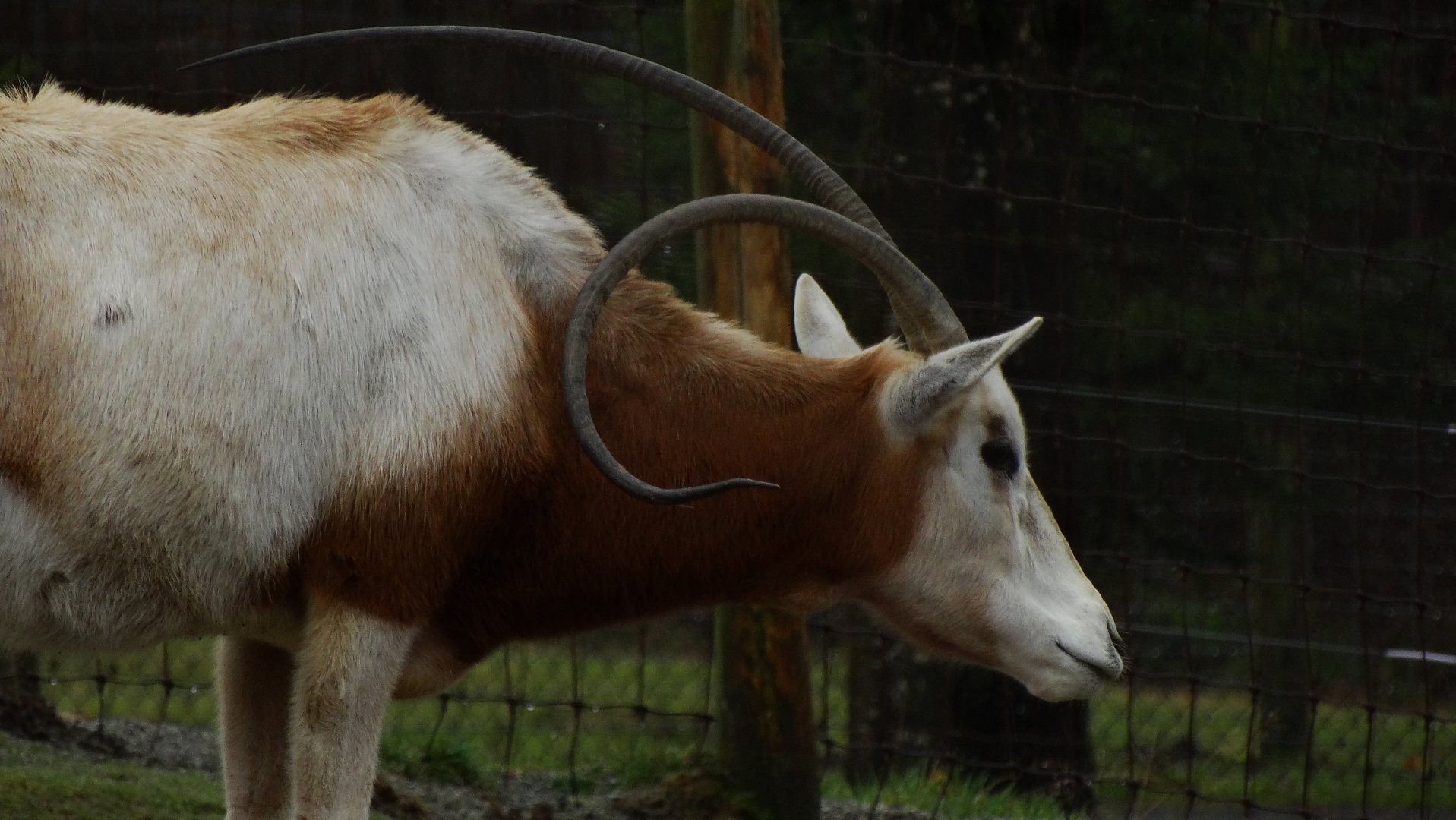
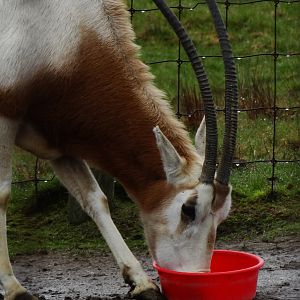
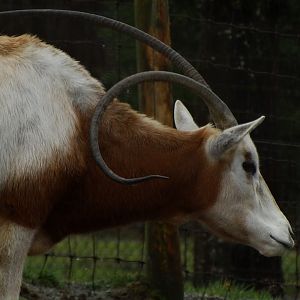
@PossumRoach -- In aridland species, like scimitar-horned oryx and addax, horn abnormalities can be linked to being kept on wet, grassy pastures. Lush grass and other forage is a lot richer than what their digestive systems have evolved to manage, and thus, this overload of nutrients can cause abnormal horn growth and hoof growth. That would be my guess as to what's going on here.
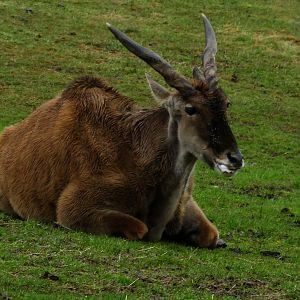
Castration usually only causes noticeable horn abnormalities in species that are sexually dimorphic. You see it a lot in blackbuck (like the DAK animals I've commented on before), but also waterbuck, some gazelles, etc. Tragelaphids don't seem to exhibit the extreme horn abnormalities when castrated that you see in the former species even though they are also sexually dimorphic -- you usually just don't see the full development of the secondary sexual characteristics, i.e. beards, dewlaps, manes, coat color, etc., and the horns are usually just not as fully developed as they would be in an intact male. It is believed that this is because these species are less territorial than aforementioned species. I also would not claim that it is "improper" castration, just early castration. There isn't anything necessarily "improper" about castrating an animal early. Often times, if it is known that an animal is going to be surplus from birth, castrating as early as possible is the least stressful and least painful time to do the procedure. It gets more complicated and more risky the older the animal gets.
Horn abnormalities can also be a result of injuries sustained to the horn base while the horns are still developing. If that horn base is disturbed, the horns will not grow in in the normal fashion. This is commonly seen if an animal is spooked and hits a fence as a calf. I've seen this quite a bit in bongo (since both males and females have horns), where you end up with horns that are not parallel or have dramatic crosses.