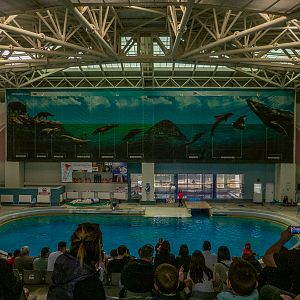
The dolphinarium was opened in 1972, making it the oldest dolphinarium in the former socialist countries of Europe (outside the Soviet Union). It was originally an institution in its own right, but was merged into the CMSN a year later (1973) along with the Aquarium, Exotic Birds Exhibition, Mini-Zoo and Planetarium. First there were Black Sea porpoises (Phocoena phocoena relicta) and long-beaked dolphins (Delphinus delphis ponticus), later (after 20 years) bottlenose dolphins (Tursiops truncatus ponticus), in the 90s there were also penguins in the dolphinarium.
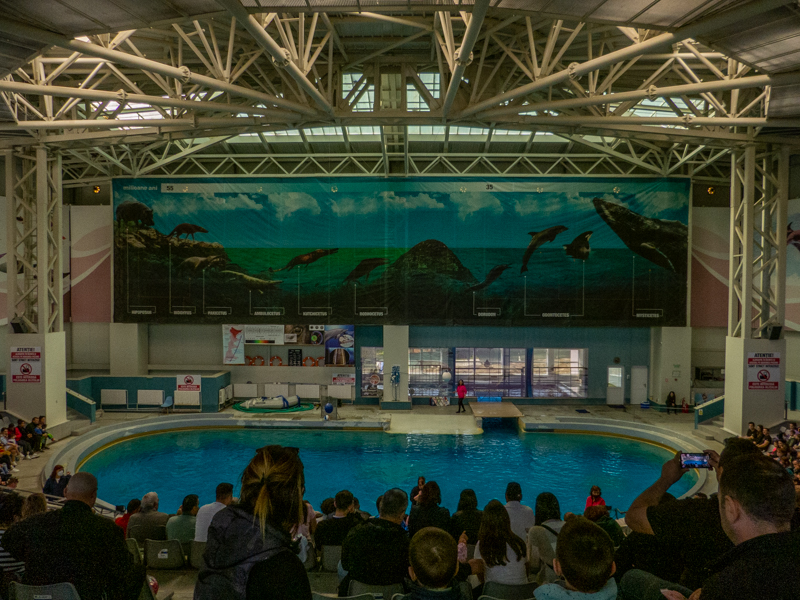
The Dolphinarium building originally featured an open pool, 22 m long, 12 m wide and 4.5 m deep (1200 m³), surrounded by an amphitheater seating around 600 people. Shows were held there during the summer season. This pool is connected by a canal to another pool (Winter) with a volume of 160 m³.
Beginning in 1981, a new dolphin site was built and commissioned to continue training and entertainment activities throughout the winter. This space benefits from an indoor pool with a depth of 3m, a capacity of 500m³ and 300 seats for spectators.
Extensive modernization and expansion work on the dolphinarium began at the end of 2013 and was completed in July 2016.
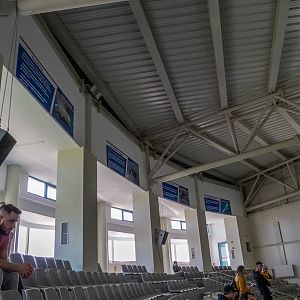
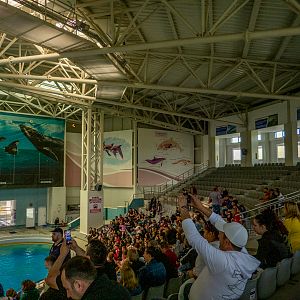
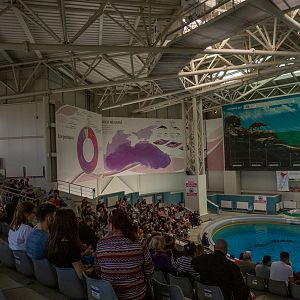
The number of spectator seats has been increased (from 600 to 1348 seats) and the enclosure has been covered with a vault (1720 m²), which ensures access for tourists in all weathers.
The former winter hall is today's rear pool away from the public.
For comparison with German zoos:
And again for everyone the summary:
Duisburg
large main pool and two alternate pools: up to 5m deep, 3000 m³
Nuremberg
Basin 1: 1,078.4 m³
Basin 2: 1,518.2 m³
Pool 3: 1,798.4 m³
Pool 4: 363.7 m³
Pool 5: 214.8 m³
Pool 6: 486.8 m³
Water depth in the lagoon between 0.5 and 7 meters
Constanta
Show pool: length 22 m, width 12 m and water depth of 4.5 m (1200 m³)
Barrier tank: 160 m³ [the sea lions were in there]
Second pool: depth 3 m, volume 500 m³