B

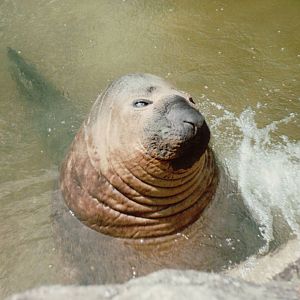
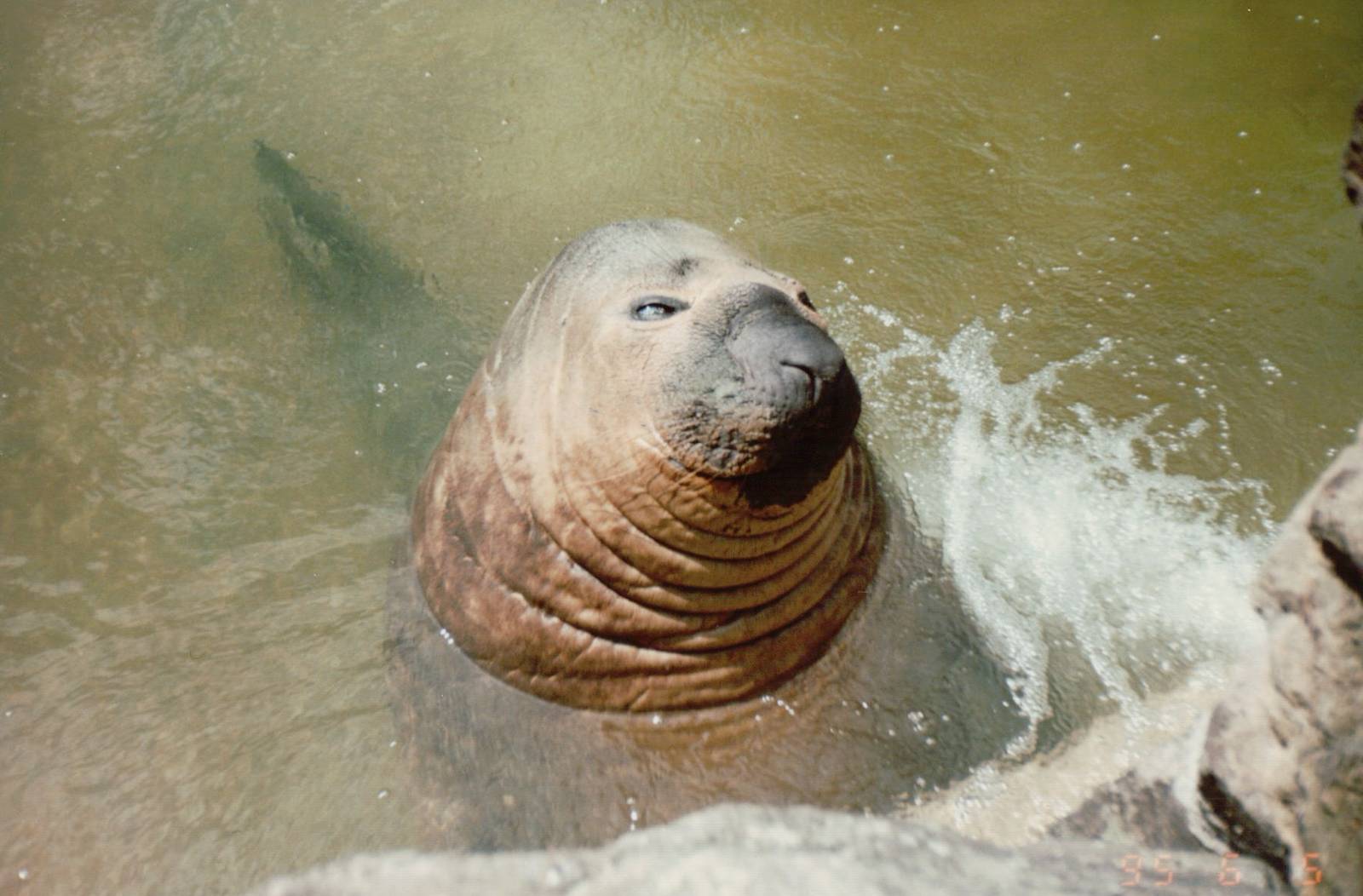
Berlin Zoo 1995 - The last Elephant Seal in Europe

  • Media owner Baldur
  • Date added
Scanned photo from my visit in June 1995.

If Zoochat had been around in 1995, I would most likely have known that I was looking at the last Elephant Seal in Europe. But even if I did not know that back then, seeing 'Sharky' was and will always be one of my most memorable zoo experiences and I am so grateful that I got to see this animal.
Another example are Pangolins. But as long as enough pangolins are still living in the wild, the zoos have enough more attempts, to keep them alive....Too many of them died ? Who cares, if the Zoofreaks are happy to have seen one alive....

This may make me sound rather callous, but does it matter, massively, if pangolins - at the moment - do not have a particularly long life in zoos? Many thousands are hunted in south-east Asia; a handful being taken into the zoo world is but a drop in the ocean. And if some are taken into captivity, then at least they offer something to science - as well as to those (like me!) who would gladly travel many miles to see such a creature. And, eventually, we can get it right - and they can flourish in zoos (hopefully).
 
@ Zoomaniac.

Don't Worry, I never lost my level of respect...But I have to say, you wrong if you name me The World Greatest Elephant seal expert, I'm only the second in the row.

Where in my posting I have done any assumption ?

Yes, in some japanese aquariums some whale sharks are now living there for several years, so like elephant seals did. But how many of them have died ?

Should we open a new thread for all species, which can't be kept in zoos and Should not be kept ? So let me start with one of my favourite examples-gerenuk. They are still dying like flies, and some zoos have stopped keeping them, altough it was no problem to replace the dead animals. Why ?

But I like the very cute "gerenuk" house, which was designed by some zoofans full of experience in keeping antelopes, especially gerenuks. It was very funny and I was very amused about it....So please send the design to all gerenuk holders, I'm sure, they gonna need the help and advices of private Zoofans....Another example are Pangolins. But as long as enough pangolins are still living in the wild, the zoos have enough more attempts, to keep them alive....Too many of them died ? Who cares, if the Zoofreaks are happy to have seen one alive....

Forget it. It makes no sense to discuss that with people, which are only intersted to see as many rare species as they can, this people call themselfs a Species Collector. A perfect name, which says eevrything...

I wish you many fun with the upcoming Gondwanaland, I promise you, you will find your El Dorado there....

As I've pointed out before, gerenuks are doing just fine for multiple generations in a number of US zoos, including LA and St. Louis. So, you should stop using them as an example of an "impossible" species.

I get that the deep-diving, migratory and colonial elephant seals are a huge--possibly unsurmountable--challenge. But Taipei seems to have "figured out" how to do pangolins, and shoebills are now starting to breed, so there's always hope.....
 
@reduakari. Gerenuks are doing fine in the uS ? Are you sure ? I KNOW they are doing NOT fine in Us-Zoos. They never did FINE in zoos. Belive me, I've been to several gernuks holders and I had very good talkings to keepers and curators, so I have a little bit more background knowledge about teh history of gerenuks in zoos. Some keepers of them told me, it should be better NOT to keep them in a zoo............

i've been to taipei Zoor ecentcly and I have seent eh pangolojn holding area behind the scenes,and I ahd talkings to responsable persons theer. Sorry, they have the same number of ad pangolins as before, and they are still working on the correct diet for them.
 
@Tarsius:

I see we can come a little closer again:)

The point that is obviously "dividing" us is the designation/the word "impossible". If we could reduce it to "very hard to breed", "could not been etablished as a self-sustaining zoo population UNTIL NOW" or "is not necessary to be kept AT THE MOMENT" then my portion of agreement would be much higher:)

The general question is, where should we (if ever) draw the line? When is the point to say: Stop keeping Gerenuks, Killer Whales, Pangolins (or whatever)? Who is able (or has the right) to say: Now it ist enough, to much of them are gone across the River Jordan (german saying for dying)?
By all this, we have to look behind the scenes. Means: Have we everything done that was possible to establish a population in captivity or has it failed because of individual faults. Remember also, that with new technics and more knowledge about the biology of a species such a species could suddenly bred well and could have a long(er) life in captivity.

Finally, just for the completeness, the answer to your question about your assumptions:

Yes I know, what comes next from you, maybe the scientists of Frankfurt Zoo in that time are just fools.....:
And even some phrases in form of questions could be considered as assumptions. But I will not longer ride on that (also a german saying). Let's concentrate on the "non personal battle" again...;)
 
To get back to the elephant seals - to my knowledge, there has never been a purpose built, appropriate enclosure for elephant seals in any zoo or aquarium. They were always "thrown" into existing sea lion/ seal enclosures, which were always utterly inappropriate for them. It has also never been tried, to establish a larger group (bigger than two or three individuals). Until some institution really tries to do it "right" (Maybe something remotely similar to the walrus enclosure at Harderwijk, but hopefully even much bigger), I think the verdict is still out on the "keep-ability" of elephant seals in zoos.
 
@Saro

Absolutely agree. Thats what I meant with former "individual faults". And that's also because I said, it is - beside the interest of the responsible persons in a zoo - (manly) a question of money and space.
 
@zoomaniac. I think, there is no way to come together. As i said, its not the question of money and space, it is the question of the biology of elephant seals, which makes it impossible to give them just nearly natural living conditions in zoos. Have you ever asked yourself,why so many females were killed by the males ? This has several reasons, so I give you the advice, to read more about the biology of elephant seals, maybe then you will understand me....

Its up on the zoos, to decide, which species they want to keepor not. Most Us-zoos for example do not want to keep anymore pangolins, because it is impossible to get a population of zooborn animals....L.a has kept one, because it was smuggled. It died just a few month later..... And strange, some Us-zoo dont want to keep anymore gerenuks, after to many of them were send over the Jordan....You have no idea, how many....I wish the european zoos, which are interested in gerenuks good luck with them, but I feel Sorry for the gerenuks....

Sorry, but there are no techniques, to improve the natural living conditons of elephant seals.

@Saro. Frankfurt has build an own pool just for the elephant seals., today it is used for seals. They always kept only two animals at the same time, but all of them did aftter just a few months or years. I'm really happy, that the western zoos have regognized the impossibility of keeping this species in human care, I hope,the same will happen with some other species.
 
@Tarsius: You know the current seal pool is not appropriate for any large seal. That is not the kind of enclosure I was talking about. In your personal opinion, what in the biology of elephant seals makes it impossible to keep them ? How many females were killed by males?
 
@Tarsius:

Your advice in this case is not necessary. As you surely know, Elephant Seal bulls CAN kill females and their young also in nature. Mostly because of "mating stress". In nature, bulls must fight against other bulls and they are allways in a hurry to mate with as much females as they can. So there is less power and time to harass one female, while in zoos in the past - as Saro mentioned - there were only one or two female to mate and no break for them (and mostly no competitive bull). So if the zoos would have built a bigger exhibit with more individuals (mostly females) a zoo population could have been established (= space and money).

IF anyone says that Elephant Seals are (mostly) migratory animals, then I answer, that there are other migratory animals in captivity as well which are doing fine (White Stork for example).

But okay, I think we have to live with it, that in that point we can't find eachother;).
 
@Saro. The current Sealpool at Frankfurt zoo isn't approciate for any large seal ? Sorry, I didn't knew that.

Every kind of the elephant seals biology makes it impossible to keep them.

To answer your last question I had to do a reserach in my archive, Sorry, I don't have the time for that now...

@zoomaniac. You're right, we will not come together. Do you think, there are animals whicha re now in zoos, which can't be kept or shouldn't be kept in a zoo ? I don't think so...
 

Media information

Category
Berlin Zoo
Added by
Baldur
Date added
View count
10,175
Comment count
36
Rating
0.00 star(s) 0 ratings

Share this media

Back
Top