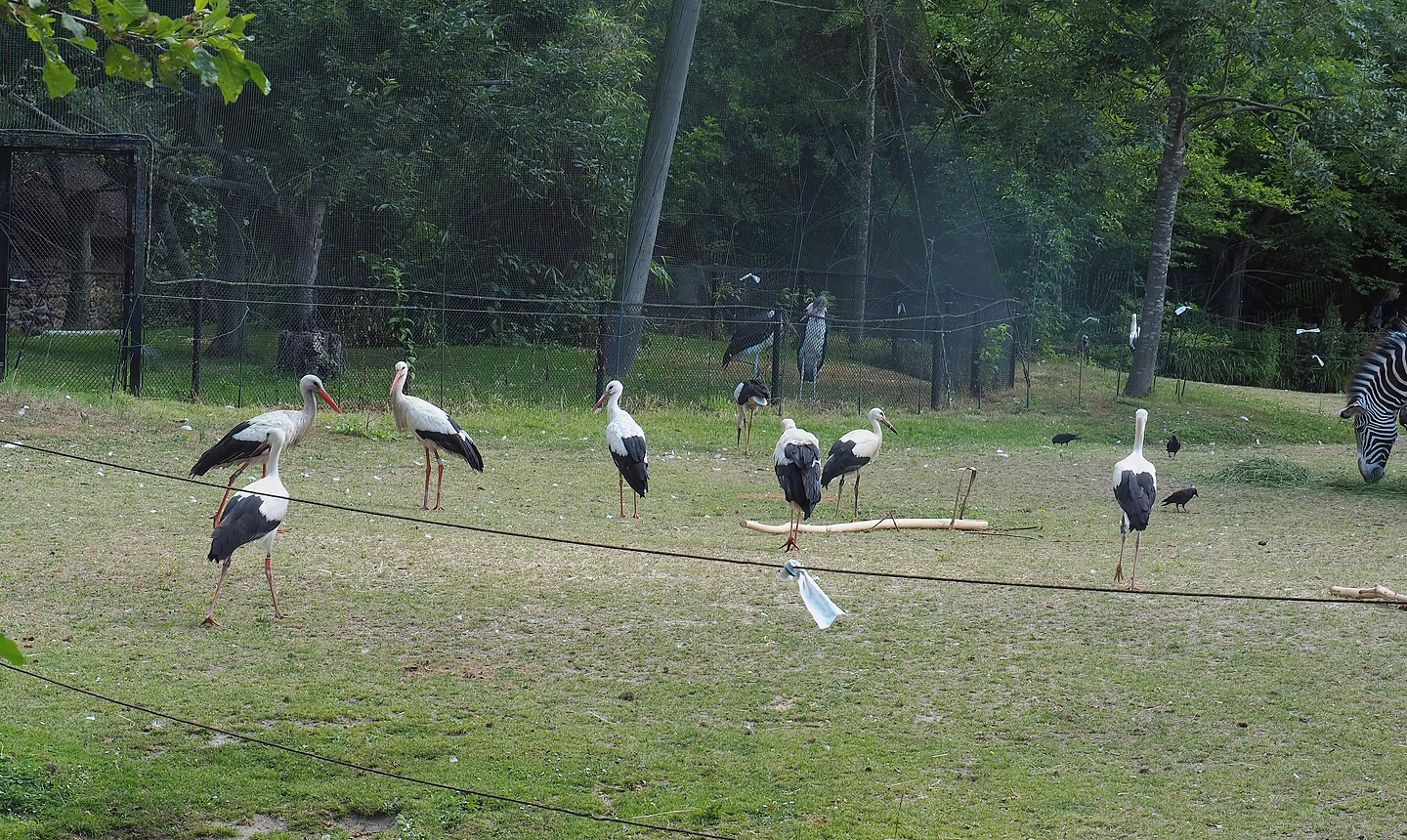
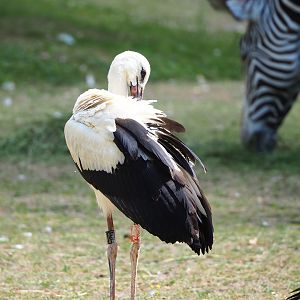
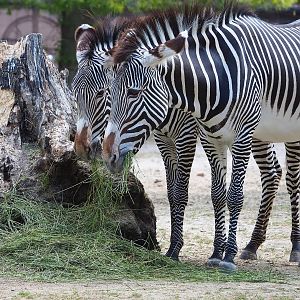
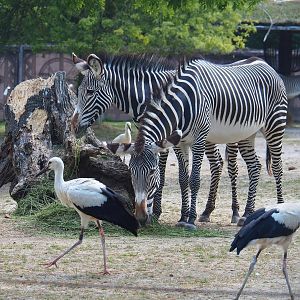
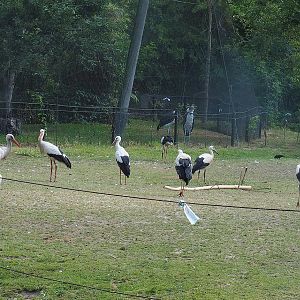
The Grévy's zebra paddock seems to be a common gathering place for storks. Marabous (in the African waterfront aviary) and a Grévy's zebra are seen in the background.
@Lota lota Planckendael has a large colony (207 adults, 145 chicks and 86 nests in 2022) of free-ranging, almost completely wild storks, many of them also naturally migrating to the Iberian peninsula or Western Africa. They place nests, during the winter months the resident non-migratory storks get extra food (roughly in the area depicted here, near the aviary) and the chicks are banded, otherwise the birds are interfered with very little. The colony was started from captive birds, but is now almost totally wild.
@DelacoursLangur The project was started in the mid 1980's to reintroduce the stork in Belgium/Flanders, with the first storks released in 1990. Quite a bit of scientific work on the storks has been done in the past, especially on following their migrations routes and identifying dangers during migration.