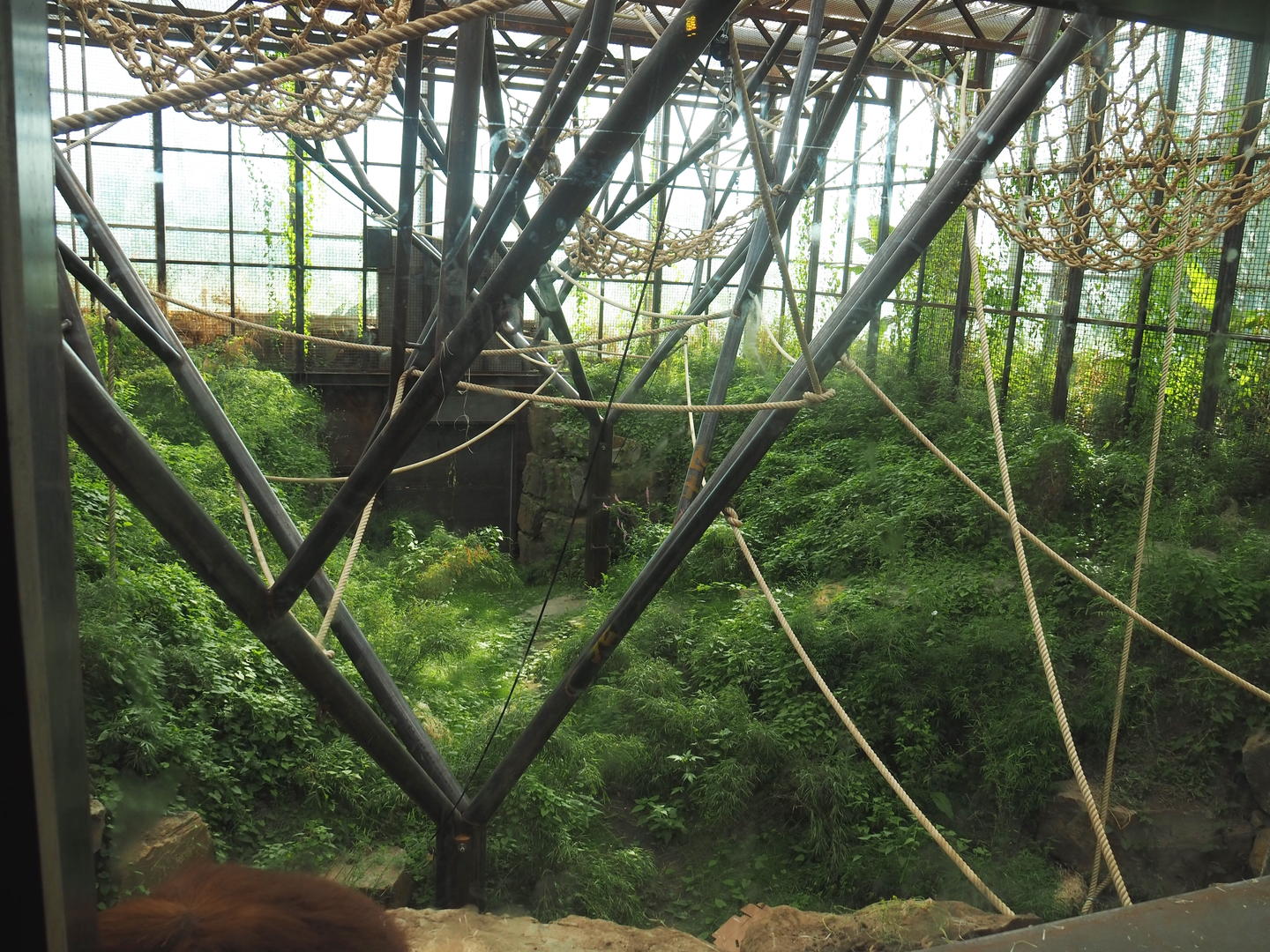
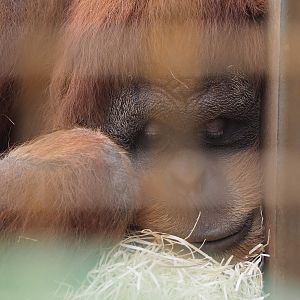
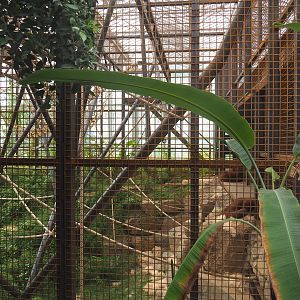
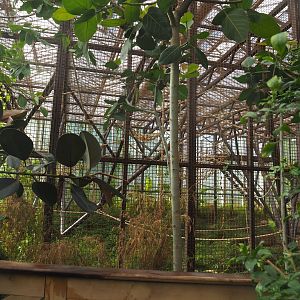
@DelacoursLangur They also have similar exhibits for a family group (male, female and male juvenile) and for gibbons (mixed with the family groups) that are similar, but a little less lush on the floor. The grass and herbs on the ground seem to be holding up pretty well so far, probably because the apes are spending a lot of time in the higher levels (which was the intention of the design of the exhibits).
@ZooElephantsMan The orangutan and gibbon exhibits themselves are very young, they were opened at the beginning of the summer of 2022.
The greenhouse they are built into however was originally built in 2005-2006 and was renovated and repurposed to house the apes. It previously housed birds, small mammals and the gibbons in a different, smaller exhibit.
It will be really fascinating to see if this type of indoor exhibit will begin a trend in zoos, as it appears to be so much better than the old-fashioned cement floors with a little scattering of hay.
@snowleopard I'm personally a fan of either this, or something like the bonobo house at Planckendael, opened in 2019, which doesn't have the grass/herb bottom, but does have large, tall rooms with a natural material like mulch on a large portion of the floor of the indoor exhibits.
By the way, Planckendael does still offer materials like hay or wood shavings and blankets or burlap sacks for nesting and sleeping, which the apes do seem to like using.
@snowleopard I believe you have commented before on how many zoos orang utan enclosures encourage them to spend a huge amount of time on the floor which does not occur in the wild. This certainly looks like it solves that problem - it would be nice to see this develop into a trend.
@Cat-Man That was certainly the idea for this exhibit and from what I have seen it seems to be working. I usually see the orangutans on platforms at height, using the climbing structures or climbing on the mesh of the exhibits.