Really? Of the ones that reduakari mentions, Hamburg is marvellous in an early C20th sort of way (no criticism!); Hannover goes full steam ahead for the Tarzan / Jungle Book approach; Leipzig's Gondwanaland has much to commend it but still goes for a strangely themed boat ride that owes as much to the films of John Huston, and the ideas of Disney, as it does to reality. Only Zurich's Masoala is an unequivocal success - but I'm not sure I'd want every zoo to go down this route. My experience of American zoos is limited, but I very much hope that the immersion thing is done better across the Atlantic than it is in Europe.
Randers? Burgers? And the ultimate indoor rainforest, Eden project?
My response, as you could see, was not directed at whether it was the sort of thing you favor but to IanRRobertson's assertion that it would be very difficult to attempt in Berlin. It would not be.
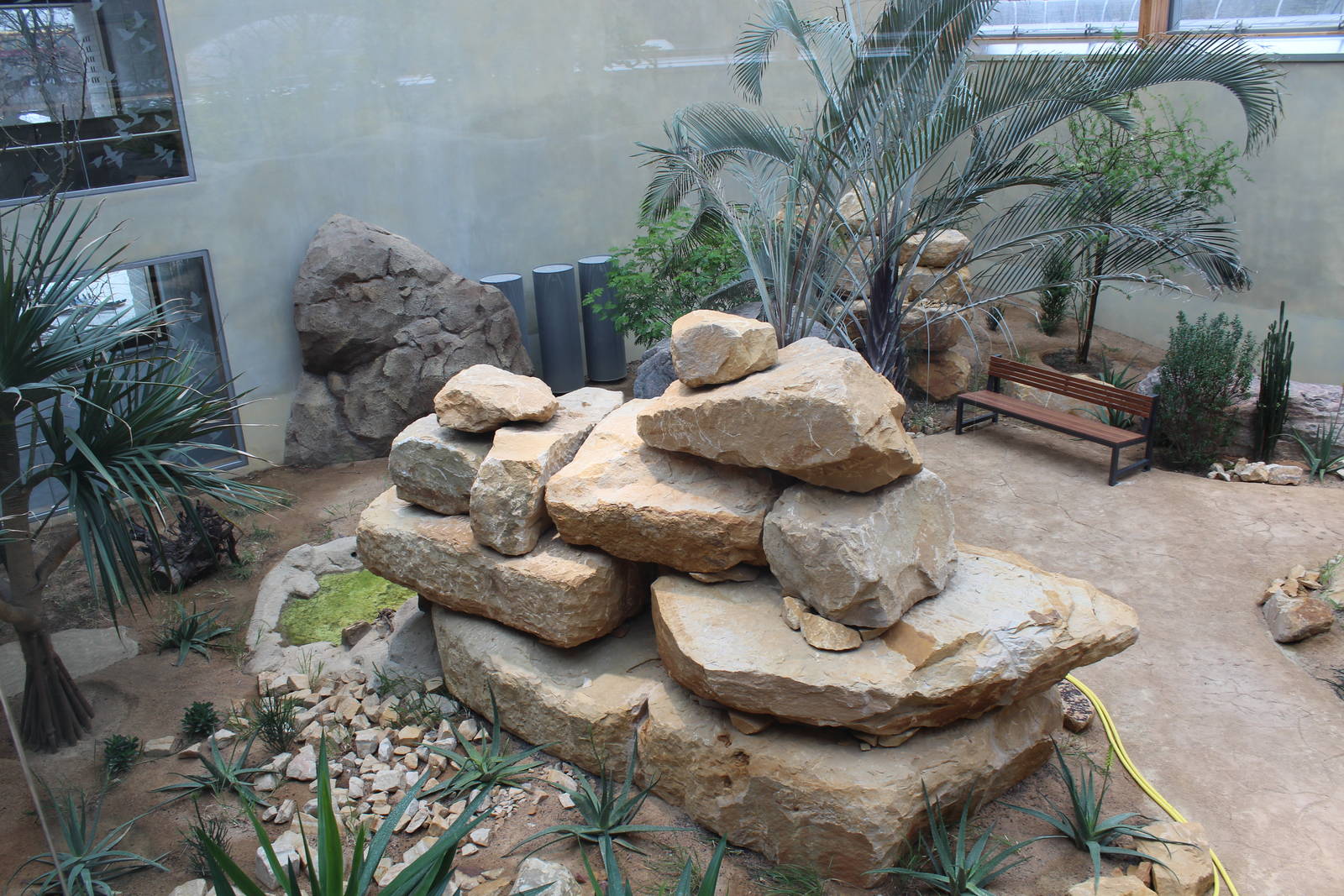
The failure here is not that it is poor immersion exhibitry but rather that it (appears to) be poor design. Neither great immersion nor great anything else. As an example of a brilliant alternative to immersion exhibits: Chester's Realm of the Red Ape. That exhibit -- especially the outdoor yard -- took something from standard UK zoo exhibits and made it much much better for animals and visitors alike. It is a fantastic experience for both and attractive as well.
^I think it may make a bit of a difference to actually visit the place first, before judging the whole structure based on some early pictures. It already looks somewhat better and it may also improve over the years. But no one planned to have a second Burger's Bush or Gondwana here. It is a different concept. If people don't like this kind of concept they have many other options.
Personally I quite like the new building, though. I only object to the bare cement (and other similiar materials) which appears to become more fashionable these days. The halls are quite awesome in my opinion and the other aviaries are very decent as well, even though they could of course still be bigger. I think it is a very good place for keeping and breeding birds. I also like the way they are presented.
^I think it may make a bit of a difference to actually visit the place first, before judging the whole structure based on some early pictures. It already looks somewhat better and it may also improve over the years. But no one planned to have a second Burger's Bush or Gondwana here. It is a different concept. If people don't like this kind of concept they have many other options.
I do agree that we cannot judge the building.
For myself, I am responding only to what can be seen in this photo.
I have treid to be very clear about that... perhaps I did not succeed
. As an example of a brilliant alternative to immersion exhibits: Chester's Realm of the Red Ape. That exhibit -- especially the outdoor yard -- took something from standard UK zoo exhibits and made it much much better for animals and visitors alike. It is a fantastic experience for both and attractive as well.
...which I suppose is another example of one man's wine being another man's poison. I loathe Chester's orang house. From the outside it looks like an out-of-town DIY store. Inside, the public areas are too narrow, leading to crowding and claustrophobia. Viewing of the outdoor areas is compromised. Viewing indoors can be great, but there is a real feeling of peering into a box. I know other opinions are available (although I know of many who share my disappointment with this house) - but my point is, again, that not everyone is drawn to the same style.
You mentioned the Burgers Bush, which is, obviously, a wonderful thing - one of the great European zoo buildings. However, on my many visits there, I wouldn't say that I've seen an enormous number of animals. The same is true in Zurich. Ideally, I'd like to have a Berlin-style Bird House alongside an Arnhem-style rainforest.....
...which I suppose is another example of one man's wine being another man's poison. I loathe Chester's orang house. From the outside it looks like an out-of-town DIY store. Inside, the public areas are too narrow, leading to crowding and claustrophobia. Viewing of the outdoor areas is compromised. Viewing indoors can be great, but there is a real feeling of peering into a box. I know other opinions are available (although I know of many who share my disappointment with this house) - but my point is, again, that not everyone is drawn to the same style.
You mentioned the Burgers Bush, which is, obviously, a wonderful thing - one of the great European zoo buildings. However, on my many visits there, I wouldn't say that I've seen an enormous number of animals. The same is true in Zurich. Ideally, I'd like to have a Berlin-style Bird House alongside an Arnhem-style rainforest.....
I do agree with everything you wrote. On my visit to Chester it was early in the day, no crowds, and I thought the orangs outdoors were great. The building itself and the entire indoor visitor space is another matter
I also agree about the pros and cons of immersion exhibits (Well, I don't know Chester so I can't say anything specific about that). But I also would not totally call the bird house off when it comes to good immersion exhibits. The halls aren't bad at all. Many people responded positively just like some did not. And by the way: In the halls you don't always spot the birds that easily either.
Randers? Burgers? And the ultimate indoor rainforest, Eden project?
My response, as you could see, was not directed at whether it was the sort of thing you favor but to IanRRobertson's assertion that it would be very difficult to attempt in Berlin. It would not be.
The failure here is not that it is poor immersion exhibitry but rather that it (appears to) be poor design. Neither great immersion nor great anything else. As an example of a brilliant alternative to immersion exhibits: Chester's Realm of the Red Ape. That exhibit -- especially the outdoor yard -- took something from standard UK zoo exhibits and made it much much better for animals and visitors alike. It is a fantastic experience for both and attractive as well.
I didn't say that it would be very difficult to attempt immersion exhibits in Berlin, but that it would be harder. West Berlin, as is well documented, was flattened in World War II, which meant a great deal had to be built quickly in the 1950s and 1960s. That era favoured taxonomic displays, and West Berlin - a tremendous symbol of the city's determination to keep the Red Army out - took pride in having as comprehensive a display as possible.
Attitudes die hard. Twenty years after unification, Berlin's zoos still don't seem to have reconciled themselves to the concept of bigger animals in the East and smaller ones in the West that seems so obvious to an outsider. (Although only up to a point: West Berlin isn't much smaller than San Diego Zoo, and is over twice the size of London).
In any case, does everywhere have to look the same? Sooty mangabey's point is very well made - the kneejerk condemnation of taxonomic displays, no matter how well done they may be, in which a number of posters seem to indulge, does get a tad wearisome.
It would be a dull world indeed where all looked the same and liked the same..
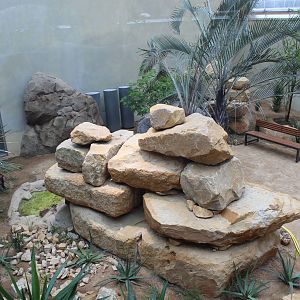
It appears that members would prefer to debate the pros and cons of taxonomic displays or immersion exhibits rather than comment on this specific image.
Do most find what is shown here to be attractive? Are you drooling with anticipation of sitting on that sad bench staring at that pile of rocks?
In any case, does everywhere have to look the same? Sooty mangabey's point is very well made - the kneejerk condemnation of taxonomic displays, no matter how well done they may be, in which a number of posters seem to indulge, does get a tad wearisome.
It would be a dull world indeed where all looked the same and liked the same..
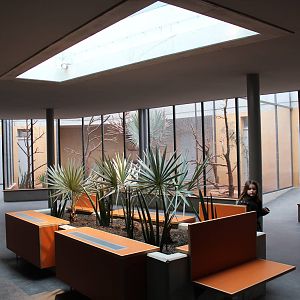
My criticism is not directed at the taxonomic arrangement (it is a BIRDHOUSE after all), but at the animal and public spaces themselves, or at least those shown in the few photos that have sparked this conversation. My opinion is that what is shown is most definitely not "well done," but is barren and small (aviaries) and sterile and unimaginative (public spaces). I can only hope that the remaining work on this project involves a lot of plants, perching and interpretive graphics.